


Jennile

skid steer type

What Are the Two Types of Skid Steers?

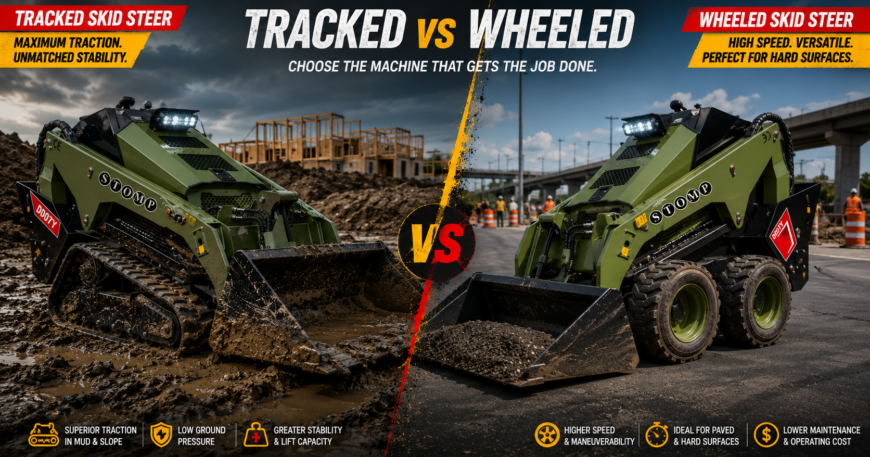
What Are the Two Types of Skid Steers? Every successful heavy construction and landscaping project relies on machinery that delivers exceptional power without sacrificing maneuverability. When you step onto a crowded job site, you quickly realize that massive, single-purpose equipment often creates more logistical headaches than it solves. Contractors need highly adaptable solutions that can seamlessly transition from heavy earthmoving to delicate material handling. The compact skid loader perfectly fills this critical operational gap, serving as the ultimate multi-tool for modern site management. However, maximizing your efficiency depends entirely on answering one foundational question: what are the two types of skid steers, and which one does your business actually need? Understanding the fundamental differences between tracked and wheeled skid steers is essential for protecting your profit margins and ensuring long-term operational success. Making an uneducated purchasing decision can severely limit your daily capabilities, leading to stalled projects and frustrated ground crews. This comprehensive guide breaks down the core designs of both machine types, exploring how they perform across different terrains and industries. By evaluating the unique advantages, maintenance requirements, and long-term value of each configuration, you will gain the expert knowledge required for choosing the right skid steer to drive your company forward. The Foundation of Compact Versatility Modern construction demands a relentless pace, requiring crews to execute complex, multi-phase operations within incredibly tight deadlines. The traditional approach to these projects involved renting or purchasing a different piece of heavy machinery for every specific task. The immediate problem with this fragmented strategy is the massive financial burden it creates. Paying to transport, fuel, and maintain a dedicated trencher, a standalone forklift, and a large wheel loader quickly destroys your working capital and clutters the staging area. The skid steer loader was engineered specifically to eliminate this costly redundancy. By utilizing a universal quick-attach plate and a highly pressurized hydraulic system, a single compact machine can connect to hundreds of different specialized tools. Operators can drop a heavy demolition bucket and pick up a set of pallet forks in a matter of seconds. This seamless adaptability allows a single operator to perform the work of an entire fleet, moving smoothly from site preparation to final grading without ever shutting off the engine. The real-world impact of this concentrated versatility is a drastically streamlined, highly profitable operation. You dramatically reduce your equipment overhead, lower your transportation costs, and keep your operators actively generating revenue throughout the entire shift. Unlocking this immense earning potential, however, requires you to select the correct foundational platform to carry those specialized attachments across your specific job sites. Decoding the Two Primary Configurations When you visit an equipment dealership, you are immediately confronted by dozens of different machines painted in identical corporate colors. A frequent vulnerability for new equipment buyers is assuming that all compact loaders perform identically under pressure. They look closely at horsepower ratings and lifting capacities, completely ignoring the most crucial engineering element separating the machines on the lot. If you fail to recognize how the machine actually makes contact with the ground, you risk purchasing a loader that actively fights against your daily operational goals. The industry strictly divides these machines into two distinct categories: wheeled skid steer loaders and compact track loaders. Wheeled models rely on four heavy-duty pneumatic or solid rubber tires to navigate the site. They execute their signature zero-radius turns by locking the wheels on one side and driving the wheels on the other, literally skidding across the surface. Conversely, compact track loaders abandon tires entirely in favor of two wide, continuous rubber tracks that wrap around a sophisticated steel undercarriage. Understanding these two types of skid steers provides absolute clarity when evaluating your fleet’s true capabilities. The physical mechanism a machine uses to touch the earth completely dictates where it can operate safely and efficiently. Making the right choice ensures your operators can tackle challenging environments with absolute confidence. Navigating the most hostile, unforgiving environments naturally points contractors toward the tracked configuration. Conquering Hostile Ground with Tracked Models Weather delays represent one of the most frustrating and expensive threats to any contracting business. When a heavy rainstorm saturates a freshly graded residential development, the soil instantly turns into deep, adhesive mud. Attempting to force standard wheeled equipment into this environment is a guaranteed recipe for disaster. The tires quickly lose traction, aggressively dig themselves into deep ruts, and leave the machine hopelessly buried in the mud, forcing you to waste hours executing a dangerous physical recovery. Tracked skid steers deliver the ultimate mechanical solution to soft, unstable ground conditions. The wide, continuous rubber tracks distribute the machine’s immense operating weight across a massive surface area. This brilliant weight distribution creates exceptional flotation, allowing the heavy loader to effortlessly glide over deep mud, loose sand, and delicate turf without sinking. Furthermore, the tracks provide relentless pushing power, ensuring the machine never loses traction while aggressively grading soil or clearing heavy brush. The financial impact of deploying a tracked machine is the complete elimination of weather-related downtime. When competing contractors are forced to shut down their operations and wait for the ground to dry, your crew continues to execute highly profitable work. Additionally, because the tracks do not leave deep ruts, you save significant time and money on final site restoration. While tracks dominate the dirt, they face severe operational limitations when the ground turns to solid concrete.   Maximizing Speed and Agility on Hard Surfaces Many contracting businesses operate almost entirely within heavily developed urban environments, focusing on asphalt paving, concrete demolition, and commercial warehouse logistics. The severe limitation these companies face is the rapid, aggressive deterioration of rubber track systems when exposed to hard, abrasive surfaces. Driving a tracked loader across jagged concrete debris or spinning it on hot asphalt literally shreds the expensive rubber, resulting in catastrophic undercarriage repair bills that evaporate your hard-earned profits. Wheeled skid steers excel perfectly in these highly developed, abrasive environments. The heavy-duty tires provide exceptional durability and massive resistance to surface
Read More +

What is the Purpose of a Skid Steer?

What is the Purpose of a Skid Steer? Walking onto an active job site, you will often see massive excavators and towering cranes dominating the skyline. While these giant machines handle the heavy lifting, they require massive amounts of open space to operate safely. When projects move into tight residential neighborhoods or crowded urban developments, these colossal pieces of equipment become completely useless. You need a machine that delivers raw power without taking up the entire property. Understanding the primary purpose of a skid steer is essential for maximizing your operational capabilities. These compact, highly maneuverable machines serve as the ultimate problem solvers for modern contractors. They bridge the gap between exhausting manual labor and oversized heavy machinery. This guide explores the core design of these loaders, their unmatched versatility, and how they secure long-term profitability for your contracting business. The Core Design and Purpose of a Skid Steer Heavy construction equipment traditionally relies on a front steering axle to navigate around a job site. The severe limitation of this traditional steering method is the massive turning radius it requires. If you need to turn a standard front-end loader around in a tight alleyway, you will likely spend ten minutes making stressful, multi-point turns while risking damage to nearby structures. This lack of maneuverability completely stalls project momentum and frustrates ground crews. The primary purpose of a skid steer is to deliver heavy lifting power within extremely confined spaces. Engineers solved the turning radius problem by designing a rigid frame where the left and right wheels operate entirely independently of each other. When the operator pushes the left joystick forward and pulls the right joystick backward, the machine physically skids across the ground to perform a perfect zero-radius turn. This unique mechanical design allows the loader to spin entirely within its own footprint. The real-world impact of this zero-turn capability is unmatched spatial efficiency. Your operators can drive straight into a narrow residential backyard, scoop a heavy bucket of soil, spin 180 degrees, and drive straight out. This eliminates the need for manual wheelbarrows and drastically reduces the physical fatigue of your workforce. Mastering this basic movement naturally transitions into a broader conversation about daily operational speed. Enhancing Daily Job Site Efficiency Every construction project operates under the intense pressure of a strict, unforgiving deadline. A frequent problem business owners face is paying highly skilled laborers to perform simple, repetitive material transport. Paying a crew of carpenters to carry heavy concrete blocks across a staging yard is a massive waste of your financial resources. Manual material handling drains your profit margins and leaves your workers exhausted before the real technical work even begins. Skid steers exist to completely automate these repetitive, labor-intensive tasks. With a rated operating capacity that often exceeds two thousand pounds, a single operator can move a massive pallet of materials across the site in less than a minute. They effortlessly transport structural lumber, heavy steel beams, and bulk aggregate from the delivery truck directly to the installation zone. This mechanical assistance transforms your overall job site efficiency. By delegating the heavy lifting to a compact loader, your specialized tradespeople can focus entirely on executing their actual craft. Projects finish ahead of schedule, labor costs drop significantly, and your commercial insurance risks decrease because fewer workers suffer back injuries. To truly capture this efficiency, however, you must look beyond the standard dirt bucket. Unlocking Ultimate Skid Steer Versatility The traditional approach to civil contracting involved purchasing a dedicated machine for every single phase of a project. Business owners bought expensive trenchers, standalone sweeping machines, and specialized forklifts. The massive problem with this strategy is the crippling financial overhead required to maintain, insure, and transport a massive fleet of single-purpose machinery. When a specialized machine sits idle in your staging yard, it actively drains your working capital. The universal quick-attach system unlocked true skid steer versatility, fundamentally changing how contractors approach heavy equipment. This standardized mounting plate allows an operator to drop a smooth grading bucket and connect a heavy-duty hydraulic breaker in a matter of seconds. Your compact loader instantly transforms from an earthmoving machine into a powerful demolition tool. By investing in a diverse catalog of attachments, you maximize the return on your initial equipment investment. A single power unit can now handle site clearing, trenching, post-hole digging, and final soil grading. You transport one machine to the job site, completely eliminating the complex logistics of coordinating multiple equipment deliveries. This multi-functional capability makes the loader a highly reliable asset across vastly different professional sectors. Industries Powered by Skid Steer Uses Construction equipment is often built for highly specific environments, limiting its appeal to a narrow segment of the market. The limitation many equipment buyers face is finding a machine that adapts to their company as their service offerings evolve. If an asphalt paving company decides to expand into commercial landscaping, their heavy road rollers offer absolutely no value to the new division. Because skid steer uses are so incredibly diverse, these machines serve as the backbone for dozens of different industries. In commercial landscaping, they power massive forestry mulchers and delicate tree spades. In the agricultural sector, farmers rely on them to clean out tight livestock pens and move heavy bales of hay. Paving contractors use them with cold planer attachments to mill damaged asphalt before laying fresh roads.   This universal reliability ensures that your business can pivot and accept new, lucrative contracts without purchasing an entirely new fleet. Your operators use the exact same cab and controls, regardless of the industry they are serving that day. This seamless transition between completely different operational tasks builds a deeply resilient business model. Securing this resilience requires matching the exact machine to your daily workload. Choosing the Right Machine for Your Needs The compact equipment market offers an overwhelming variety of makes, models, and hydraulic configurations. A common vulnerability for new equipment buyers is assuming that all loaders perform identically and simply purchasing the cheapest
Read More +
skid steer

Skid Steer Solutions: Maximizing Efficiency and Versatility

Skid Steer Solutions: Maximizing Efficiency and Versatility Contractors constantly face the immense pressure of shrinking project timelines and tightening operational budgets. Delivering exceptional results requires equipment that can handle multiple demanding tasks without ballooning your overhead costs. Heavy, single-purpose machinery often drains capital and creates logistical nightmares when moving between different project locations. Your business needs a unified approach to equipment that guarantees aggressive performance and ultimate adaptability. Implementing comprehensive skid steer solutions provides the exact operational flexibility modern contractors require to stay highly profitable. These compact powerhouses serve as the foundational anchor of your fleet, easily adapting to the shifting realities of any given workday. This guide explores exactly how mastering these machines protects your bottom line and accelerates your business growth. We will detail the unmatched versatility of modern loaders, the transformative power of specialized tools, and the critical importance of operator precision to ensure your absolute success. The Core of Modern Construction Versatility The traditional approach to heavy civil construction heavily relied on amassing massive fleets of highly specialized machinery. Business owners routinely purchased dedicated trenchers, standalone forklifts, and bulky front-end loaders just to complete a single commercial phase. The severe limitation of this outdated strategy is the massive financial anchor it creates through multiple maintenance schedules and complex transportation logistics. Hauling five different machines to a single residential development completely destroys your profit margins before the work even begins. Modern skid steer solutions completely eliminate this financial burden by centralizing your mechanical power into a single, highly maneuverable platform. The compact footprint of a skid steer allows your crew to access tight residential backyards and crowded urban staging areas that traditional heavy equipment simply cannot reach. Despite this smaller physical size, these machines deliver incredible hydraulic breakout force and relentless pushing power.   The real-world impact of this foundational versatility is a massive reduction in your operational overhead. You transport one machine, maintain one diesel engine, and train your crew on one set of primary controls. This streamlined approach instantly boosts your daily agility, allowing you to accept complex, multi-phase contracts with absolute confidence. Capitalizing on this central power unit naturally requires connecting it to the right specialized tools. Transforming Capabilities with Versatile Attachments A skid steer loader is an incredibly strong hydraulic power plant, but its true value remains locked until you connect it to the proper implement. The daily problem many crews encounter is transitioning between drastically different phases of a project, such as moving from heavy demolition to delicate soil grading. If your team has to wait for a rental company to deliver a specific machine for each new phase, your project momentum instantly dies. Investing in a robust arsenal of versatile skid steer attachments instantly transforms your single loader into a dozen different highly capable machines. The universal quick-attach system allows an operator to drop a heavy dirt bucket and connect to a high-flow forestry mulcher in under a minute. Your crew can effortlessly switch to pallet forks to unload morning delivery trucks, then attach a hydraulic breaker to demolish an old concrete driveway in the afternoon. Deploying these specialized attachments guarantees exceptional job site efficiency with skid steers. Your operators never stop working, and your machine never sits idle on the edge of the property. This continuous, multi-functional capability ensures you capture the maximum possible revenue from every single hour your equipment is running. Navigating these transitions smoothly prepares your crew to handle the unpredictable challenges of the physical environment. Overcoming Common Job Site Challenges Mother Nature and poor site planning constantly conspire to derail even the most meticulously scheduled construction projects. The most frustrating limitation contractors face is arriving at a site only to find it completely saturated by heavy rain or severely constrained by new fencing. Attempting to force standard wheeled equipment through deep, sticky mud results in deeply buried machines and completely ruined landscaping. Strategic skid steer solutions provide the exact mechanical answers needed to conquer these hostile environments. By selecting a compact track loader configuration, you instantly distribute the machine’s weight across a massive surface area, providing the necessary flotation to glide over deep mud without sinking. Furthermore, utilizing tools like six-way grading blades or specialized soil conditioners allows your operators to rapidly repair rutted, damaged ground and keep the project moving forward. The immediate impact of utilizing these targeted solutions is the total prevention of weather-related downtime. When your competitors are forced to halt operations and wait for the ground to dry, your crew continues to execute highly profitable work. This unyielding reliability builds immense trust with your clients, proving that your company can deliver premium results regardless of the physical obstacles. Securing this reputation relies heavily on the individuals operating the controls. The Human Element of Precision and Training The most advanced hydraulic systems and perfectly engineered attachments are completely useless if the person inside the cab lacks professional discipline. A critical vulnerability on many job sites is assuming that anyone with a driver’s license can safely operate heavy machinery. When untrained operators aggressively force a skid steer past its physical limits, they inevitably tear up client property, drop heavy loads, and violently damage expensive attachments. Maximizing the effectiveness of your skid steer solutions demands a rigorous, uncompromising commitment to operator training. You must teach your crews the complex physics of weight distribution, the specific flow requirements of their hydraulic tools, and the precise techniques required to navigate steep slopes safely. An elite operator understands how to feather the joysticks for surgical precision, treating the machine as a delicate extension of their own hands rather than a blunt instrument.   This intense focus on professional training directly translates to vastly safer job sites and perfectly executed contracts. Operators who truly understand their equipment work with a calm, calculated speed that eliminates costly rework and prevents catastrophic accidents. Your commercial insurance rates remain low, and your clients remain deeply impressed by the quiet professionalism of your field crews. Maintaining this elite level of performance naturally
Read More +
Hydraulic Oil

The Lifeblood of Your Machine: Skid Steer Hydraulic Oil

The Lifeblood of Your Machine: Skid Steer Hydraulic Oil Walking onto a busy construction site, the immediate focus is often the roar of the diesel engine and the sheer physical size of the heavy equipment. While the engine provides the initial muscle, the true secret behind a compact loader’s immense lifting capacity remains entirely hidden behind thick steel panels and heavy rubber hoses. The most powerful skid steer on the market becomes nothing more than a heavy metal paperweight without the highly pressurized fluid coursing through its veins. Understanding exactly how this fluid operates separates struggling contractors from highly profitable, deeply reliable construction businesses. This comprehensive guide explores why skid steer hydraulic oil is the absolute lifeblood of your entire operation. We will examine the critical mechanics of fluid power, the devastating financial consequences of neglecting your maintenance schedule, and the science behind selecting the perfect fluid for your specific environment. By mastering the fundamentals of hydraulic system health, you will empower your operators to work with absolute confidence while fiercely protecting your company’s working capital. The Core Role of Hydraulic Oil in Skid Steer Operation Every time an operator pulls back on the control joysticks to lift a heavy pallet of retaining wall blocks, they rely on a sophisticated system of energy transfer. The primary challenge many equipment owners face is viewing their machine strictly as a mechanical entity, focusing entirely on greasing the steel pivot pins while completely ignoring the fluid driving the movement. When operators fail to respect the hydraulic system, they push the machine past its engineered limits, resulting in sluggish performance and severely dangerous load handling. Hydraulic fluid serves as the direct physical medium that transfers rotational energy from the diesel engine directly into linear lifting force. Because liquid cannot be compressed, it acts as a flawless, unyielding mechanism for delivering thousands of pounds of pressure exactly where it is needed. When the internal hydraulic pump pressurizes the oil, it forces the heavy steel cylinders to extend, effortlessly lifting payloads that would otherwise require dozens of laborers to move. The real-world impact of this seamless energy transfer is the incredible speed and operational efficiency that modern contractors rely on to secure profitable bids. When the oil flows smoothly and cleanly, the machine responds instantly to the operator’s touch, allowing for surgical precision around delicate property features. Maintaining this high level of responsive power requires a deeper understanding of exactly what the fluid does when it is placed under extreme stress. How Hydraulic Oil Works Under Extreme Pressure A skid steer loader operates in some of the most physically demanding environments on earth, constantly battling heavy loads, steep inclines, and relentless repetitive motions. The severe operational limitation operators encounter is that generating massive hydraulic pressure inherently creates dangerous amounts of internal friction. If a machine lacks the proper fluid dynamics, this friction will rapidly generate intense heat, causing the internal metal components of the pump and drive motors to literally weld themselves together. Skid steer hydraulic oil functions as much more than just a power transmitter; it acts as a critical coolant and protective lubricant for the entire system. As the highly pressurized fluid rushes through the microscopic tolerances of the hydraulic pump, it coats the moving metal parts with a thin, resilient chemical film that prevents physical metal-on-metal contact. Simultaneously, the oil absorbs the massive heat generated by this friction and carries it directly to the hydraulic cooler, where the temperature is safely dissipated into the atmosphere. When your fluid effectively manages both heat and friction, your machine can run at maximum capacity throughout a grueling ten-hour shift without missing a single beat. Your operators remain safe and highly productive because the lifting arms never stall and the drive motors never lose their torque. Unfortunately, this perfect mechanical harmony is easily shattered when the oil becomes compromised by the harsh reality of the job site. The High Cost of Poor Hydraulic Oil Maintenance Active construction sites are naturally hostile environments filled with abrasive concrete dust, airborne sand, and sudden rainstorms. A frequent vulnerability for growing contracting businesses is treating hydraulic systems as entirely sealed, invincible units that never require active monitoring. When crews rush through their morning inspections and ignore small leaks or dirty quick-connect fittings, they unknowingly invite microscopic contaminants directly into the machine’s circulatory system. Failing to prioritize hydraulic oil maintenance directly leads to catastrophic mechanical failures that can easily bankrupt a small construction company. Even a single teaspoon of abrasive dirt entering the hydraulic reservoir will circulate through the high-pressure pump thousands of times, aggressively scoring the precision-machined internal surfaces. Once the pump is physically scarred, it can no longer generate the necessary pressure to lift heavy loads, resulting in thousands of dollars in emergency repair bills and weeks of lost project revenue.   Implementing a strict, non-negotiable fluid maintenance protocol entirely neutralizes this terrifying financial risk. By ensuring your crew religiously cleans the hydraulic couplers before attaching new tools, you keep the abrasive dirt out of the system and protect the expensive internal pumps. Preserving your equipment’s longevity saves your business massive amounts of capital and guarantees your fleet is always ready for the next lucrative contract. Securing this longevity, however, begins long before the machine ever leaves the staging yard. Choosing the Right Hydraulic Oil for Your Machine Walking into an equipment dealership or a heavy-duty parts store reveals dozens of different pails and drums of fluid, all claiming to offer superior mechanical protection. The daunting problem equipment buyers face is assuming that all hydraulic fluids are fundamentally identical and simply purchasing the cheapest option available. Pouring the wrong viscosity or an incompatible chemical blend into your compact loader will immediately cause severe foaming, spongy lifting controls, and dangerously unpredictable machine behavior. Choosing the right hydraulic oil requires a strict adherence to the manufacturer’s exact engineering specifications and a clear understanding of your local climate. Hydraulic fluids are rated by their viscosity, meaning their physical resistance to flow at
Read More +
skid steer

The Skid Steer Genius: Unlocking the Full Potential of Your Machine

The Skid Steer Genius: Unlocking the Full Potential of Your Machine Construction projects constantly demand higher efficiency, tighter engineering tolerances, and aggressively protected profit margins. Equipment owners and operators face immense daily pressure to do significantly more work with fewer resources. Anyone can turn the ignition key and move a pile of loose gravel across a staging yard. However, settling for basic operation leaves massive amounts of money and productivity sitting completely untouched on the table. Becoming a true “skid steer genius” means moving far beyond the fundamental basics of machine driving. It involves an active, strategic commitment to mastering the equipment’s absolute full capabilities through specialized tools, advanced technology, and refined physical skill. When you elevate your understanding of these compact powerhouses, you transform a simple loader into the most valuable financial asset in your entire fleet. This comprehensive guide explores the exact pathways to maximizing skid steer potential on your job sites. We will examine the impressive evolution of loader technology and how advanced hydraulic attachments multiply your daily output. By integrating modern digital systems and mastering advanced operational techniques, you will establish a highly reliable, incredibly profitable contracting business. The Evolution of Compact Equipment Technology Decades ago, the original skid steer loaders were incredibly simple, three-wheeled machines designed strictly for basic agricultural tasks. They featured minimal lifting capacity and relied on rudimentary chain-drive systems that struggled in severe commercial environments. The severe limitation contractors faced during this era was treating these loaders strictly as lightweight utility carts rather than primary production machines. They lacked the necessary breakout force to handle heavy excavation or navigate deep, saturated mud on active civil construction sites. Manufacturers recognized this operational gap and completely transformed the skid steer into a sophisticated hydraulic powerhouse. Modern machines now feature highly advanced closed-loop hydraulic systems, turbocharged diesel engines, and incredibly durable rubber track undercarriages. Engineers optimized the internal geometry to lower the center of gravity, drastically increasing the rated operating capacity without expanding the physical footprint of the machine. The real-world impact of this technological evolution is unparalleled job site dominance for the modern contractor. You can now deploy a single compact machine to execute heavy commercial grading, dense concrete demolition, and complex material handling. This immense physical power effectively replaces the need for massive, cumbersome excavators on tight residential and urban job sites. Harnessing this raw, concentrated power naturally requires connecting the machine to the proper specialized tools. Elevating Productivity with Advanced Attachments The universal quick-attach system revolutionized the heavy equipment industry by standardizing how tools connect to loader arms. Despite this incredible innovation, many contracting businesses still rely almost entirely on standard smooth dirt buckets and basic pallet forks. The frustrating problem with this limited approach is that it severely restricts the types of lucrative contracts a business can confidently accept. When a crew lacks the proper implement, they waste hours attempting to force a general-purpose tool to perform a highly specialized task. A skid steer genius actively leverages a diverse arsenal of advanced attachments to dominate their local market. By utilizing high-flow auxiliary hydraulics, operators can effortlessly run aggressive forestry mulchers, heavy-duty cold planers, and precise six-way grading blades. These advanced tools instantly convert a basic dirt loader into a highly specialized machine capable of executing highly technical niche tasks. By matching premium hydraulics with specialized implements, crews drastically reduce the need for multiple redundant machines on the site. This strategic approach significantly lowers transportation costs, decreases fuel consumption, and vastly improves overall project efficiency. Your business captures more revenue per operational hour because the machine never sits idle waiting for the next project phase. Unlocking the true value of these expensive attachments demands an operator who possesses exceptional physical control. The Art of Precision: Advancing Operator Skill The absolute peak physical capabilities of a skid steer rely entirely on the specific hands gripping the control joysticks. Inexperienced operators frequently rely on aggressive brute force, leading to jerky machine movements, massive material waste, and unnecessary wear on the equipment. When a driver violently spins the tracks on a delicate residential lawn, they destroy client property and completely erase the project’s profit margin. This lack of finesse actively damages the company’s reputation and exposes ground crews to severe physical danger. Implementing advanced skid steer techniques transforms average equipment drivers into highly respected, elite operators. This professional evolution involves mastering dynamic weight distribution, understanding complex hydraulic flow management, and utilizing smooth, deliberate joystick inputs. A master operator anticipates how a heavy load will shift the machine’s center of gravity, keeping the bucket extremely low to maintain perfect stability. Precision operation completely eliminates costly job site rework and aggressively protects delicate property features. An operator who executes a flawless, rolling zero-turn without tucking the turf proves their profound mechanical competence to the client. This relentless commitment to operational excellence protects the company’s bottom line and establishes a culture of unyielding safety. While human skill is fundamentally irreplaceable, modern digital technology offers powerful tools to enhance this precision even further. Integrating Telematics and GPS for Ultimate Control The digital revolution has officially reached the heavy equipment sector, introducing highly sophisticated software directly into the operator’s cab. Many traditional business owners ignore these powerful digital tools, choosing instead to rely entirely on visual estimates and manual maintenance tracking. This outdated, stubborn approach directly leads to inaccurate subgrade elevations, wasted expensive materials, and entirely preventable mechanical breakdowns. Operating blindly in a data-driven industry guarantees that your competitors will eventually outpace your production capabilities. Becoming a skid steer genius requires eagerly integrating modern GPS grading systems and comprehensive machine telematics into your daily workflow. GPS and laser-guided grading attachments allow operators to achieve millimeter-perfect elevations automatically, completely removing human error from the equation. Simultaneously, telematics software actively tracks engine hours, daily fuel consumption, and idle time, transmitting this vital data directly to the fleet manager’s smartphone. These technological integrations drastically reduce costly surveying times and completely eliminate structural material overages. Furthermore, business owners can proactively schedule essential maintenance
Read More +

Skid Steer Operator Jobs: A Career Built on Precision and Power

Skid Steer Operator Jobs: A Career Built on Precision and Power A massive construction site relies on heavy machinery to physically reshape the earth, but those steel behemoths are completely useless without highly capable professionals sitting in the cab. The equipment provides the raw hydraulic muscle, but the human operator provides the critical intelligence, spatial awareness, and strategic foresight required to execute the work safely. Many people outside the heavy civil industry mistakenly view equipment operation as simple manual labor, failing to recognize the intense technical demands of the profession. Exploring skid steer operator jobs reveals a highly dynamic, financially rewarding career path that forms the absolute backbone of modern infrastructure development. This comprehensive guide serves as a definitive resource for individuals seeking to enter the heavy equipment industry, as well as business owners desperately searching for elite talent. By understanding the essential skills required, the profound importance of job site safety, and the long-term career trajectory, you will discover exactly what it takes to succeed in this demanding field. The Driving Force of Modern Construction and Landscaping Every successful commercial development, residential neighborhood, and public park relies heavily on the unmatched versatility of compact construction equipment. Skid steers are the primary workhorses of these environments, seamlessly transitioning from aggressive earthmoving tasks to delicate material handling operations within a single shift. The severe limitation that project managers face is that this incredible mechanical versatility is entirely locked behind the physical capabilities of the person controlling the joysticks. A machine driven by an amateur will inevitably tear up expensive turf, drop heavy payloads, and completely disrupt the delicate scheduling of a multi-phase project. Professional skid steer operators solve this problem by acting as the strategic brain of the equipment, constantly calculating lifting angles, weight distribution, and hydraulic flow. They navigate tight, congested spaces with effortless grace, ensuring that materials arrive exactly where the ground crews need them without causing collateral damage. The real-world impact of deploying a true professional in the cab is an immediate, massive surge in daily job site efficiency. When an operator seamlessly executes complex grading and loading tasks, the entire project timeline accelerates, saving the contracting business thousands of dollars in labor costs. Establishing this level of foundational efficiency naturally requires the operator to possess a highly specific, finely tuned set of technical capabilities. Developing Essential Skid Steer Operator Skills Stepping onto the platform of a compact loader and turning the ignition key is a massive responsibility that demands profound technical competence. A frequent misconception among new recruits is assuming that driving a skid steer is simply an extension of driving a standard passenger vehicle. This dangerous assumption leads to a complete misunderstanding of how a rear-heavy machine physically reacts when thousands of pounds of stone are suddenly lifted into the air. Securing the best skid steer operator jobs requires mastering a deeply complex set of physical and mental capabilities. Elite operators possess exceptional hand-eye coordination, allowing them to smoothly feather the hydraulic controls while actively steering the machine across uneven, muddy terrain. Furthermore, they develop a profound mechanical intuition, enabling them to literally hear when a diesel engine is bogging down or a hydraulic pump is starving for fluid.   Developing these precise skid steer operator skills transforms an entry-level worker into a highly sought-after industry expert. Contractors gladly pay premium wages for operators who can consistently grade a concrete pad to a quarter-inch tolerance without wasting expensive base materials. Mastering these physical controls directly feeds into the operator’s ability to protect the lives of everyone working around the machine. The Uncompromising Demand for Precision and Safety An active construction site is an inherently dangerous environment filled with deep trenches, exposed utilities, and dozens of ground workers moving quickly between tasks. The terrifying reality of heavy equipment operation is that a single momentary lapse in concentration can instantly result in a catastrophic, life-altering accident. Operators who lack spatial awareness frequently back into expensive client property, crush newly laid pipes, or, tragically, strike their own crew members. Treating precision and safety as non-negotiable professional standards entirely neutralizes these terrifying job site hazards. A professional operator constantly scans their peripheral vision, maintains strict visual contact with their spotters, and completely refuses to move the machine if their line of sight is obstructed. They intimately understand the physical tipping point of their specific loader, ensuring they always carry heavy payloads low to the ground to prevent violent rollovers on steep slopes. The financial and human impact of this uncompromising safety discipline is the absolute preservation of your company’s workforce and working capital. Safe operators protect the business owner from devastating commercial insurance claims, catastrophic lawsuits, and severe reputational damage. By proving that you can operate thousands of pounds of steel with surgical precision, you guarantee your long-term value to any prospective employer. Exploring Careers in Construction Equipment Operation Many young professionals hesitate to enter the skilled trades because they fear getting permanently stuck in a physically exhausting, dead-end position. They view equipment operation as a temporary job rather than a stable, long-term profession that can easily support a family and a mortgage. This outdated perspective ignores the massive, ongoing labor shortage in the heavy civil industry and the incredible financial premiums placed on highly capable talent. Careers in construction equipment operation offer an incredibly lucrative, highly structured pathway to long-term professional success. A skid steer is widely considered the ultimate gateway machine, providing a crucial training ground before an operator moves up to massive excavators, bulldozers, or articulated dump trucks. As operators accumulate thousands of hours of accident-free experience, they frequently transition into highly respected roles such as site foremen, equipment fleet managers, or specialized heavy lift instructors. The personal impact of dedicating yourself to this career path is total financial security and unparalleled job mobility. Because the fundamental physics of earthmoving remain identical across the globe, an elite operator can confidently secure high-paying work in virtually any city or state. Maximizing this earning potential requires partnering with
Read More +
Skid steer for sale

Skid Steer Buying Guide (2026): How to Choose the Best Machine for Your Business

Skid Steer Buying Guide (2026): How to Choose the Best Machine for Your Business Buying a skid steer can be one of the smartest investments a contractor, landscaper, builder, farmer, rental company, or property maintenance business makes in 2026. The right machine can increase productivity, reduce labor costs, improve efficiency, and open the door to more profitable jobs. A skid steer is one of the most versatile machines on any jobsite. It can move materials, load trucks, grade surfaces, handle pallets, power attachments, clean sites, remove debris, and support dozens of daily tasks across mul tiple industries. That versatility is exactly why choosing the right machine matters. Many buyers make the mistake of focusing only on price. Others buy the biggest model they can afford without considering real workload needs. The best skid steer is not simply the cheapest or largest option. The best skid steer is the machine that matches your business, improves output, stays reliable, and delivers long-term return on investment. This complete skid steer buying guide explains how to choose the right size, what features matter most, pricing expectations, financing strategies, business benefits, and how to make a confident purchase decision. Why Buying a Skid Steer Is a Smart Business Move A skid steer is more than equipment. It is a revenue-producing asset. Businesses that invest in the right machine often complete jobs faster, reduce dependence on manual labor, improve scheduling flexibility, and take on more work with the same crew size. Instead of paying for extra labor to move soil, gravel, pallets, mulch, concrete debris, or tools manually, a skid steer can handle those tasks quickly and consistently. For many companies, one machine can replace hours of labor every day. That creates real value through: Faster project completion Lower labor pressure Better crew efficiency Improved professionalism on site More services offered to clients Higher earning potential A properly selected skid steer can begin generating value immediately.   Who Should Buy a Skid Steer Skid steers are ideal for businesses that need compact power and multi-purpose performance. Contractors Useful for grading, site cleanup, loading, trenching, backfilling, demolition support, and material handling. Landscapers Perfect for moving soil, mulch, stone, pavers, trees, debris, and hardscape materials. Builders Excellent for residential construction, lot prep, framing support, pallet movement, and cleanup. Farmers Helpful for feed movement, barn cleanup, lifting supplies, fencing work, and general property maintenance. Property Maintenance Companies Great for debris removal, snow work, lot cleanup, pallet handling, and commercial site support. If your business regularly moves materials or needs more productivity in tight spaces, a skid steer can be a powerful upgrade. How to Choose the Right Skid Steer Before comparing brands or prices, define what the machine must do most often. This is the most important buying step. Ask yourself: What materials will I move daily? Do I need pallet handling? Will I work in narrow gates or tight urban jobsites? Do I need to load trucks? Will I run hydraulic attachments? How many hours per week will it operate? Who will operate it? The right answers guide the right machine. Choose the Right Size Skid Steer Size impacts productivity, access, transport cost, fuel use, and lifting ability. Compact Models Best for: Tight spaces Residential jobsites Narrow access points Smaller trailers Light to moderate workloads Mid-Size Models Best for: Mixed commercial work Daily contractor use Landscaping crews Strong balance of power and maneuverability Large Models Best for: Heavy production work Commercial construction Large material movement Frequent truck loading Demanding hydraulic applications Bigger is not always better. Oversized machines can increase purchase cost, fuel consumption, transport complexity, and wear. Choose based on recurring workload, not occasional jobs. Track vs Wheel Skid Steer One of the most common buyer decisions is whether to choose tracks or wheels. Wheel Models Best for: Hard surfaces Concrete Asphalt Faster travel speeds Lower maintenance in some environments Track Models Best for: Mud Soft ground Loose soil Wet conditions Lower ground pressure Better traction If your work is mainly landscaping, dirt, grading, or unstable surfaces, tracks are often a smart investment. If your work is mostly pavement, yards, or mixed hard surfaces, wheels may be the better fit. Vertical Lift vs Radial Lift Lift path design affects how the machine performs. Radial Lift Often preferred for: Digging Grading Pushing Ground-engaging work Vertical Lift Often preferred for: Loading trucks Pallet movement Stacking materials Higher reach at full lift height If material handling is a major revenue source, vertical lift can be highly valuable. Key Features That Increase ROI Modern skid steers offer features that improve daily performance and long-term ownership value. Enclosed Cab Protects operators from dust, heat, rain, noise, and harsh conditions. HVAC Keeps crews comfortable in hot or cold weather, improving productivity. High-Flow Hydraulics Important for running demanding attachments such as: Brush cutters Cold planers Trenchers Augers Sweepers Mulchers Ride Control Reduces bouncing while carrying loads and improves comfort. LED Lighting Useful for early starts, evening jobs, and indoor work. Backup Camera / Visibility Packages Improves awareness and site safety. Easy Service Access Saves time during maintenance and protects uptime. Choose features that make money, save time, or reduce downtime.  Best Attachments to Buy Attachments are one reason skid steers deliver exceptional value. Popular options include: Bucket Pallet forks Grapple Auger Trencher Brush cutter Soil conditioner Sweeper Snow blade Breaker The more jobs your machine can perform, the higher your ROI. How Much Does a Skid Steer Cost in 2026? Pricing depends on: Size Lift capacity Hydraulic package Cab options Tracks or wheels Brand Dealer region Technology package Included attachments Entry-level models may start lower, while premium commercial units with advanced features can rise significantly. The smarter approach is not asking “What is cheapest?” Ask: What machine makes me money fastest? What machine fits daily work best? What machine protects uptime? What machine holds value strongly? That mindset creates better buying decisions. Should You Finance a Skid Steer? Many businesses finance equipment to preserve working capital. Instead of tying up cash, financing can allow you
Read More +
Attachments

Versatility Through Multi-Functional Attachments – mini skid steer

Versatility Through Multi-Functional Attachments As crews move through different stages of development, the scope and demand of construction projects change all the time. You could start the day digging a deep trench, spend the afternoon grading a yard, and end the day hauling heavy pallets of stone. In the past, business owners had to buy, move, and keep a large fleet of highly specialized machines to keep up with these quickly changing needs. This old-fashioned method ties up a lot of working capital and makes things very hard for your transport crews to plan. The real strength of a mini skid steer is not just its small engine, but also its ability to completely get around this old fleet model. A compact loader is not just a tool for moving dirt; it’s a lot more than that. It is a universal hydraulic power platform that has been designed to run dozens of highly capable, interchangeable tools. You can turn one piece of equipment into a powerful tool that can do many things if you know how to make the most of its amazing flexibility. When you give your crews a wide range of attachments, it changes how they handle complicated, multi-stage contracts. Your operators can get right back to work by switching out the working end of their loader instead of waiting for a rental company to bring them a dedicated machine. This complete guide explains how using multi-functional attachments can help you avoid having to buy single-purpose machines, make your daily work easier, and protect your bottom line at the same time. Overcoming the Burden of Traditional Equipment Fleets If a contracting business wants to grow its service offerings, one of its main goals should be to build a complete inventory of all its tools and equipment. Contractors want to be ready for any job that pays well, which is why they often buy a dedicated rough-terrain forklift, a small bulldozer, and a compact excavator. The biggest problem with this plan is that these very specialized machines spend most of their lives sitting around doing nothing. You end up paying a lot of money each month for heavy equipment that you only use for a few hours a week. Also, it’s a nightmare for your dispatch team to plan the logistics for moving three different heavy machines to the same residential job site. You have to secure a lot of big trailers, burn through hundreds of gallons of diesel fuel, and drive huge delivery trucks through quiet neighborhoods. The elegant answer to this logistical chaos is viewing your compact loader as a modular, universal hub for all your heavy lifting needs. Instead of buying a completely new engine, cab, and undercarriage for every job; all you have to do is buy the right attachment to do the job. This modular equipment method cuts your initial capital investment by a huge amount and your annual routine maintenance costs by a huge amount. Your mechanical crew only has to take care of one diesel engine and one set of rubber tracks, but your business can still do dozens of very specific jobs. This huge drop in operational costs instantly boosts your profit margin on every contract you sign. Getting rid of a big, old-fashioned fleet lets you focus only on the tools that make money, starting with the basics of preparing the site. Mastering Earthmoving and Precision Grading Almost every successful building or landscaping project starts with a lot of earthmoving and careful site preparation. Before any real building can safely happen, crews have to regularly cut away thick topsoil, fill in huge retaining walls, and level the ground perfectly. It takes a long time to do these tasks by hand with shovels and heavy wheelbarrows, and it can be very tiring for your workers. On the other hand, it’s often impossible to bring in a big, dedicated bulldozer because modern residential property lines don’t have enough space. Standard dirt buckets and specialized grading blades on a mini skid steer are the perfect middle ground between hard work and big machines. The loader’s strong pushing power drives the bucket deep into hard-packed soil, easily tearing out tough roots and heavy clay. Operators can quickly move huge scoops of dirt around the property, which speeds up the first phase of the project by a lot. Once most of the material has been moved, the operator can smoothly switch from aggressive digging to careful finishing at the surgical site. The operator can perfectly level the ground to exact specifications by replacing the standard bucket with a dedicated soil conditioner or grading blade. These attachments break up hard soil clods, get rid of dangerous rocks, and leave behind a smooth, perfectly graded surface that is ready for seed or concrete. This dual capability makes sure that your highly paid crew spends their time building instead of fighting with the dirt under their feet. As the surface soil is properly prepared and graded, contractors must naturally turn their attention to the important utilities that are buried deep underground. Streamlining Complex Underground Utility Work Modern buildings need a complicated network of underground utilities, such as heavy water mains, electrical conduits, and complicated irrigation systems. Plumbers, electricians, and irrigation experts always have to deal with the problem of safely burying these important lines below the frost line in their area. When you use a standard compact excavator for this job, it often makes a trench that is too wide, which means you have to backfill too much and ruin the grass that is already there. This strict method annoys property owners and makes contractors spend thousands of dollars fixing the surrounding landscape before they can finish the job. Dedicated trencher and hydraulic auger attachments are a very precise alternative to traditional, messy digging methods. A trencher attachment uses a strong chain with carbide tips to cut a perfectly straight, narrow channel right where the utility line needs to go. The machine neatly drops the dirt it
Read More +
mini skid steer

Exceptional Maneuverability in Tight Spaces – Mini Skid Steer

Exceptional Maneuverability in Tight Spaces Getting a good deal on a contract often comes with a big logistical problem. The real work area is either behind a narrow residential gate, at the end of a narrow city alleyway, or completely inside an existing commercial building. If you can’t get the machine to the dirt, raw horsepower doesn’t mean anything when space is very limited. Contractors often find themselves staring at a job that would make them a lot of money, only to realize that their usual tools won’t fit. This spatial limitation makes it hard for construction business owners to make a choice. You can either say no to the job completely or make your crew do days of hard, unprofitable manual labor with wheelbarrows and shovels. Neither choice helps a contracting business grow and compete. You need a mechanical solution that is specifically designed to deliver a lot of power into the most difficult situations. Knowing how to use small machines turns these annoying space limits into clear competitive advantages. This in-depth guide will show you exactly how a mini skid steer can help with the problem of small work areas. You will learn how their unique engineering protects fragile property, cuts down on wasted movement by a huge amount, and keeps your projects in tight spaces very profitable in the end. The Reality of Restrictive Work Environments Urban development and renovations of residential properties currently dominate the construction industry. Clients constantly enhance their homes by constructing outdoor living spaces and upgrading utilities buried deep underground. These projects don’t often have the luxury of a big, clean dirt lot. Instead, contractors have to deal with mature landscaping, paved driveways, and property lines that are only a few inches away from the work area. Bringing in traditional heavy machinery right away makes things very hard to work with. Full-sized loaders need a lot of space to turn around, which is not something that can be found in a typical suburban backyard or a busy downtown sidewalk. When operators try to fit big machines into these spaces, they spend more time nervously checking their blind spots than actually moving things. This constant indecision slows the whole project down to a crawl and puts a lot more physical stress on your crew.   A mini skid steer is purpose-built to eliminate this exact operational friction. The machine features an incredibly narrow frame, often measuring less than thirty-six inches wide, allowing it to slip gracefully through standard pedestrian doorways and narrow property lines. This compact footprint removes the immediate barrier to entry, allowing you to bring mechanized power directly to the heart of the project. By solving the access problem, you immediately eliminate the need to manually haul materials across the property, saving countless hours of expensive labor. Navigating Narrow Access Points and Alleyways The most difficult phase of any residential or urban project is usually the initial staging and site access. Getting tools, heavy materials, and machinery from the street parking area to the actual backyard work zone is a massive logistical hurdle. Many contractors resign themselves to dismantling expensive wooden fences or temporarily removing structural gates just to get their equipment inside. This tear-down and rebuild process consumes valuable hours, annoys the property owner, and eats directly into your carefully calculated profit margins. Standard skid steers and compact track loaders, while powerful, simply cannot squeeze through a standard garden gate without causing extensive collateral damage. Even if the machine barely clears the posts, the operator lacks the necessary room to turn the machine once inside the enclosure. This lack of maneuverability turns a simple material delivery into a tense, high-risk operation that threatens the integrity of the client’s property. The solution requires a machine that treats narrow corridors as a standard operating environment rather than an impassable obstacle. Mini skid steers thrive in these exact scenarios due to their specialized undercarriage design and zero-turn capabilities. The independent tracks allow the machine to rotate completely within its own physical footprint. An operator can drive straight down a narrow concrete alleyway, stop, spin the machine ninety degrees on a dime, and proceed directly through a tight gate. This exceptional maneuverability eliminates the need for costly fence removal and ensures your materials arrive at the work zone safely and efficiently. Precision Control Around Delicate Structures Operating heavy machinery is inherently risky, but those risks multiply exponentially when you are working inches away from an expensive glass sunroom or a newly poured concrete foundation. Residential and commercial clients expect contractors to improve their property, not accidentally destroy the surrounding features during the process. Standard construction equipment carries massive momentum, and a slight slip of the operator’s hand can easily result in a heavy steel bucket smashing through a structural wall. When operators are forced to use oversized machines in confined areas, their focus is entirely consumed by avoiding catastrophic collisions. They constantly ride the brakes, overcorrect their steering, and work at an agonizingly slow pace just to prevent property damage. This hyper-cautious approach is mentally exhausting for the operator and terrible for your project timeline. To maintain both speed and safety, you need equipment that responds with absolute precision to the operator’s commands.   The hydraulic systems on a high-end mini skid steer are designed to give you very smooth, predictable, and proportional control. The operator stands on a rear platform instead of sitting in an enclosed cab, so they can see the whole machine from all sides. From this great vantage point, they can see exactly where the tracks are and how close the bucket is to a fragile structure. With smooth hydraulics and perfect visibility, this lets your crew work hard and safely in the smallest spaces. Maximizing Efficiency Without Constant Repositioning Keeping a steady, smooth rhythm is important for both earthmoving and material handling. The faster a machine can scoop, turn, dump, and go back to the pile, the more money it makes all day. But working in a small space naturally
Read More +
impact

Reduced Ground Impact and Surface Damage

Reduced Ground Impact and Surface Damage Over the past ten years, clients’ expectations have changed a lot in the construction and landscaping industries. Property owners no longer judge a successful project only by the final structure or the new garden beds they planted. People today judge how professional you are by how well the property looks right after your crew leaves. It is no longer acceptable to leave behind a working new retaining wall with a ruined lawn, cracked driveways, and deep mud ruts. This change in client standards puts a lot of pressure on contractors to work quietly, getting big results without leaving any evidence that they were there. The main problem is that moving a lot of dirt, stone, and building materials usually needs heavy machinery. Bringing full-sized tools onto a delicate residential or finished commercial property will definitely damage a lot of the surface. To solve this complicated operational puzzle, you need to make a big change to the equipment you use. Contractors who need to combine a lot of hydraulic power with a small, low-impact footprint have found that mini skid steers are the best option. This full guide will show you exactly how these small machines keep your job sites safe. You will learn how careful weight distribution protects valuable hardscapes, keeps hidden underground utilities safe, and ultimately gives your growing business a big edge over the competition. The High Price of Collateral Site Damage To get a profitable contract, you need to be very careful when estimating the costs of materials, labor, and equipment deployment. But the hidden cost of damage to collateral property is the most dangerous threat to your carefully planned profit margin. You can almost be sure that some expensive repairs will need to be made before the client signs the final payment check when you bring heavy traditional machinery to a well-kept site. The issue with this conventional method is that restoring a site is very costly and takes a lot of time. When a heavy loader tears up a healthy lawn, your crew has to spend days bringing in new topsoil, carefully leveling the damaged ground, and laying down new sod on expensive pallets. This restorative work makes your highly paid skilled workers do basic landscaping repairs instead of moving on to the next project that will make you money. The intentionally light design of mini skid steers completely breaks this cycle of damage and repair. The machine can move around the site without damaging the soil structure because it is much lighter than a standard excavator or full-sized skid steer. You can safely move heavy loads of gravel or brick across a backyard without leaving behind deep, muddy trenches that are hard to get rid of. The financial effect of not doing site remediation in the real world is huge. You won’t have to buy new sod or pay your crew for days of cleaning up after the storm anymore, so all of your original profit stays in your bank account. Your business runs much more smoothly, making it easy for you to move from one job to the next that pays. To fully understand how this protection works, you need to look closely at the engineering of the undercarriage. Decoding Ground Pressure and Weight Distribution Ground pressure, which is measured in pounds per square inch, is an engineering term that tells you how much damage a machine does to a job site. When you drive a heavy wheeled loader, the whole weight of the machine and its load is focused on four small patches of contact with the tires. This huge amount of downward force is like a series of heavy punches that easily break through the turf layer and sink deep into the soil below. High ground pressure makes it very hard to do your job, especially in places where the weather is hard to predict. If it rains suddenly and makes the ground softer, driving a heavy wheeled machine onto the dirt will make deep ruts and often leave the machine stuck. Contractors often have to stop working for days at a time while they wait for the sun to harden the ground enough to hold their equipment. These weather-related delays mess up your project schedule, upset your clients, and stop your steady cash flow. Mini skid steers, especially those with special rubber track systems, fix the problem of high ground pressure by spreading the weight out better. The compact loader’s weight is spread out evenly over the large surface area of two continuous tracks, rather than resting on four small points. This great engineering creates an effect called flotation, which lets the machine glide over soft mud, wet grass, and loose sand without sinking. This amazing flotation keeps your crew very productive no matter what the weather is like. You can safely start an outdoor renovation project the morning after a heavy rain without damaging the property or putting your tools at risk. Keeping up a steady, fast pace of work will keep your business very profitable and show your clients that you can always be counted on. This weight distribution is just as important when your machine has to work on expensive paved surfaces as it is when it has to work on soft soil and mud. Preserving Expensive Pavements and Hardscapes Getting into the main work area is often the most stressful part of any home or city contracting project. Most of the time, your heavy equipment will have to drive over decorative concrete driveways, expensive paver walkways, or freshly laid asphalt to get to a backyard installation site. The main problem with bringing regular excavators or full-sized loaders into these places is that they could seriously damage the pavement. Standard residential concrete can’t handle the weight of big machines, which causes instant, spiderwebbing cracks that ruin the whole slab. Also, the aggressive steel tracks or heavy-duty tire treads on big machines act like rough sandpaper, leaving deep, permanent scars on
Read More +
Cart

No products in the cart.
Select the fields to be shown. Others will be hidden. Drag and drop to rearrange the order.
  • Image
  • SKU
  • Rating
  • Price
  • Stock
  • Availability
  • Add to cart
  • Description
  • Content
  • Weight
  • Dimensions
  • Additional information
Click outside to hide the comparison bar
Compare