


No products in the cart.
Skid Steer Tires vs Tracks: Which Performs Better on Different Terrain?
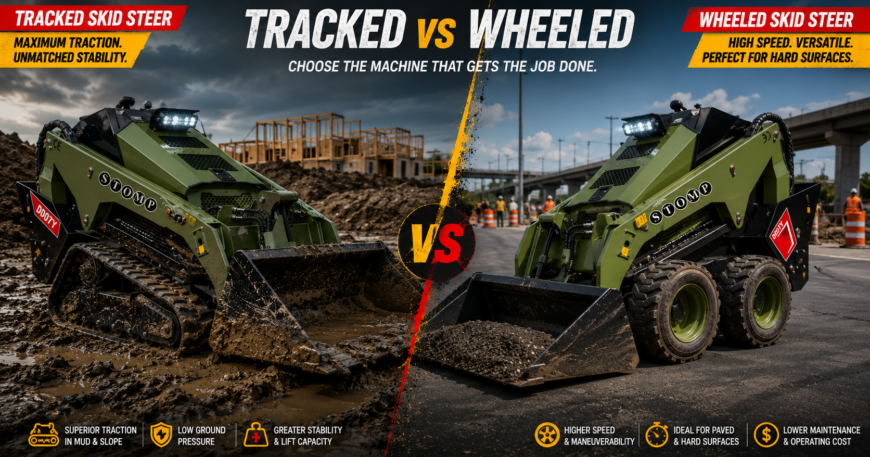
Skid Steer Tires vs Tracks: Which Performs Better on Different Terrain? You’re standing at the dealer lot with a decision that suddenly feels bigger than it should: tires or tracks? The two machines look almost identical from the seat, but drop them onto your worksite and the difference shows up fast. One flies across firm ground and pavement; the other floats over mud that would swallow the first up to its axles. Pick wrong, and you either sink in the muck all season or pay a premium for capability you never touch. The real answer lives in your ground conditions, not the spec sheet. If most of your work happens on compacted soil, concrete, or gravel yards where travel speed and low upkeep matter, tires keep things efficient and simple. If your jobs regularly take you into soft soil, wet sites, snow, or freshly disturbed ground, tracks give you the stability and flotation needed to keep moving without constant recovery work. It also comes down to how much disruption you can afford on finished surfaces. Tires are quicker and easier on hard ground but can leave marks or struggle when conditions turn loose. Tracks spread the machine’s weight, reducing ground pressure and helping you protect lawns, landscaping, and soft subgrades while maintaining traction. The trade-off is higher cost and more maintenance, but better control in difficult terrain. How Each Setup Works Before you can choose, you need to understand what’s rolling under the machine. Both setups carry the same skid steer, but the way they meet the ground shapes traction, speed, cost, and where the machine can go. That difference drives everything else. Wheeled Skid Steers: Speed and Simplicity A wheeled skid steer runs on four rubber tires, steering by driving one side faster than the other. It’s the traditional, time-tested setup with a simple, rugged undercarriage and fewer wear parts to worry about. Because tires roll with little resistance, wheeled machines travel fast and cost less to buy and maintain. They shine on hard, dry, and paved surfaces where grip comes easy and speed pays off. Tracked Skid Steers: Traction and Flotation A compact track loader replaces the tires with two rubber tracks wrapped around an undercarriage of rollers, idlers, and drive sprockets. Those tracks spread the machine’s weight over a much larger surface area. That wider footprint is the key advantage of tracks, allowing the machine to spread its weight, gain traction, and stay on top of soft or loose ground where tires would sink or spin. The tradeoff is higher cost, more wear parts, and increased maintenance compared to a simpler wheeled setup with four rubber tires. Tires are faster, more affordable, and better suited to firm surfaces, while tracks prioritize stability and flotation in mud, sand, and uneven terrain, making each option a fit for different working conditions. Performance on Different Terrain Types The ground you work on most should drive your choice more than anything else. Each setup owns certain surfaces and struggles on others. Match the machine to your terrain and the work flows; mismatch them and you fight the ground all day. Where Tires Perform Best Tires rule firm, dry, and hard surfaces. On pavement, packed gravel, dry soil, and finished lots, they roll fast, grip cleanly, and waste no energy fighting the ground. They also handle hard surfaces more cleanly, without the scuffing tracks that can leave when turning. On pavement, concrete, and other firm ground, tires offer faster travel and better efficiency, especially on packed gravel, dry soil, and established lots where traction isn’t an issue and surface wear needs to be minimized. Where Tracks Perform Best Tracks own the soft, loose, and unstable ground that stops a wheeled machine cold. Their flotation keeps the loader on top of mud, sand, and wet soil instead of sinking, and their grip powers through where tires just spin. They also perform better on slopes, snow, and unstable ground, making them the better choice when conditions become unpredictable. Tracks provide added grip and flotation in mud, wet soil, sand, and loose fill where tires would sink or rut, while also maintaining control on steep or uneven terrain where traction is critical. Takeaway: tires are best for firm, dry, and paved surfaces, while tracks are the stronger option for soft, slippery, or unstable ground where stability and grip matter most. Maneuverability and Site Fit Traction only matters if the machine works where and how you need it. How each setup turns, fits, and treats your surfaces often decides the choice before terrain ever enters the picture. Speed, Turning, and Surface Care Wheeled machines move faster between tasks and across a site, which adds up over a long day of loading and hauling. But their pivot turns can scuff soft ground and tear up turf, so they’re happiest on surfaces that don’t mind a little grinding. Tracked machines turn more gently on soft ground thanks to their spread-out weight, but they can scuff and mark hard surfaces like concrete when they pivot. Match the setup to the surface you most want to protect. Ground Pressure and Delicate Surfaces This is where the two setups split sharply. Tires concentrate the machine’s weight onto four small contact patches, creating high ground pressure that ruts lawns and sinks into soft soil. Tracks spread the machine’s weight over a much larger surface area, significantly reducing ground pressure. This allows the machine to move across wet lawns or freshly graded soil with minimal marking, while wheeled machines are more likely to leave ruts or sink into soft ground. Choosing the Right Setup for Your Work There’s no single winner here, only the right match for your terrain, your work, and your budget. Line up each setup against how you actually operate, and the choice gets clear. When Wheels Make Sense Choose a wheeled skid steer if your work stays mostly on firm, dry, and paved ground. Loading on hard lots, working established sites, and moving fast between tasks all