What Is Another Name for Skid Steer?
Ask three people on a jobsite what they call the compact loading machine parked near the materials, and you may get three different answers. One calls it a skid steer, another swears by “skid loader,” and a third simply points and says “the Bobcat.” All three are talking about the same category of equipment, yet the words they use carry different histories, different technical meanings, and sometimes different machines entirely. For anyone buying, renting, or specifying equipment, that confusion is more than a quirk of language. It can cost you the wrong machine, a delayed rental, or a miscommunication that stalls a job.
This guide is written for contractors, landscapers, construction business owners, property developers, equipment buyers, and anyone searching for clarity on skid steer terminology. We will untangle the most common alternate names, explain where each one comes from, and clarify which terms mean the same thing and which point to genuinely different machines. You will learn why “skid loader” persists, what “compact track loader” really signals, why “Bobcat” became shorthand for an entire industry, how regional and international naming shifts the conversation, and how mastering this vocabulary helps you navigate the market with confidence rather than guesswork.
Skid Loader: The Most Common Direct Synonym
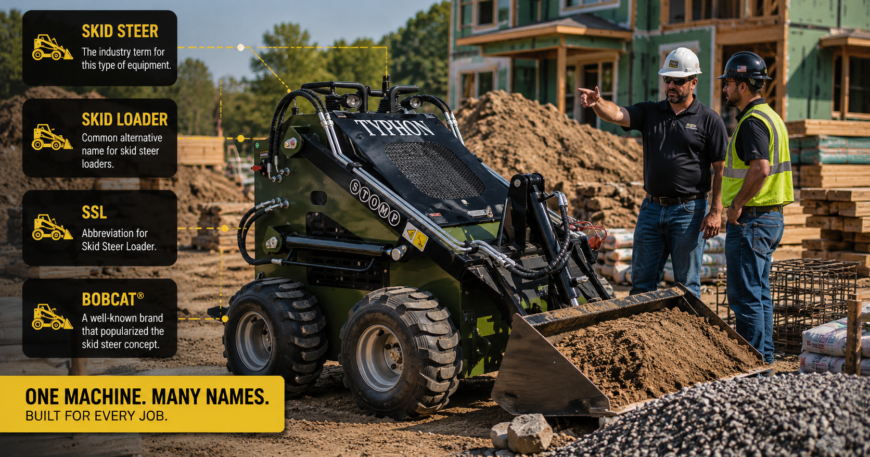
Of all the alternate names you will encounter, “skid loader” is the closest and most reliable synonym for skid steer. The two terms describe exactly the same machine, and people often use them interchangeably within a single conversation. The difference is purely linguistic, not mechanical, which means there is no risk of ordering the wrong equipment when one term is swapped for the other.
The confusion arises because newcomers sometimes assume that two different words must point to two different machines. They hear “skid steer” in one breath and “skid loader” in the next, then wonder whether they need to compare specifications between them. That hesitation can slow down a purchase or a rental request, and in a trade where time directly affects profitability, even small moments of doubt add friction to decisions that should be straightforward.
Understanding that these terms are identical removes that friction entirely. Both names trace back to the same defining trait: the machine steers by skidding its wheels, driving one side faster than the other to pivot in place, while the loader arms and bucket up front handle the lifting and carrying. “Skid steer” emphasizes how it turns, and “skid loader” emphasizes what it does, but they describe one machine. When you recognize this, you can speak with dealers, operators, and rental yards in either dialect without missing a beat, which keeps your conversations efficient and your decisions clear. That clarity becomes even more valuable when we reach a term that genuinely does describe a different machine.
Compact Track Loader: A Close Cousin, Not a True Twin
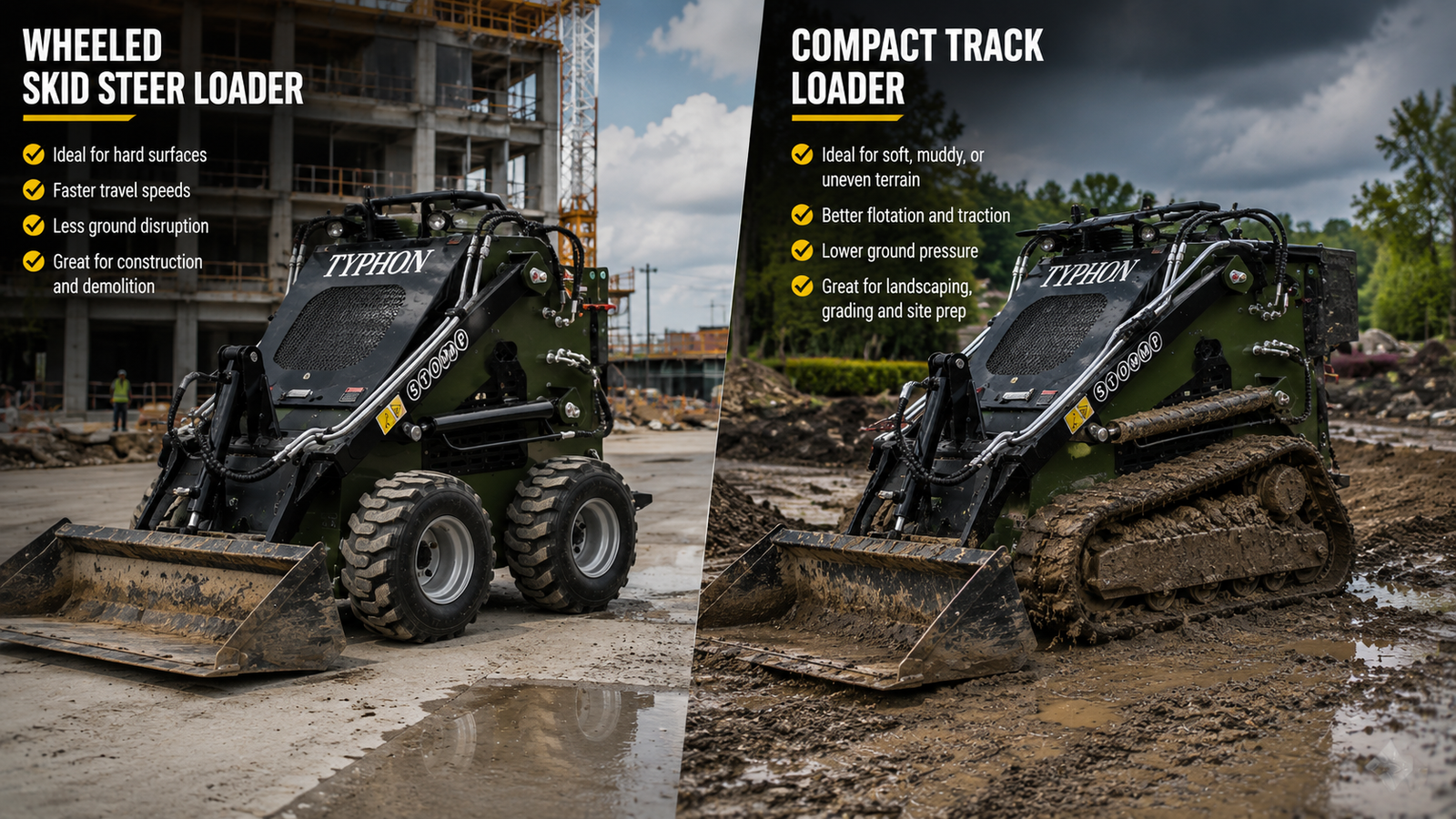
The term “compact track loader” surfaces constantly in skid steer discussions, and this is where careful buyers need to pay attention, because here the names diverge into real mechanical differences. A compact track loader, often shortened to CTL, shares the same body, the same loader arms, and the same skid steering principle as a traditional skid steer. The crucial distinction is that it rides on rubber tracks rather than four wheels.
The problem this creates is that the two are frequently grouped under the broad “skid steer” umbrella, even though they perform differently on the ground. A buyer who orders a “skid steer” expecting solid traction on soft, muddy terrain may end up with a wheeled machine that sinks and struggles, while a buyer who needs speed and low maintenance on hard pavement may overpay for tracks they do not need. The shared vocabulary masks a choice that has a direct effect on productivity and cost.
The practical guidance is to treat “compact track loader” as a specific subtype rather than a casual synonym. Tracked machines spread weight across a larger surface area, delivering lower ground pressure, better flotation, and superior traction on soft, wet, or sloped ground, which makes them favorites for landscaping and site work on delicate surfaces. Wheeled skid steers move faster on hard surfaces, cost less to buy and maintain, and excel at material handling on established sites. When you ask a dealer or rental yard whether they mean a wheeled skid steer or a compact track loader, you protect yourself from a mismatch that could undermine an entire job. With that distinction settled, the next term takes us into the world of abbreviations.
SSL and the Language of Abbreviations
Walk through equipment listings, spec sheets, or dealer catalogs, and you will run into abbreviations that compress these long names into a few letters. “SSL,” standing for skid steer loader, is among the most common, and you may also see “CTL” for compact track loader used right alongside it. These shorthand terms are a normal part of how the industry writes and catalogs equipment, especially in technical documentation and inventory systems.
The challenge for a buyer or renter is that abbreviations assume familiarity. If you do not already know that SSL means skid steer loader, an otherwise clear listing suddenly reads like code, and you may scroll past the exact machine you need or hesitate to inquire because you are unsure what you are looking at. In fast-moving rental markets where the right machine gets reserved quickly, that hesitation can mean losing access during your busiest stretch of the season.
Learning to read these abbreviations fluently turns confusion into speed. When you see SSL, you know you are looking at a skid steer loader; when you see CTL, you know the listing refers to its tracked counterpart. This fluency lets you scan inventory efficiently, compare options across dealers and rental platforms, and communicate precisely when you call to reserve or purchase. In an industry that runs on quick, confident decisions, knowing the shorthand is a small skill that pays off every time you shop for equipment. Yet no abbreviation has shaped everyday speech as powerfully as a single brand name.
“Bobcat”: When a Brand Becomes the Word
Perhaps the most widespread alternate name for a skid steer is not a technical term at all. It is a brand. On countless jobsites, in casual conversation, and even in some rental requests, people call any skid steer a “Bobcat,” regardless of who actually manufactured it. The name has become so deeply embedded in the culture of the trade that it functions almost like a generic word for the entire category.
This happens because Bobcat, as a manufacturer, became closely associated with these machines early and prominently, much the way certain brand names come to stand in for tissues, gelatin, or photocopying. The limitation is that the habit blurs an important line between a machine type and a specific company’s products. When a customer walks into a dealership or calls a rental yard asking for “a Bobcat,” they may genuinely want that brand, or they may simply mean any skid steer, and the supplier has to guess or ask.
For business owners and buyers, the lesson is to know the difference and communicate deliberately. If brand matters to you, perhaps for parts availability, dealer support, or fleet consistency, then specify the manufacturer by name and mean it. If you simply need a capable skid steer and are open to any quality brand, make that clear so you do not inadvertently limit your options or pay a premium for a name when a comparable machine would serve just as well. Speaking precisely about brand versus category ensures you get exactly what you intend, whether that is a particular make or the best available value. That precision matters even more once you cross regional and national borders.
Regional and International Naming Differences
Equipment terminology does not stay consistent as you travel, and the same machine can carry noticeably different names depending on where you are working. Within different regions of a single country, you will hear “skid steer,” “skid loader,” and “Bobcat” used in varying proportions, with some areas favoring one term so strongly that the others sound unfamiliar. Cross an international border, and the vocabulary can shift further still.
This variation becomes a genuine obstacle for businesses that operate across regions, source equipment internationally, or work with crews and suppliers who learned the trade elsewhere. A term that is perfectly clear in one market may draw a blank look in another, and specifications written with one regional vocabulary can confuse a supplier accustomed to different wording. For property developers and contractors expanding into new areas, or buyers importing machines, these mismatches can slow procurement and invite costly misunderstandings.
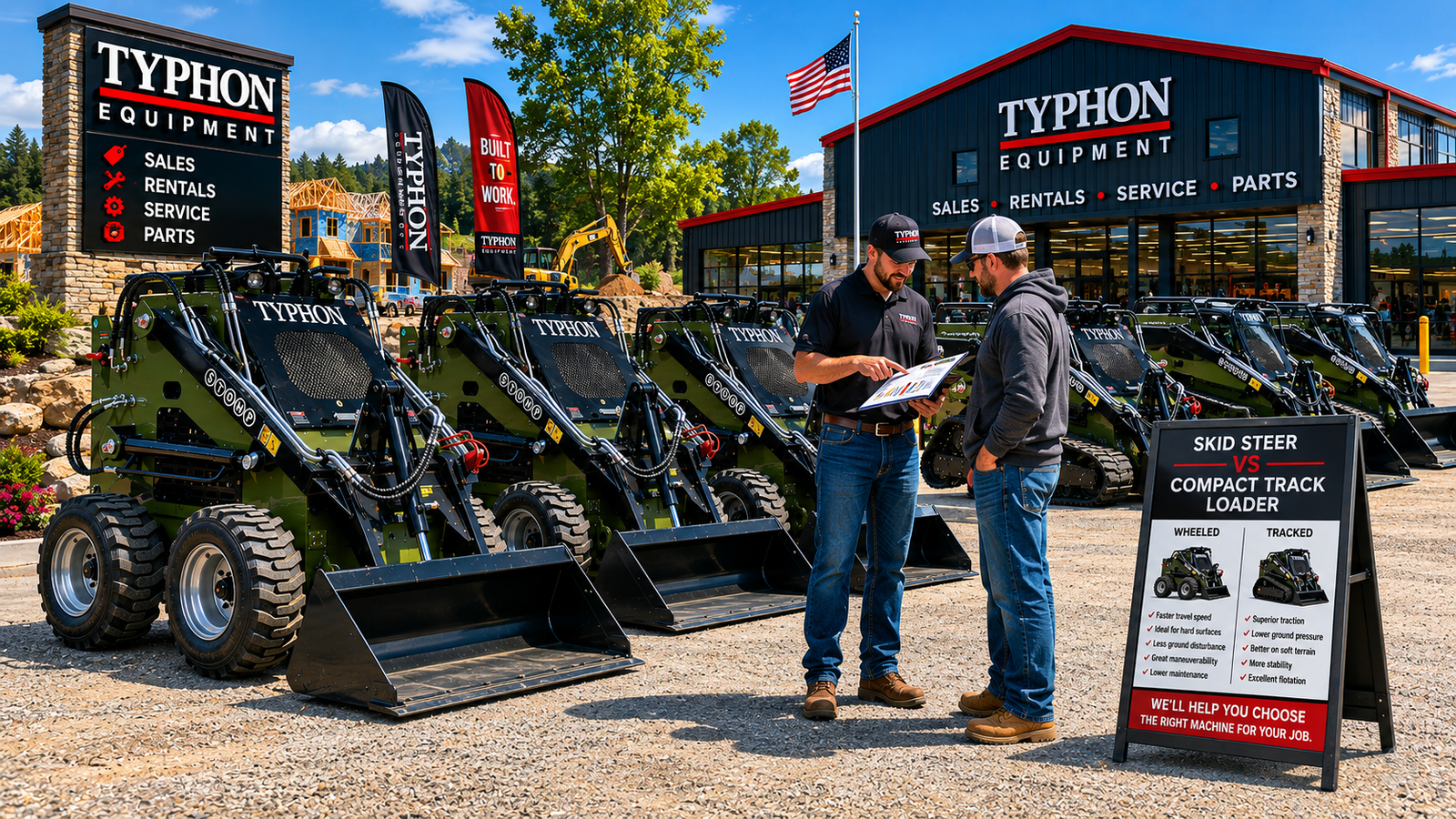
The way to navigate this is to treat terminology as something to confirm rather than assume. When you work in an unfamiliar market or deal with an international supplier, take a moment to establish which terms everyone is using and what machine those terms refer to. Describing the machine by its function and key features, such as a compact, skid-steered loader on wheels or tracks, cuts through regional vocabulary and ensures everyone pictures the same equipment. That habit of confirming rather than assuming protects your projects wherever you operate, and it points directly to the larger reason all of this terminology matters.
How Knowing the Names Helps You Navigate the Market
Beyond satisfying curiosity, fluency in skid steer terminology delivers a real, practical advantage every time you engage with the equipment market. Buying, renting, and operating these machines all depend on clear communication with dealers, rental yards, manufacturers, and crews, and that communication runs on shared vocabulary. When you and the person across the counter mean the same thing by the same words, transactions move faster and mistakes grow rare.
The risk of not knowing the names is concrete. A buyer who confuses a compact track loader with a wheeled skid steer may purchase the wrong machine for their terrain. A renter unfamiliar with abbreviations may overlook the right listing or hesitate until the machine is gone. Someone who says “Bobcat” when they mean any skid steer may receive a quote for a brand they did not intend, or fail to receive the options they hoped to compare. Each of these small misunderstandings carries a cost in time, money, or productivity.
Mastering the vocabulary turns those risks into strengths. When you can move comfortably between “skid steer,” “skid loader,” “SSL,” “compact track loader,” and the brand names people use casually, you negotiate with confidence, search inventory efficiently, specify machines precisely, and communicate clearly with everyone involved in a job. You ask the right clarifying questions, you avoid the wrong purchase, and you secure the right rental before a competitor does. In a market where the difference between the right machine and the wrong one shapes your bottom line, that command of language is a quiet but genuine competitive edge.
Conclusion
The short answer to what another name for a skid steer is depends on the nuance you need. “Skid loader” is a true synonym, “SSL” is its common abbreviation, and “Bobcat” is a brand name that has slipped into everyday use as shorthand for the whole category. “Compact track loader,” by contrast, refers to a close relative riding on tracks rather than wheels, a distinction that genuinely affects performance and cost. Layer in regional and international naming differences, and it becomes clear that knowing this vocabulary is far from trivial, it is essential to communicating accurately in the trade.
For contractors, landscapers, construction business owners, property developers, equipment buyers, and anyone learning the terminology, the next step is to put this clarity to work. When you shop or rent, confirm whether a listing means wheels or tracks, specify brand only when it truly matters, and describe the machine by function whenever vocabulary varies by region or supplier. Master these names, and you will navigate the market faster, avoid costly mismatches, and make every equipment decision with confidence and precision.