SkidSteer Loaders
-
Rated 0 out of 5Sale!DISCOVER MORE$19,999.00Original price was: $19,999.00.$14,999.00Current price is: $14,999.00. -
Rated 0 out of 5Sale!DISCOVER MORE$6,999.00Original price was: $6,999.00.$5,499.00Current price is: $5,499.00. -
Rated 0 out of 5Sale!DISCOVER MORE$9,199.00Original price was: $9,199.00.$7,999.00Current price is: $7,999.00. -
Rated 0 out of 5Sale!DISCOVER MORE$7,198.00Original price was: $7,198.00.$0.00Current price is: $0.00. -
Rated 0 out of 5Sale!DISCOVER MORE$6,999.00Original price was: $6,999.00.$5,699.00Current price is: $5,699.00. -
Rated 0 out of 5Sale!DISCOVER MORE$9,199.00Original price was: $9,199.00.$6,699.00Current price is: $6,699.00. -
Rated 0 out of 5Sale!DISCOVER MORE$9,399.00Original price was: $9,399.00.$7,999.00Current price is: $7,999.00. -
Rated 0 out of 5Sale!DISCOVER MORE$9,399.00Original price was: $9,399.00.$8,399.00Current price is: $8,399.00.
What is a Skid Steer?
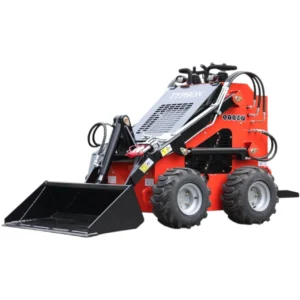
A skid steer is undeniably the most versatile piece of construction machinery available on the market today. Originally invented for agricultural use, these compact units have evolved into the primary multi-tool for modern construction, landscaping, and municipal maintenance. Whether you are navigating tight residential garden gates or tackling massive commercial foundation backfills, these machines deliver an unmatched power-to-weight ratio.
Unlike traditional heavy machinery that relies on articulated steering, a mini skid steer features a rigid, immovable frame. The steering is accomplished by operating the left and right wheel arms independently—causing the machine to "skid" across the ground. This provides a zero-turn radius, allowing the operator to spin the entire machine within its own footprint. This maneuverability makes it the only heavy equipment capable of operating efficiently in extremely narrow spaces, alleyways, and even indoors.
However, a skid steer is only as good as the iron inside it. To withstand the brutal demands of daily commercial use, our models rely on globally recognized components. From Japanese diesel engines to premium European hydraulics, investing in our compact loaders ensures you have the relentless power needed to execute drilling, digging, grabbing, and rock-breaking operations without experiencing catastrophic downtime.
Premium Components & Engineering
We do not cut corners on the drivetrain. Our compact models are built with world-class components to withstand intensive construction projects.
Kubota D1105 Diesel Engine
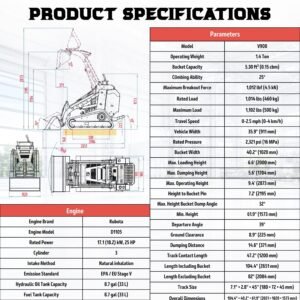
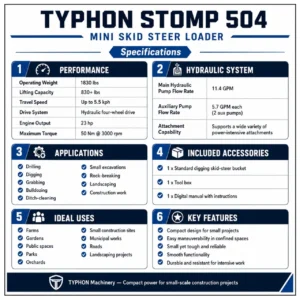
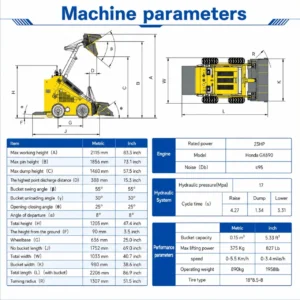
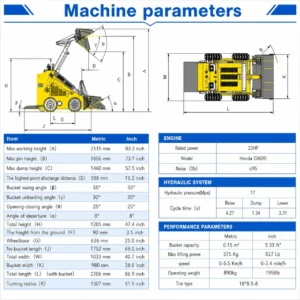
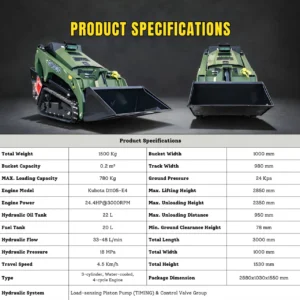
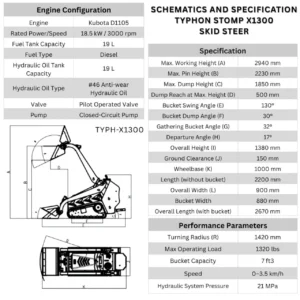
Powered by an EPA-certified Japanese Kubota engine. This vertical, water-cooled, 4-cycle, 3-cylinder indirect injection beast produces 25 HP at 3000 RPM (19 HP at 2200 RPM), guaranteeing smooth, relentless power under extreme loads.
Italian HANSA Hydraulics
Equipped with a premium HANSA closed-loop hydraulic system, paired with a high-efficiency Taifeng plunger pump and an IMPRO motor, delivering flawless attachment operation and extreme pushing power.
Lufthansa Joystick Control
Experience absolute precision. Operation is carried out via a mixture of pilot and mechanical control. The left pilot control handle manages the fluid overall movement of the machine, while the right mechanical handle operates the heavy lifting arm.
Operator Comfort & Safety
Work longer shifts with significantly less fatigue. The operator's position is equipped with high-density foam padding, while the machine hood is fitted with gas spring struts to brace for heavy impacts and absorb brutal job site vibrations.
Real-World Industry Applications
Specially engineered for small construction projects, ensuring easy maneuverability across farms, gardens, public spaces, and parks.
Construction Engineering
Designed for heavy waste cleaning, building materials handling, small excavations, and adapting perfectly to extremely narrow space operations where traditional backhoes cannot fit.
Road Maintenance
Equipped with attachments like cold planers and sweepers, it executes fast road maintenance, rock-breaking, and line marking operations to drastically improve municipal maintenance efficiency.
Airport Management
Highly compact and driven on wheels (unlike tracked bulldozers), it can be deployed quickly on delicate tarmac for runway maintenance and equipment assistance, ensuring smooth airport operations.
Landscaping & Agriculture
Ideal for tree pruning, lawn maintenance, ditch-cleaning, bull-dozing topsoil, and creating beautiful landscapes in confined public parks or dense agricultural orchards.
Unlocking Value Through Versatility
A skid steer is fundamentally just a highly mobile hydraulic power unit. Its true return on investment (ROI) is unlocked through its attachments. The Italian HANSA closed-loop hydraulic system provides the immense auxiliary flow required to run the most demanding tools in the industry.
- Standard & Grapple Buckets: Uses a hydraulic arm to lift and lower a large bucket at the front to scoop up, load, carry, and dump a wide range of materials, such as soil, rock, sand, and demolition debris.
- Hydraulic Breakers: Transforms the machine into a mobile jackhammer, delivering thousands of pounds of impact energy to shatter concrete driveways, rock shelves, and old foundations.
- Earth Augers: Planetary drive motors that spin massive drill bits deep into the ground. Absolutely essential for rapid installation of fencing posts, deck footings, and mass tree planting in landscaping.
- Trenchers: Replaces dedicated walk-behind trenchers, allowing the operator to slice through hardpan and clay to lay underground utilities, irrigation lines, and fiber optics rapidly.
- Cold Planers: Used heavily in road maintenance, these grinding attachments mill away top layers of damaged asphalt so new material can be laid flush with the existing roadway.
Fleet Decisions: When to Choose a Skid Steer
| Equipment Type | Primary Advantage | Bottom-Line Impact (ROI) |
|---|---|---|
| Wheeled Skid Steer | Extreme maneuverability on hard surfaces (concrete/asphalt) and highly versatile attachment capabilities. | Lower initial purchase price and drastically lower maintenance costs compared to tracked machinery. Ideal for roadwork and demolition. |
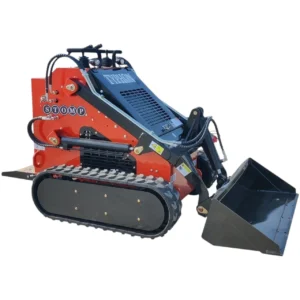
| Compact Track Loader (CTL) | Low ground pressure and extreme pushing power in deep mud, snow, and soft sand. | Prevents the machine from getting stuck on wet job sites, eliminating weather delays. However, track replacement costs are very high. |
| Mini Excavator | 360-degree rotation and deep vertical trenching below the tracks. | Unmatched for surgical digging and utility work without disturbing the surrounding landscape, but poor at transporting loose material across a site. |
| Compact Wheel Loader | Articulated steering and massive bucket capacities. | Moves huge volumes of aggregate and mulch much faster than a skid steer, but lacks the zero-turn capability needed for tight residential spaces. |
The Ultimate Skid Steer Buying Guide
1. Assess Your True Working Environment
The first rule of heavy equipment purchasing is matching the iron to the ground it drives on. If your site is constantly deep in liquid mud, a wheeled skid steer will spin its tires and sink. In those scenarios, you must use a Compact Track Loader (CTL). However, if you are operating on a firm base, crushed stone, asphalt, or concrete, a wheeled skid steer is vastly superior. Wheels produce less friction, meaning faster travel speeds, lower fuel consumption, and drastically cheaper tire replacement costs compared to buying heavy rubber tracks.
2. Radial vs. Vertical Lift Geometry
You must select the correct lifting arm geometry for your business. A Radial Lift machine swings the bucket upward in an arc. This geometry provides maximum digging and prying power at ground level, making it the perfect choice for excavating, grading, and heavy earthmoving. A Vertical Lift machine uses complex linkages to raise the bucket straight up. This keeps the load closer to the machine, making it superior for safely loading high-sided dump trucks and lifting heavy pallets of block.
3. Standard Flow vs. High Flow Hydraulics
If you only plan to use a standard dirt bucket or pallet forks, standard hydraulic flow (usually 15-25 GPM) is perfectly adequate. However, if your business model involves running high-demand attachments like large forestry mulchers, cold planers, or massive snow blowers, you must invest in a machine with a High Flow hydraulic system. Attempting to run a high-flow attachment on a standard-flow machine will result in sluggish performance and severe overheating of the hydraulic pump.
Check MoreFrequently Asked Questions
Expert answers to your most critical equipment inquiries.
What engine is used in this skid steer?
This compact skid steer is powered by an EPA-certified Japanese Kubota D1105. It is a vertical, water-cooled, 4-cycle diesel engine with 3-cylinder indirect injection, producing 25 HP at 3000 RPM (and 19 HP at 2200 RPM) for smooth, relentless power.
What hydraulic system does the skid steer use?
It utilizes a premium Italian HANSA closed-loop hydraulic system paired with a Taifeng plunger pump and an IMPRO motor. This configuration is specifically designed to withstand intensive, non-stop construction projects without sacrificing lifting or pushing performance.
How is the skid steer controlled?
Operation relies on a highly responsive Lufthansa joystick system utilizing a mix of pilot and mechanical control. The left pilot control handle manages the fluid driving movement of the machine, while the right mechanical control handle operates the heavy lifting arm.
What is a skid steer primarily used for?
It is a highly versatile material handler used for drilling, digging, grabbing, bull-dozing, ditch-cleaning, small excavations, and rock-breaking. Unlike tracked bulldozers, it is driven on wheels, allowing for a zero-turn radius in narrow residential and municipal spaces.
Is the skid steer comfortable for long shifts?
Yes. The operator’s position is equipped with high-density foam padding for added comfort. Furthermore, the machine hood is fitted with gas spring struts, which help the machine absorb heavy impacts and job site vibrations, significantly reducing operator fatigue.
What is the difference between a Skid Steer and a Track Loader?
A skid steer uses four heavy-duty pneumatic or solid tires, making it faster and much cheaper to maintain on hard surfaces like asphalt and concrete. A Compact Track Loader (CTL) uses heavy rubber tracks to distribute weight, making it essential for deep mud and snow, but far more expensive to operate.
Do I need a CDL to transport a skid steer?
Because of their compact size and lower operating weight compared to full-sized excavators, most skid steers can be safely towed behind a heavy-duty pickup truck (like a 3/4 ton or 1-ton truck) using a standard equipment trailer without requiring a Commercial Driver's License (CDL), provided you remain under your state's combined weight rating limits.
Find Your Perfect Skid Steer Today
Don't let undersized or unreliable equipment delay your contracts. Browse our inventory of premium, Kubota-powered earthmovers and dominate your next project.