Currently Empty: $0.00
Why Two Skid Steers With Similar Hydraulic Pressure Can Have Different Performance
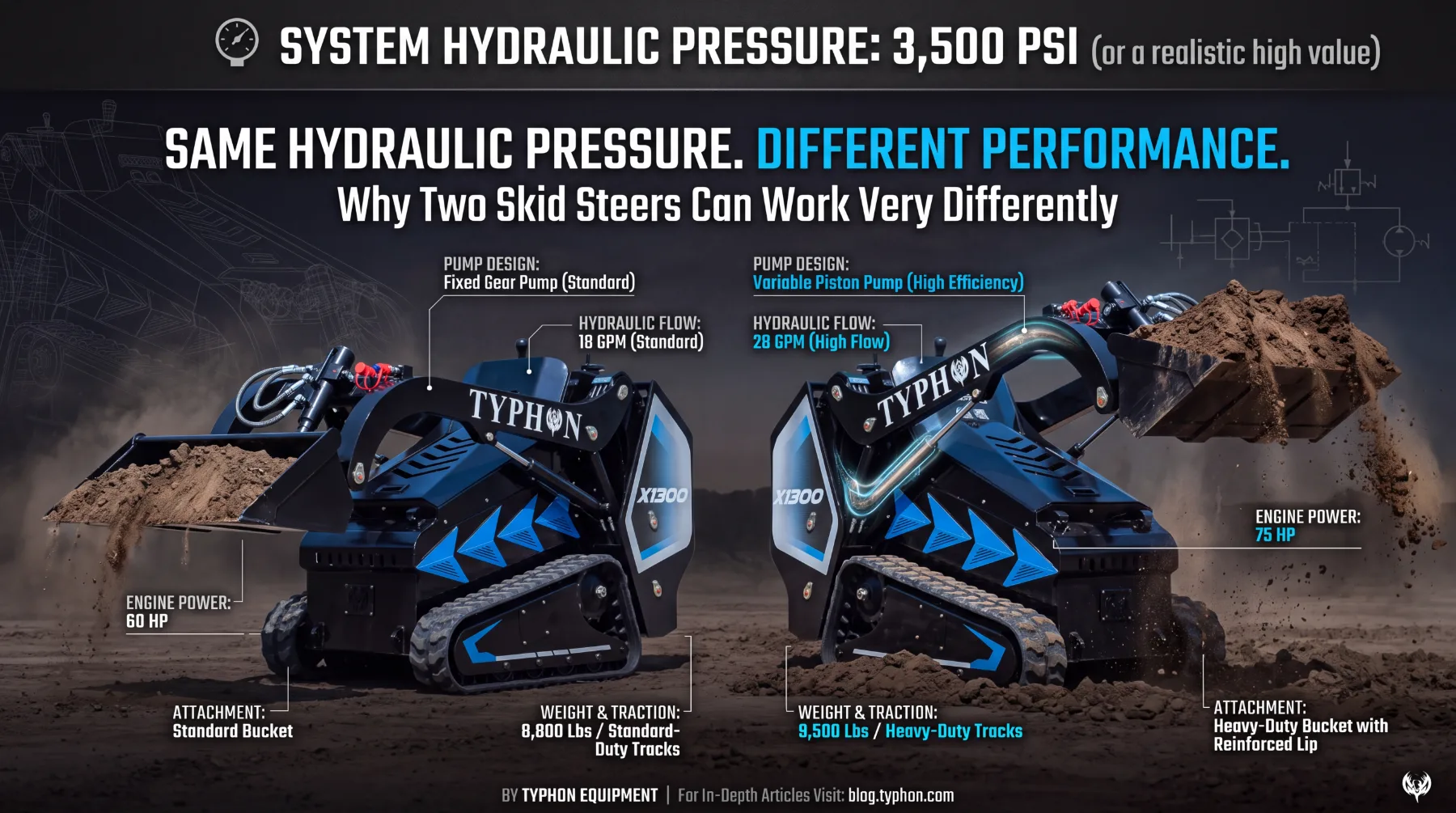
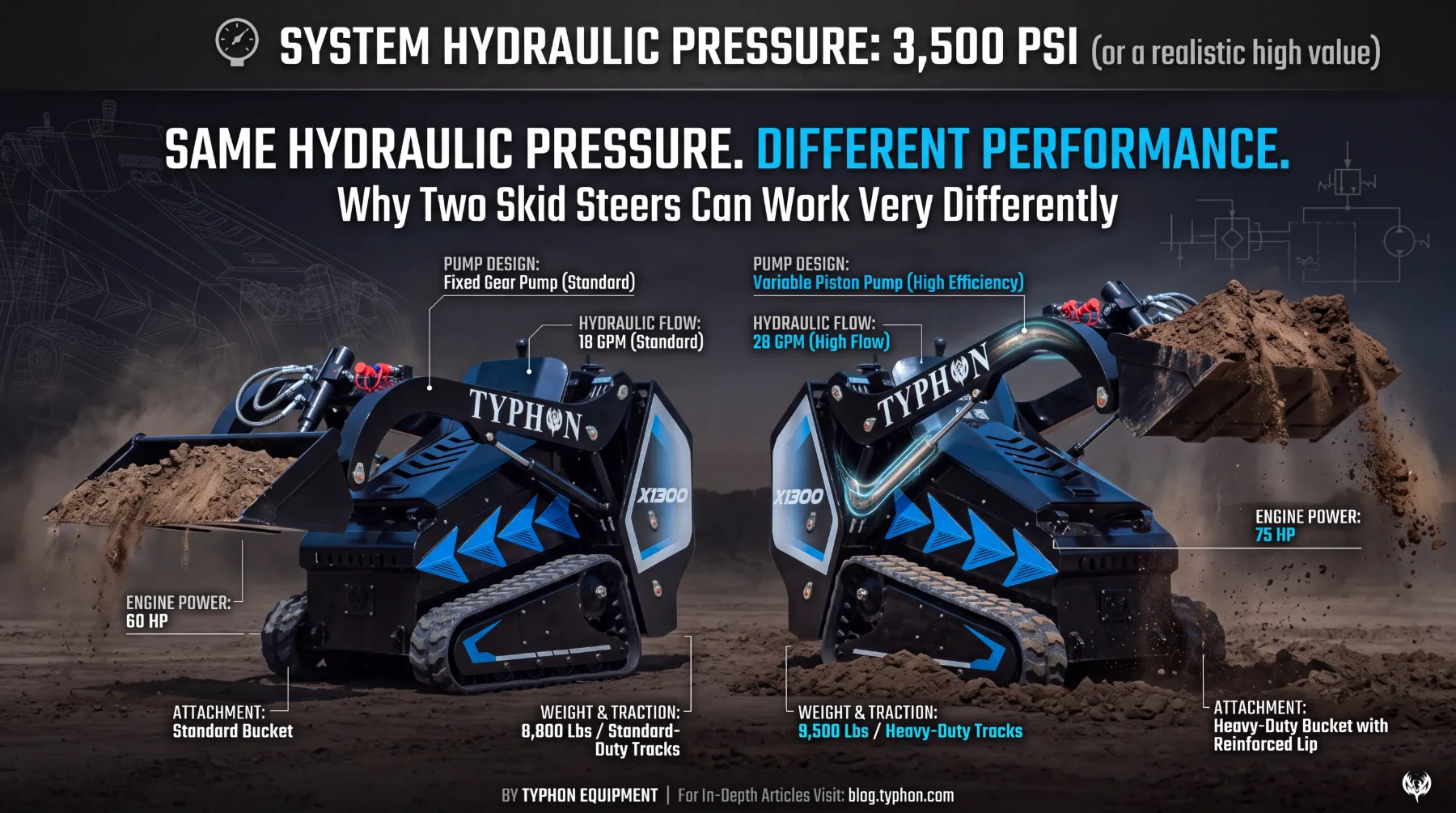 Hydraulic pressure is one of the first numbers buyers look at when comparing skid steers, and it's easy to assume that two machines with matching pressure ratings will perform the same way. In practice, that assumption often falls apart on the jobsite. You might run identical attachments on two skid steers with the same pressure spec and watch one work faster, dig harder, and hold up better under load than the other. Pressure tells only part of the story, because a skid steer's real performance comes from how several systems work together. Flow rate, engine power, pump design, machine weight, traction, and attachment all shape what the machine can actually accomplish. This post breaks down five reasons two skid steers with similar hydraulic pressure can deliver very different results, so you can look past the headline number and choose a machine that truly fits your work.
Hydraulic Flow Makes a Difference
Pressure and flow are two different measurements, and confusing them is one of the most common reasons buyers end up disappointed with a machine's performance. Pressure, measured in psi or MPa, describes the force the hydraulic system can apply. Flow, measured in gallons per minute or liters per minute, describes how much fluid the system moves over time. Two skid steers can share an identical pressure rating yet deliver very different flow rates, and that difference shows up clearly the moment you put an attachment to work. Flow is what determines how fast a hydraulic attachment operates. Higher flow sends more fluid to the attachment's motor or cylinders, which means faster cycle times and more work completed in less time. A skid steer with strong flow will run a cold planer, a mulcher, or an auger noticeably quicker than a machine with the same pressure but lower flow. For attachments that depend on speed and continuous motion, flow often matters more than pressure alone. Here's how flow shapes attachment performance:
- Working speed – higher flow spins motors and cycles cylinders faster, boosting productivity.
- Sustained output – strong flow keeps high-demand attachments running at full capability.
- Attachment range – ample flow opens the door to demanding tools that lower-flow machines can't run effectively.
When comparing skid steers, look at both pressure and flow together. A machine with generous flow delivers more usable hydraulic power to the attachment, and that translates directly into faster, more capable performance in the field.
Engine Power Supports the Hydraulics
 Hydraulic pressure describes what the system can deliver at a given moment, but it says nothing about whether the engine can sustain that output under real working conditions. The engine is the source of all hydraulic power, driving the pump that pressurizes the fluid running through the machine. When two skid steers share a pressure rating but carry different engines, the one with the stronger, better-matched engine will almost always hold its performance better when the work gets demanding. The difference becomes obvious under heavy load. Digging into packed material, running a high-demand attachment, or combining several functions at once all draw heavily on engine power. A skid steer with an underpowered engine may hit its pressure rating on paper but struggle to maintain it when the workload climbs, causing the machine to slow down or bog. A stronger engine keeps the hydraulic system supplied with steady power, so the machine sustains its output instead of losing momentum when you need it most. This is why engine capability deserves close attention alongside hydraulic specs. An engine sized to support the hydraulic system comfortably handles peak demands without straining, which keeps performance consistent through long shifts and tough tasks. It also protects the machine over time, since an engine constantly pushed to its limit wears faster and runs less efficiently. When you compare skid steers, consider how much power the engine can actually deliver to the hydraulics, not just the pressure the system is rated to reach. A well-matched engine is what turns a pressure figure on a spec sheet into dependable, sustained performance on the job.
Hydraulic Pump Capacity Matters
Between the engine and the attachment sits the hydraulic pump, and its design has a major say in how well a skid steer performs. The pump converts the engine's mechanical power into hydraulic energy, and not all pumps do this with equal efficiency. Two machines can carry the same pressure rating yet use pumps of different types, sizes, and displacement, which means they convert engine power into hydraulic output in noticeably different ways. This is one of the less visible reasons similar-spec skid steers can perform so differently. Pump displacement, the volume of fluid the pump moves per cycle, directly affects flow and overall hydraulic capability. A pump with greater displacement can deliver more fluid to the system, supporting higher flow and stronger performance without necessarily changing the pressure rating. Pump design matters too. A well-engineered pump maintains steady, efficient output across a wide range of demands, while a less capable pump may lose efficiency under heavy load or struggle to keep multiple functions supplied at once. Efficiency is the key word here. A high-quality pump wastes less energy as it converts engine power into hydraulic power, meaning more of the engine's effort reaches the attachment and the drive system. That efficiency shows up as smoother operation, better response, and more usable power at the same pressure rating. A less efficient pump squanders some of the engine's output as heat and internal losses, leaving the machine feeling weaker even when the numbers look similar. When you're weighing two skid steers, the pump is worth understanding, because it's the component that determines how effectively raw engine power becomes the hydraulic performance you actually feel in the machine.
Weight and Traction Affect Performance
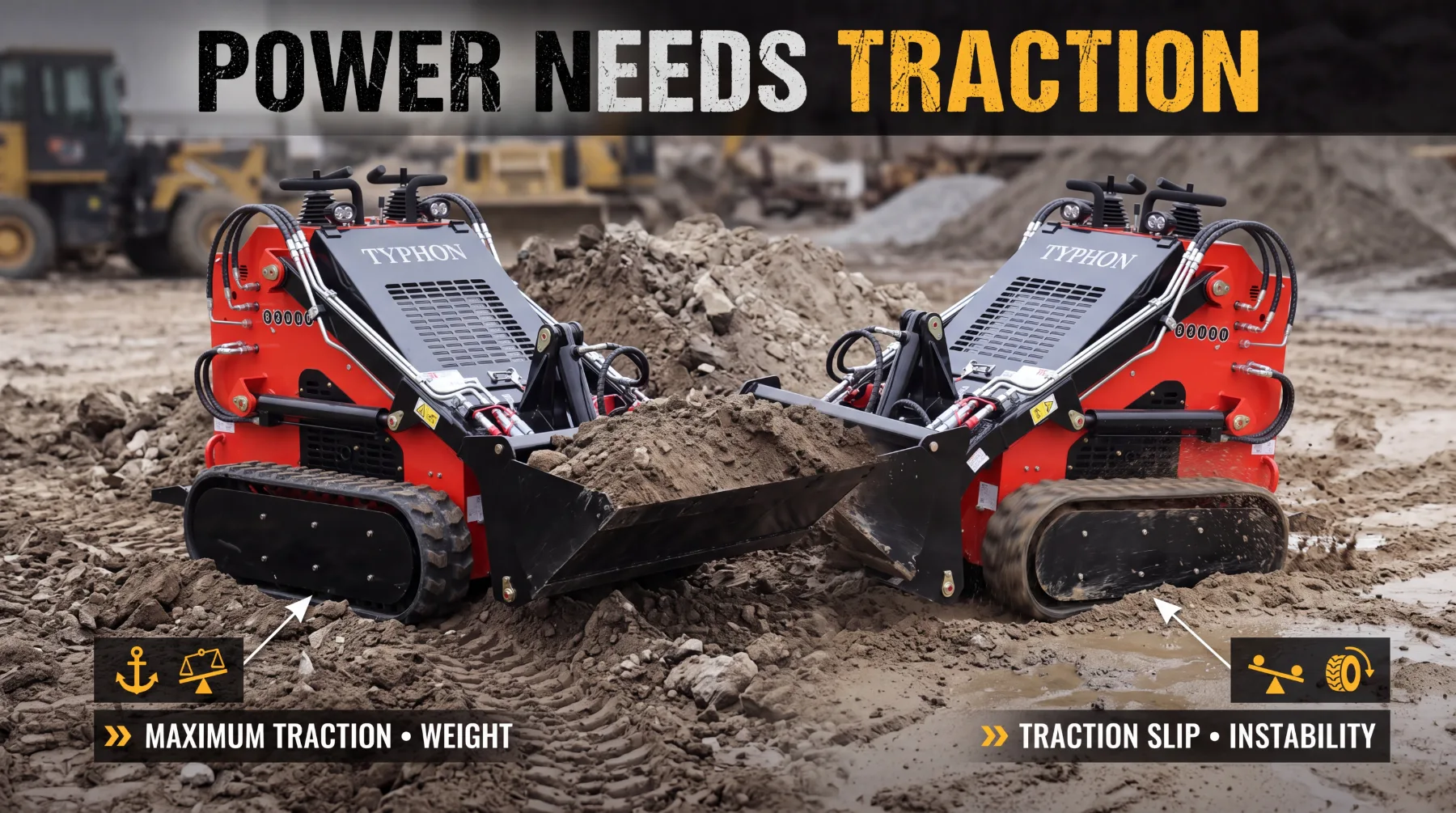
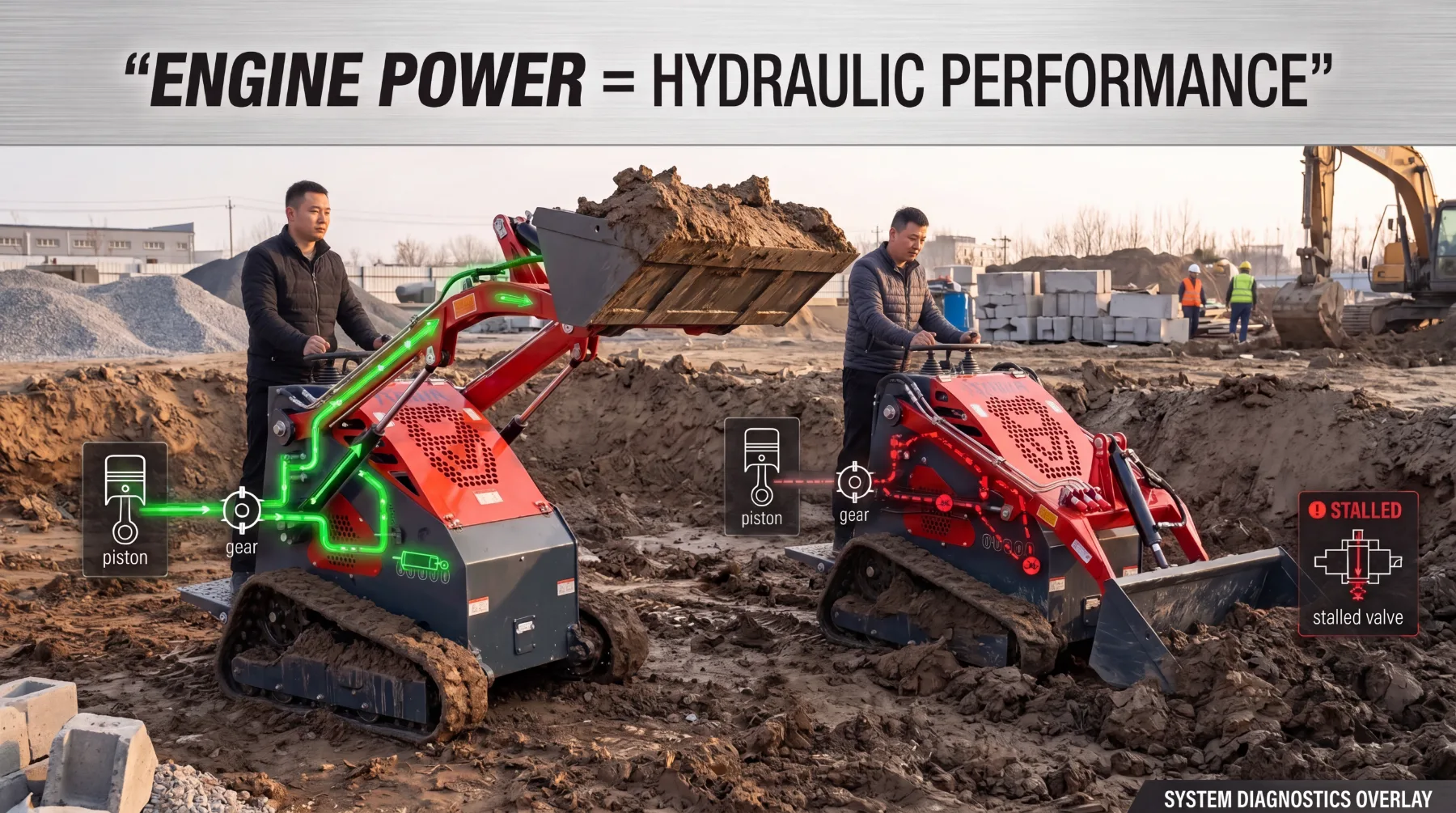 A skid steer can generate impressive hydraulic and engine power, but that power only matters if the machine can put it to work against the ground. Operating weight, traction, and weight distribution all determine how effectively a skid steer transfers its power into productive force. Two machines with matching hydraulic pressure can perform very differently simply because one is better built to stay planted and push, lift, or dig without slipping or tipping. Operating weight plays a central role in stability and pushing power. A heavier machine can generate more downward force, which helps it dig, grade, and drive attachments into material without losing grip. Traction determines how much of that force actually reaches the ground. A skid steer on well-designed tracks or quality tires holds its footing on loose, wet, or uneven surfaces, while a machine with poor traction spins and stalls no matter how strong its hydraulics are. Several factors influence how well a skid steer transfers power:
- Operating weight – heavier machines apply more force and stay more stable under load.
- Traction – tracks or tires with good grip keep power connected to the ground.
- Weight distribution – balanced weight improves stability, lift capacity, and control.
Weight distribution ties it all together. A machine balanced properly across its frame lifts more confidently, resists tipping, and maintains steady contact with the ground during demanding work. Without that balance, even a powerful skid steer can feel unstable and struggle to use its full capability. This is why identical pressure ratings tell you so little on their own. A skid steer built with the right weight, traction, and balance converts its hydraulic and engine power into real, usable work, while a machine lacking these qualities leaves much of that power wasted.
Attachment Compatibility Changes Results
The same skid steer, running at the same hydraulic pressure, can deliver wildly different results depending on the attachment mounted to it. Every hydraulic attachment has its own flow and power requirements, and performance depends on how well the machine's output matches what the attachment actually needs. A pressure rating alone can't tell you whether a given attachment will run at its best, which is why matching the skid steer to the attachment is essential for getting dependable results. Attachments fall into different demand categories. Some, like standard buckets, place light hydraulic demands on the machine. Others, such as mulchers, cold planers, snow blowers, and stump grinders, require high, sustained flow to reach their full working speed and force. Run a high-flow attachment on a machine that can't supply enough flow, and it will operate slowly and inefficiently even if the pressure rating looks adequate. Match that same attachment to a skid steer with the right flow and power, and it performs exactly as intended. Getting the pairing right protects both productivity and equipment. An attachment starved of flow works poorly and can strain the hydraulic system, while an attachment matched to a capable machine runs smoothly and lasts longer. Before pairing a tool with a skid steer, check the attachment's flow and pressure requirements against the machine's rated output, and confirm the two align across the range of work you plan to do. This is often the difference between a machine that feels underwhelming and one that performs beyond expectations. Rather than trusting pressure ratings in isolation, match the skid steer to the specific attachments you rely on, and you'll unlock the full performance the equipment is capable of delivering.
Conclusion
Hydraulic pressure is a useful specification, but it's only one piece of a much larger picture. Two skid steers with identical pressure ratings can perform very differently because flow rate, engine power, pump design, machine weight, traction, and attachment matching all shape what a machine can actually do. Flow determines attachment speed, the engine sustains performance under load, the pump governs how efficiently power converts to hydraulic output, and weight and traction decide how much of that power reaches the ground. On top of it all, the right attachment pairing turns a machine's rated output into real results. When you compare skid steers, look past the headline pressure number and consider how these systems work together. That fuller understanding is what helps you choose a machine that delivers dependable, capable performance on the jobs you count on it for.
Frequently Asked Questions
1. What's the difference between hydraulic pressure and hydraulic flow? Pressure and flow measure two different things. Pressure, given in psi or MPa, describes the force the hydraulic system can apply. Flow, measured in gallons or liters per minute, describes how much fluid the system moves over time. Pressure determines how hard the machine can push or dig, while flow determines how fast an attachment operates. Two skid steers can share the same pressure rating yet deliver different flow rates, which is why one may run an attachment noticeably faster than the other. For the fullest picture of hydraulic capability, always look at both figures together rather than pressure alone. 2. Why does engine power matter if two skid steers have the same hydraulic pressure? The engine is the source of all hydraulic power, driving the pump that pressurizes the system. A pressure rating shows what the system can reach, but not whether the engine can sustain that output under heavy load. A stronger, well-matched engine keeps the hydraulics supplied with steady power during demanding tasks, so the machine holds its performance instead of bogging down. An underpowered engine may hit its pressure rating on paper but struggle to maintain it in real work. That's why engine capability is just as important as the hydraulic spec itself. 3. How does the hydraulic pump affect performance? The pump converts the engine's mechanical power into hydraulic energy, and its design and displacement determine how efficiently that conversion happens. A pump with greater displacement can move more fluid, supporting higher flow and stronger performance even at the same pressure rating. A well-engineered pump also maintains steady, efficient output under heavy load, while a less capable pump loses efficiency and wastes energy as heat. Because of this, two machines with matching pressure can feel very different depending on the quality and capacity of their pumps. 4. Why do weight and traction change how a skid steer performs? Power only matters if the machine can apply it against the ground. Operating weight, traction, and weight distribution determine how effectively a skid steer transfers its hydraulic and engine power into productive force. A heavier machine applies more pushing and digging force and stays more stable, while good traction from quality tracks or tires keeps that force connected to the ground on loose or uneven surfaces. Balanced weight distribution improves lift capacity and control. Without these qualities, even a powerful machine wastes much of its capability. 5. How do I match an attachment to my skid steer? Start by checking the attachment's flow and pressure requirements, then compare them against your skid steer's rated hydraulic output. Light-demand attachments like buckets run on almost any machine, but high-flow tools such as mulchers, cold planers, and stump grinders need enough sustained flow to work properly. Running a high-flow attachment on a machine that can't supply it leads to slow, inefficient operation and added strain on the hydraulic system. Confirming that the machine's output aligns with the attachment across your typical work ensures you get the full performance both are capable of delivering.