Currently Empty: $0.00
Is the TYPHON TERROR X2 Compact Mini Excavator Reliable for Daily Work?
A small utility crew lands a steady run of water-line and trenching contracts across town, and the owner needs a machine that earns its keep every morning without drama. Renting was eating the margin, and the bigger-brand machines carried price tags that didn't pencil out for an operation this size. So he puts a TYPHON TERROR X2 on the trailer instead, a 2.7-ton compact mini excavator with a Kubota diesel, half-expecting to spend more time nursing it than running it. Three months and dozens of trenches later, the machine has started cold every day, dug clean through clay and pack, and stayed out of the shop. That's the real question every contractor asks before buying: not whether a machine looks good on paper, but whether it holds up shift after shift when real work depends on it.
Reliability for daily use comes down to a handful of things that actually matter once you're on site. The engine that powers it, how cleanly it digs, the range of work it can handle, whether it survives hard and repetitive use, how comfortably it runs an operator through a full shift, and what it actually costs to own over time. This post walks through each one for the TERROR X2, grounded in the kind of trenching, utility, and compact job-site work this class of machine faces every day. The goal is an honest answer to whether it earns a permanent spot on a working crew.
A working machine earns its place by delivering dependable results when the schedule is tight and every hour counts. For contractors, that means having equipment that can handle repeated digging, lifting, and site preparation tasks without constant interruptions. A reliable compact excavator helps crews maintain steady production, take on more projects, and build confidence that their equipment will perform whenever the job demands it.
The Kubota V1505 Diesel Engine
Dependability starts under the hood, and the TERROR X2 runs a Kubota V1505 diesel, which is a genuine advantage for a machine at this price. Kubota engines have built a strong reputation across the equipment industry for torque, fuel efficiency, and long service life, and that track record is exactly what daily digging demands. When a machine has to fire up cold every morning and pull hard all day through heavy soil and compacted fill, a proven powerplant keeps downtime low and confidence high.
EPA certification matters here for two reasons. First, it confirms the engine meets current emissions standards, which keeps the machine legal on job sites that check. Second, it signals that the engine design meets a standard that looser options don't, which matters to a contractor running a machine hard week after week. Beyond compliance, the diesel supplies the steady muscle that trenching and utility work lean on, pulling through packed ground and driving hydraulic attachments without straining the system. Parts and service for Kubota engines are widely available across the country, so a mechanic isn't hunting for obscure components when routine maintenance comes due. For a contractor weighing reliability above everything else, that familiar, well-supported powerplant is one of the strongest marks in this machine's favor.
Dig Performance for Trenching and Utility Work
Digging is where a mini excavator either proves itself or falls short, and a 2.7-ton machine sits in a practical sweet spot for the utility and trenching work small crews handle day to day. The TERROR X2 carries enough weight and hydraulic power to cut clean trenches for water lines, drainage, and electrical runs, yet stays compact enough to work in spots a full-size machine can't squeeze into. That balance matters more than raw weight on most small utility and site jobs, where access is often as much of a challenge as the dig itself.
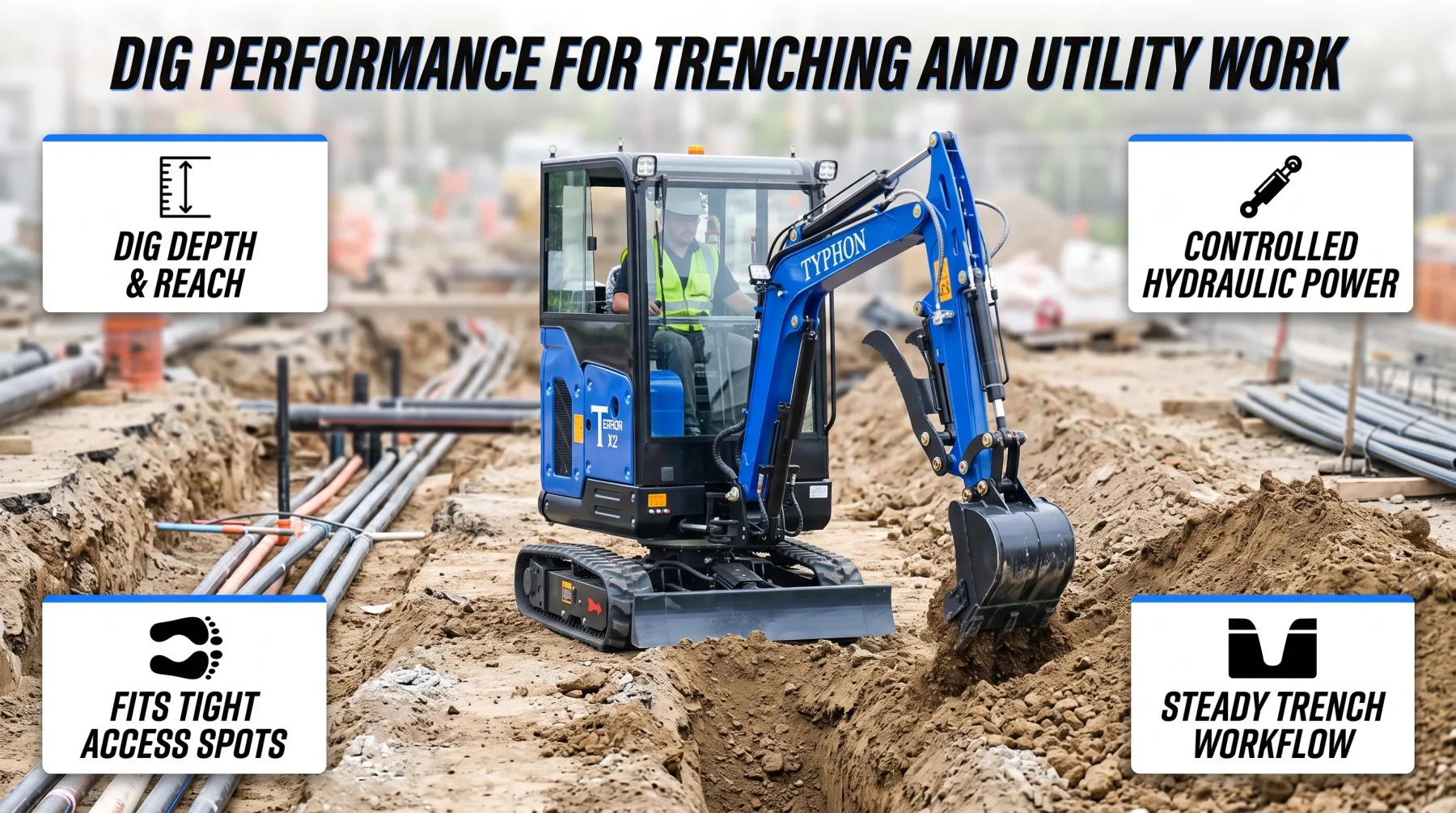
Dig depth and reach on a machine this size covers the bulk of everyday excavation needs, from footings and utility trenches to grading around a foundation or opening up a slope for drainage. Controlled hydraulics let an experienced operator place spoil cleanly to the side and work around obstacles without repositioning the machine every few feet, which keeps a trench moving efficiently from start to finish. On a typical eight-hour day, that fluid workflow adds up to real yardage. Matching the machine's dig envelope to the work you run most keeps expectations grounded, so confirming a 2.7-ton unit fits the jobs on your schedule before you commit is a smart first move. For steady trenching and utility work, the TERROR X2 covers daily demand without struggling.
Attachment Versatility
One machine that handles multiple tasks beats owning a yard full of single-purpose tools, and the TERROR X2 accepts a range of attachments that meaningfully widen its daily usefulness. Swap the digging bucket for a hydraulic thumb and it grabs pipe, rock, and irregular debris with control. Add an auger and it drills post holes for fencing, decks, and lighting. Fit a grading blade and it pushes and levels spoil efficiently after a trench run. That flexibility keeps the machine earning across a wider slice of the work a small crew takes on.
Versatility only pays off, though, when the attachment actually matches the machine's hydraulic flow and lift capacity. Running a demanding tool on an underpowered excavator bogs it down, overheats the hydraulics, and wears it out faster than it should. Confirming that each attachment suits the machine protects both performance and working life. Thinking through how much of your typical daily work a single TERROR X2 can already cover helps you assess whether one purchase replaces several rental calls. For a crew handling varied jobs across the week, that adaptability turns one well-matched machine into a tool that grows with the business.
The ability to switch between attachments also reduces downtime and improves job scheduling for smaller crews. Instead of bringing multiple machines to every project, operators can configure the TERROR X2 around the task at hand and keep moving from one phase of work to the next. This makes the excavator a more practical long-term investment, especially for contractors who handle changing job requirements and need equipment that can adapt without adding unnecessary costs.
Daily Durability and Maintenance
Surviving rough, repeated use without constant repair is the core of the reliability question. A machine that breaks down weekly costs far more than its sticker price ever suggested, once you factor in lost billable hours, rental replacements, and emergency service calls. Durability on a compact excavator comes down to solid track construction, a sturdy undercarriage, protected hydraulic lines, and a build that shrugs off the daily knocks of job-site work without cracking open.
Routine upkeep protects that durability more than any spec sheet ever will. Staying current on fluid levels, greasing the pins and bushings on schedule, clearing packed debris from the tracks and undercarriage, and following a steady maintenance routine keeps the hydraulics, engine, and moving parts working shift after shift across a long season. A common mistake worth avoiding: skipping daily greasing and undercarriage checks to save ten minutes in the morning. That shortcut quietly accelerates wear on the exact pins, bushings, and track components that are expensive and time-consuming to replace. Treat the machine the way it deserves and a well-built 2.7-ton excavator returns years of dependable service. Neglect the basics and any machine, regardless of brand or build quality, deteriorates faster than it should.
There's also a smarter habit most contractors overlook: keep a simple maintenance log. Record every fluid check, grease interval, and service date. That record helps you spot patterns before they become failures, and it protects the machine's value if you decide to sell or trade later.
Operator Comfort and Daily Usability
Comfort shapes reliability in ways that most buyers don't fully appreciate until they've run a rough machine through a long week. A worn-out, stiff, or frustrated operator makes more mistakes, works more slowly, and pushes the machine harder than the task requires. A machine that's genuinely easy to run keeps a crew productive from the first trench of the morning to the last one before quitting time, so the seat position, control feel, cab ergonomics, and forward visibility all factor into whether the TERROR X2 works as a daily workhorse.
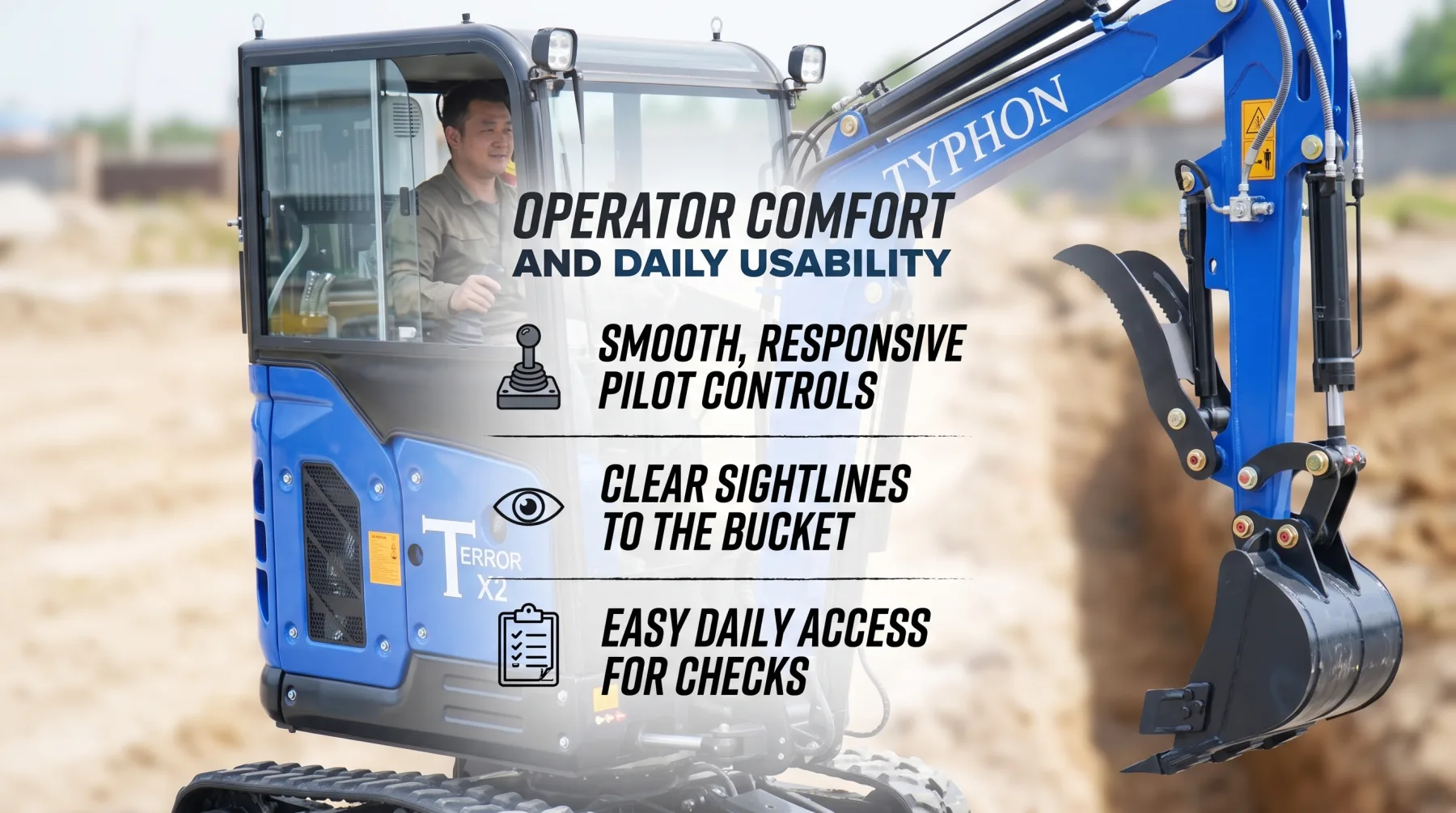
Smooth, responsive pilot controls let an operator dig clean lines and handle material with less physical effort over the course of a shift, which shows up in both quality of work and end-of-day energy levels. Usability extends to the practical details that add up across a season: easy access for daily checks, clear sightlines to the bucket edge and the trench floor, and controls that respond predictably even on tired hands. When a machine is genuinely comfortable and intuitive to operate, the crew works safer and faster without realizing it, and that consistency is a real and underrated part of what makes a machine reliable. Pairing an easy-to-use machine with safe operating practices on every site protects both the operator and everyone working around the excavator.
Conclusion
Is the TYPHON TERROR X2 reliable for daily work? For steady trenching, utility, and compact job-site tasks, the answer is a clear yes, provided the crew holds up their end of the bargain with consistent maintenance. A proven Kubota V1505 diesel supplies dependable, EPA-certified power that starts cold and pulls hard all day. The 2.7-ton size digs clean trenches across the full range of everyday utility work while staying compact enough for the tighter access a full-size machine can't manage. Attachment versatility keeps one machine busy across mixed jobs, sensible ergonomics protect the operator through a full shift, and durability holds up when the basics of upkeep are followed every day. Weigh these strengths against the jobs you run most, commit to the upkeep of any machine needs, and when you're ready to put a dependable compact mini excavator to work, reach out to a trusted equipment specialist who can pair a reliable machine with the results your projects depend on.
Frequently Asked Questions
What engine does the TYPHON TERROR X2 mini excavator use? It runs a Kubota V1505 diesel engine that's EPA certified, giving this 2.7-ton machine the torque, fuel efficiency, and proven dependability that daily trenching and utility work demand.
Is the TYPHON TERROR X2 big enough for trenching and utility jobs? Yes. At 2.7 tons it carries enough weight and hydraulic power to cut clean trenches for water, drainage, and electrical lines, while staying compact enough to work in tighter spaces a full-size machine can't reach.