Currently Empty: $0.00

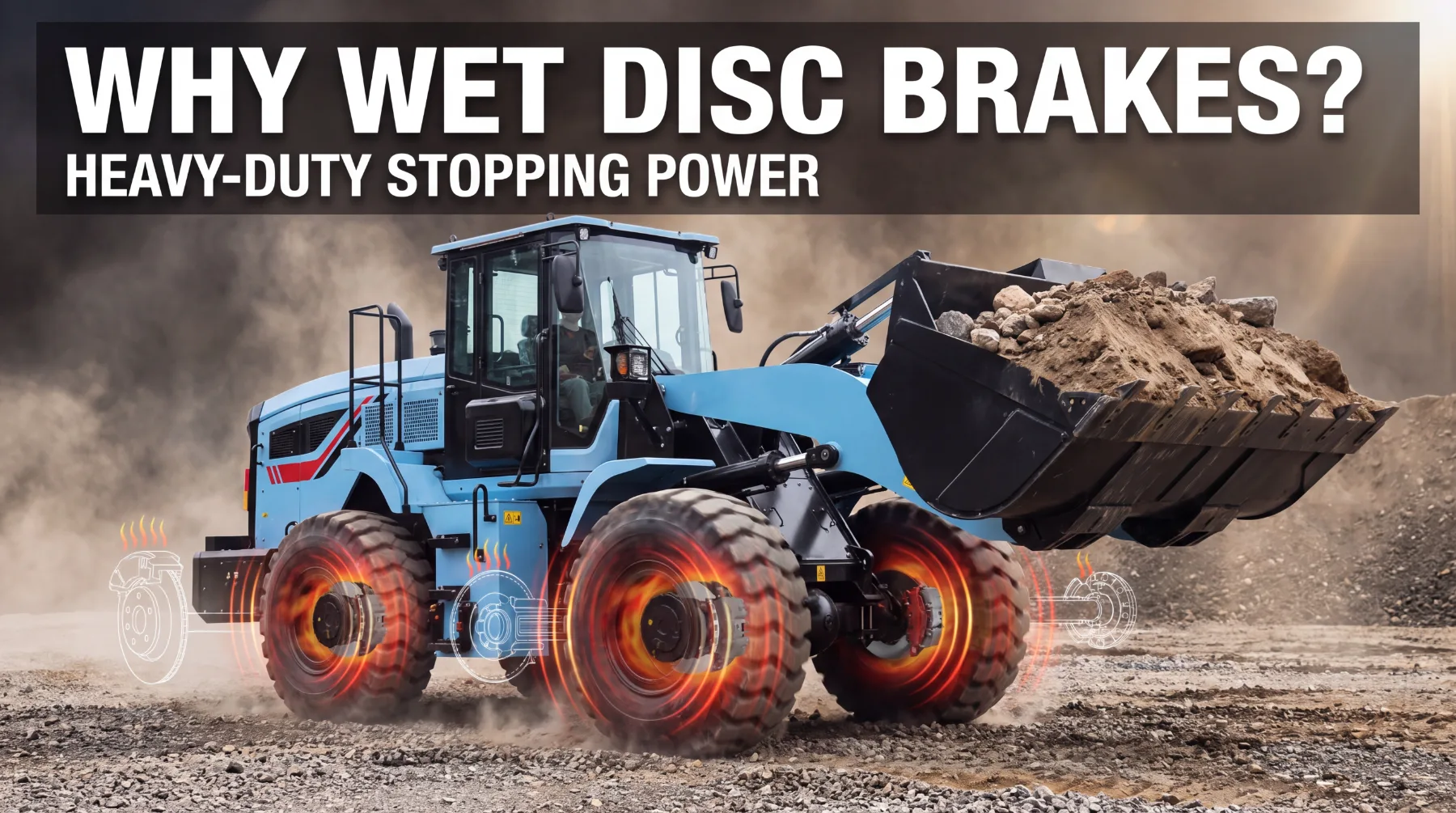
Why Wet Disc Brakes Matter for Heavy Wheel Loader Operation
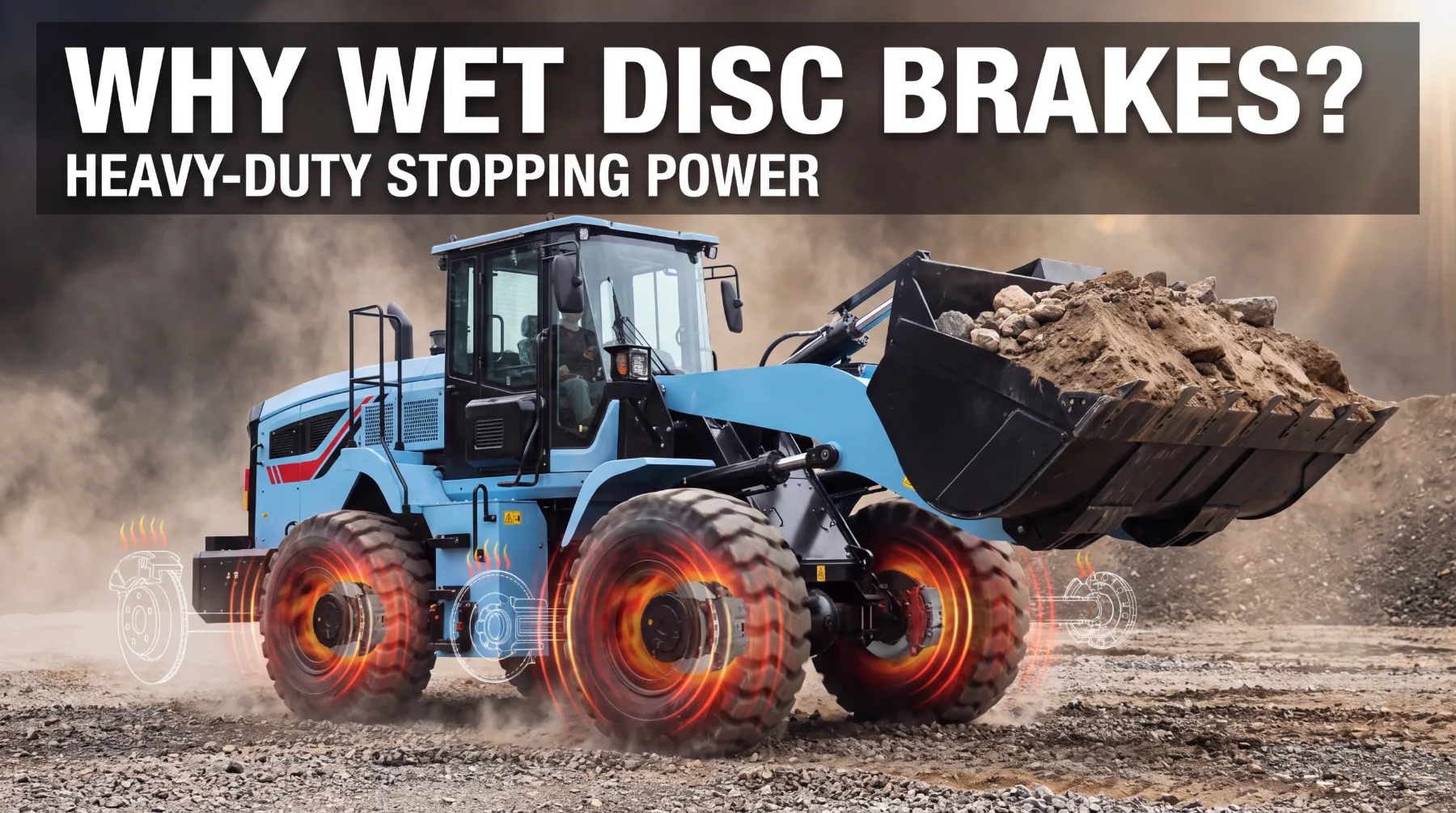
Braking might not be the first feature you consider when evaluating a wheel loader, yet it quietly determines how safely and reliably that machine performs day after day. A wheel loader carrying tons of material needs a braking system that can bring that combined weight under control without fading, faltering, or wearing out prematurely. Wet disc brakes are built for exactly this demand. Sealed inside an oil-filled housing and engineered for heavy-duty work, they deliver the stopping power, heat management, and durability that hard-working loaders depend on. This guide explains why wet disc brakes matter for heavy wheel loader operation, so you can understand what sets this braking technology apart and why it belongs on a machine you rely on.
How Wet Disc Brakes Handle Heavy Wheel Loader Loads
Wet disc brakes are designed around a simple but effective principle: use multiple friction discs working together to manage the considerable forces involved in stopping a loaded machine. Rather than relying on a single point of contact, these brakes stack several friction discs inside an oil-filled housing, spreading the braking effort across a larger surface area. That shared workload is precisely what makes the design so well suited to heavy wheel loaders, which frequently carry substantial loads across the jobsite. The reason this matters comes down to the physics of stopping heavy weight. A wheel loader hauling a full bucket of dense material carries a great deal of momentum, and bringing that mass to a controlled stop requires significant braking force. When multiple friction discs engage together, they generate the strong, distributed braking power needed to manage that force without overloading any single component. This gives the operator confident, dependable stopping performance even when the machine is working at or near its rated capacity. Consider what the multiple-disc design delivers for a hardworking loader:
- Distributed braking effort across several friction discs rather than one contact point.
- Strong stopping power suited to the momentum of a fully loaded machine.
- Dependable performance when carrying substantial loads repeatedly through a shift.
This approach reflects how the braking system is engineered to match the demands of the work. A machine built to move heavy material needs a braking system built to stop that material safely, and the multiple-disc, oil-filled design answers that need directly. By sharing the braking load across several discs within a sealed housing, wet disc brakes provide the robust, reliable control that heavy wheel loader operation calls for on every trip between loading and dumping.
Why Oil Cooling Helps Control Brake Heat
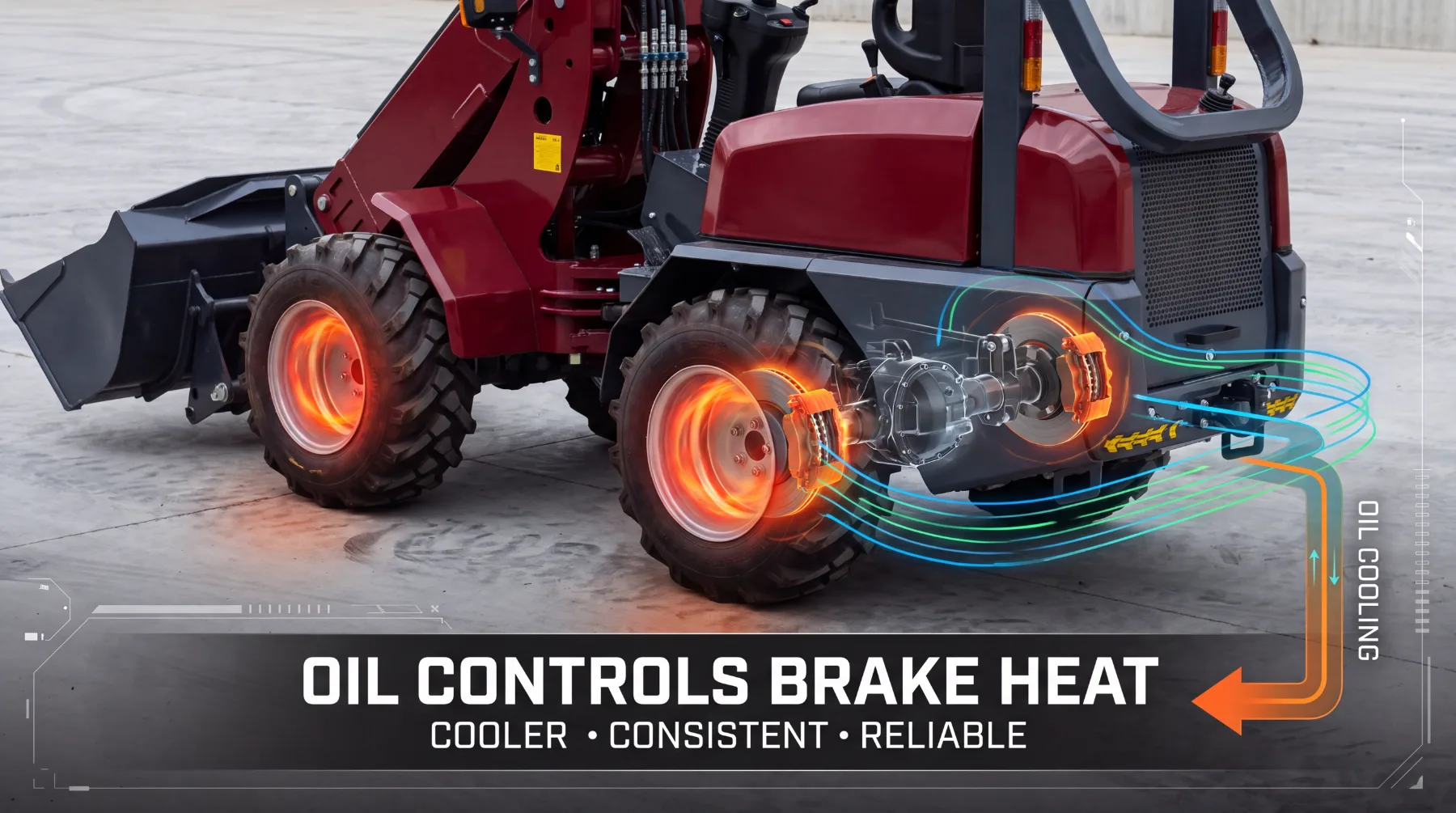
Every time a brake slows a moving machine, it converts motion into heat, and on a heavy wheel loader that heat can build quickly. This is where the oil-filled housing of a wet disc brake proves its value. The oil surrounding the friction discs absorbs the heat generated during braking and carries it away, helping keep the braking components within a safe operating temperature. That heat management is one of the defining advantages of the wet disc design, and it directly supports reliable performance under demanding conditions. The benefit becomes especially clear during the kind of work heavy loaders do routinely. When a machine makes repeated stops in a busy loading cycle, each application of the brakes adds more heat, and without an effective way to manage it, temperatures can climb to the point where braking performance suffers. The same is true when a loader works on slopes with heavy loads, where the brakes may need to control the machine continuously against the pull of gravity. In both situations, the surrounding oil absorbs and dissipates the heat, preventing the buildup that would otherwise compromise braking. By controlling brake heat this way, the oil-cooled design keeps the braking system performing consistently even through the most demanding parts of a shift. The operator can make stop after stop, or hold a loaded machine steady on a grade, without the braking power tapering off as components overheat. This is a meaningful advantage for any loader that works hard, because it means the brakes stay dependable precisely when they are working hardest. Effective heat management is not a minor technical detail; it is a core reason wet disc brakes suit the repeated, heavy-duty stopping that wheel loader work involves.
How Wet Disc Brakes Support Consistent Braking
Consistency is one of the most valuable qualities a braking system can offer, and the enclosed, oil-cooled design of wet disc brakes is built to deliver it. Because the friction discs operate inside a sealed, oil-filled housing, they are shielded from the variables that can make other braking systems perform unpredictably. This protected, temperature-managed environment allows the brakes to provide more consistent braking performance even under the demanding conditions a heavy wheel loader regularly faces. For an operator, that consistency translates directly into control. When the brakes respond the same way every time they are applied, the operator can judge stopping distances accurately and manage the machine’s movement with confidence. This matters most when transporting heavy material, where predictable, controlled deceleration is essential to moving safely around the jobsite. A braking system that behaves reliably lets the operator slow the machine smoothly and stop it where intended, rather than compensating for brakes that feel strong one moment and weak the next. The oil-cooled design underpins this reliability by managing the two factors that most often undermine braking consistency: heat and contamination. By absorbing braking heat and keeping the components enclosed, the system maintains steady performance through repeated stops and long working hours. The result is a machine that responds predictably to the operator’s commands, cycle after cycle, whether it is easing to a halt on level ground or controlling a descent with a full load. That dependable, controlled deceleration is exactly what heavy material handling demands, and it is a direct benefit of the sealed, oil-cooled wet disc design working as intended.
Why Wet Disc Brakes Resist Contamination
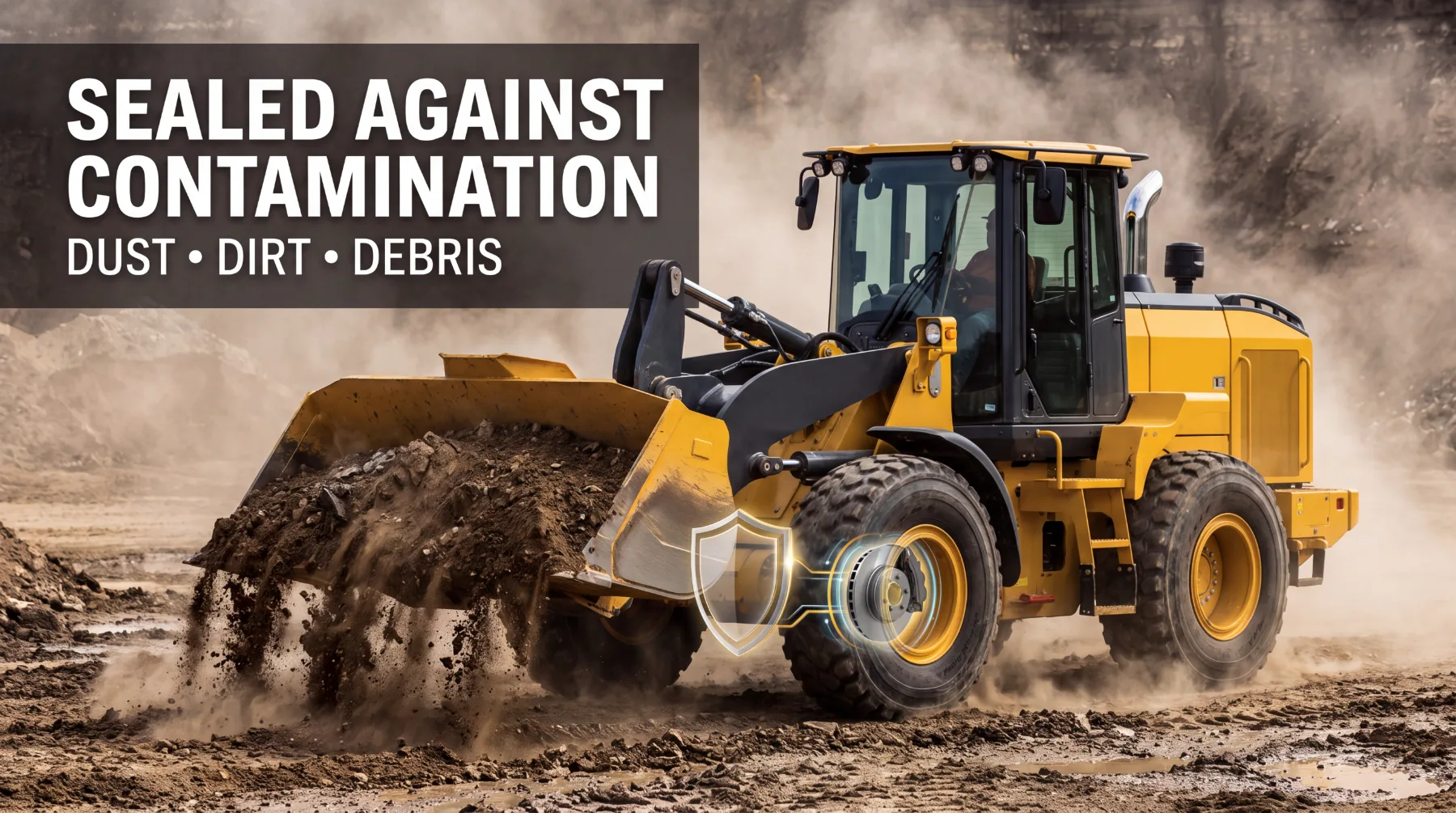
Construction sites, quarries, and aggregate operations are punishing environments, filled with the dirt, dust, and debris that can wreak havoc on exposed machine components. Braking systems are no exception, and this is where the enclosed construction of wet disc brakes offers a clear advantage. Because the brake components sit inside a sealed, oil-filled housing, they are far better protected from external contaminants than braking systems whose parts are exposed to the surrounding environment. The value of this protection is easy to appreciate for any loader working in harsh conditions. Airborne dust settles everywhere, mud and grit accumulate on the machine, and fine abrasive particles find their way into any opening they can reach. When braking components are exposed, this contamination can interfere with their operation, accelerate wear, and lead to inconsistent or degraded performance over time. The sealed housing of a wet disc brake keeps these contaminants out, allowing the friction discs to operate in a clean, controlled environment regardless of how dirty the surrounding jobsite becomes. This resistance to contamination is particularly useful for the environments where heavy wheel loaders spend much of their working lives. Quarries and aggregate operations generate constant dust and abrasive material, and general construction sites expose equipment to mud, dirt, and debris every day. In these settings, a braking system protected from contamination holds a real advantage, because it continues to perform reliably where an exposed system might struggle. By enclosing the brakes within an oil-filled housing, the wet disc design keeps the components clean and functioning as intended, supporting dependable braking in exactly the tough, dirty conditions that define heavy loader work.
How Wet Disc Brakes Can Reduce Maintenance Demands
Maintenance is a constant consideration for any operation running heavy equipment, because time spent servicing a machine is time it is not working. Wet disc brakes help address this concern through a design built for durability and long service intervals under heavy-duty use. Engineered to withstand the demands of hardworking loaders, they are made to keep performing over extended periods, which can help reduce the frequency and burden of brake-related maintenance. Much of this advantage traces back to the enclosed construction that defines the wet disc design. Because the friction discs operate inside a sealed, oil-filled housing, they are protected from the contamination and excessive heat that cause premature wear in exposed braking systems. The oil both cools the components and lubricates them, reducing wear during operation, while the sealed housing keeps out the dirt and debris that would otherwise accelerate deterioration. Together, these features help the brakes last longer and avoid the contamination-related problems that can plague exposed components. The practical benefit shows up in less frequent service and greater reliability over the machine’s working life. Compared with braking systems whose parts are exposed to the elements, wet disc brakes tend to require attention less often and suffer fewer issues caused by dirt, dust, and heat. For an operation that depends on keeping its loaders productive, this reduced maintenance demand is a genuine advantage, cutting downtime and helping control the cost of ownership over time. A braking system designed to endure heavy use and resist the conditions that cause wear is one that supports both the machine’s reliability and the operation’s bottom line, which is exactly what wet disc brakes are built to do.
Conclusion
Wet disc brakes are engineered to meet the real demands of heavy wheel loader operation, and their advantages come together into a braking system built for hard, dependable work. By using multiple friction discs inside an oil-filled housing, they deliver the strong, distributed stopping power that loaded machines require. The surrounding oil absorbs and dissipates braking heat, keeping performance steady through repeated stops and demanding slope work. That same enclosed, oil-cooled design supports consistent, controlled deceleration and shields the components from the dirt, dust, and debris of construction, quarry, and aggregate environments. It also reduces wear and maintenance demands, helping the brakes last longer and the machine stay productive. For any operation moving heavy material in tough conditions, wet disc brakes provide the reliable braking control that safe, efficient loader work depends on.
Frequently Asked Questions
1. How do wet disc brakes handle the heavy loads a wheel loader carries? Wet disc brakes use multiple friction discs operating inside an oil-filled housing to manage braking forces, rather than relying on a single point of contact. This design spreads the braking effort across several discs, generating the strong, distributed stopping power needed to control a fully loaded machine. A wheel loader hauling dense material carries considerable momentum, and bringing that mass to a controlled stop requires significant force. When multiple discs engage together, they share that workload without overloading any single component, giving the operator confident, dependable stopping performance even at or near the machine’s rated capacity. This makes the design particularly well suited to heavy wheel loaders that frequently carry substantial loads, providing robust braking control on every trip between loading and dumping throughout the working day. 2. Why does oil cooling matter in a wet disc brake system? Braking converts a machine’s motion into heat, and on a heavy wheel loader that heat can build quickly. In a wet disc brake, the oil surrounding the friction discs absorbs the heat generated during braking and carries it away, keeping the components within a safe operating temperature. This is especially valuable during work that produces repeated heat buildup, such as a busy loading cycle with frequent stops, or when a loader works on slopes with heavy loads and the brakes must control the machine against gravity. Without effective heat management, temperatures can climb to the point where braking performance suffers. By absorbing and dissipating that heat, the oil-cooled design keeps the braking system performing consistently through the most demanding parts of a shift, so stopping power stays dependable when the brakes are working hardest. 3. How do wet disc brakes provide consistent braking performance? The enclosed, oil-cooled design of wet disc brakes shields the friction discs from the variables that make other systems perform unpredictably, chiefly heat and contamination. Operating inside a sealed, oil-filled housing, the discs work in a protected, temperature-managed environment that allows them to deliver more consistent braking under demanding conditions. For the operator, this consistency means the brakes respond the same way every time they are applied, making it possible to judge stopping distances accurately and manage the machine’s movement with confidence. That predictability is essential when transporting heavy material, where controlled deceleration keeps the machine moving safely around the jobsite. By managing heat and keeping contaminants out, the system maintains steady performance through repeated stops and long hours, so the machine responds predictably cycle after cycle, whether stopping on level ground or controlling a loaded descent. 4. How do wet disc brakes resist contamination on dirty jobsites? Because the brake components sit inside a sealed, oil-filled housing, they are far better protected from external dirt, dust, and debris than braking systems with exposed parts. On construction sites, quarries, and aggregate operations, airborne dust settles everywhere, mud and grit accumulate on the machine, and fine abrasive particles find their way into any opening. When braking components are exposed, this contamination can interfere with their operation, accelerate wear, and degrade performance over time. The sealed housing of a wet disc brake keeps these contaminants out, letting the friction discs operate in a clean, controlled environment no matter how dirty the surrounding jobsite becomes. This protection is particularly useful in the harsh environments where heavy wheel loaders spend much of their working lives, allowing the brakes to perform reliably where an exposed system might struggle. 5. Can wet disc brakes help reduce maintenance demands? Yes. Wet disc brakes are designed for durability and long service intervals under heavy-duty use, which can reduce the frequency and burden of brake-related maintenance. Much of this advantage comes from the enclosed construction. Because the friction discs operate inside a sealed, oil-filled housing, they are protected from the contamination and excessive heat that cause premature wear in exposed systems. The oil both cools and lubricates the components, reducing wear during operation, while the sealed housing keeps out the dirt and debris that would otherwise accelerate deterioration. Together, these features help the brakes last longer and avoid contamination-related problems. Compared with exposed braking systems, wet disc brakes tend to require attention less often and suffer fewer issues, cutting downtime and helping control the cost of ownership over the machine’s working life.