Currently Empty: $0.00
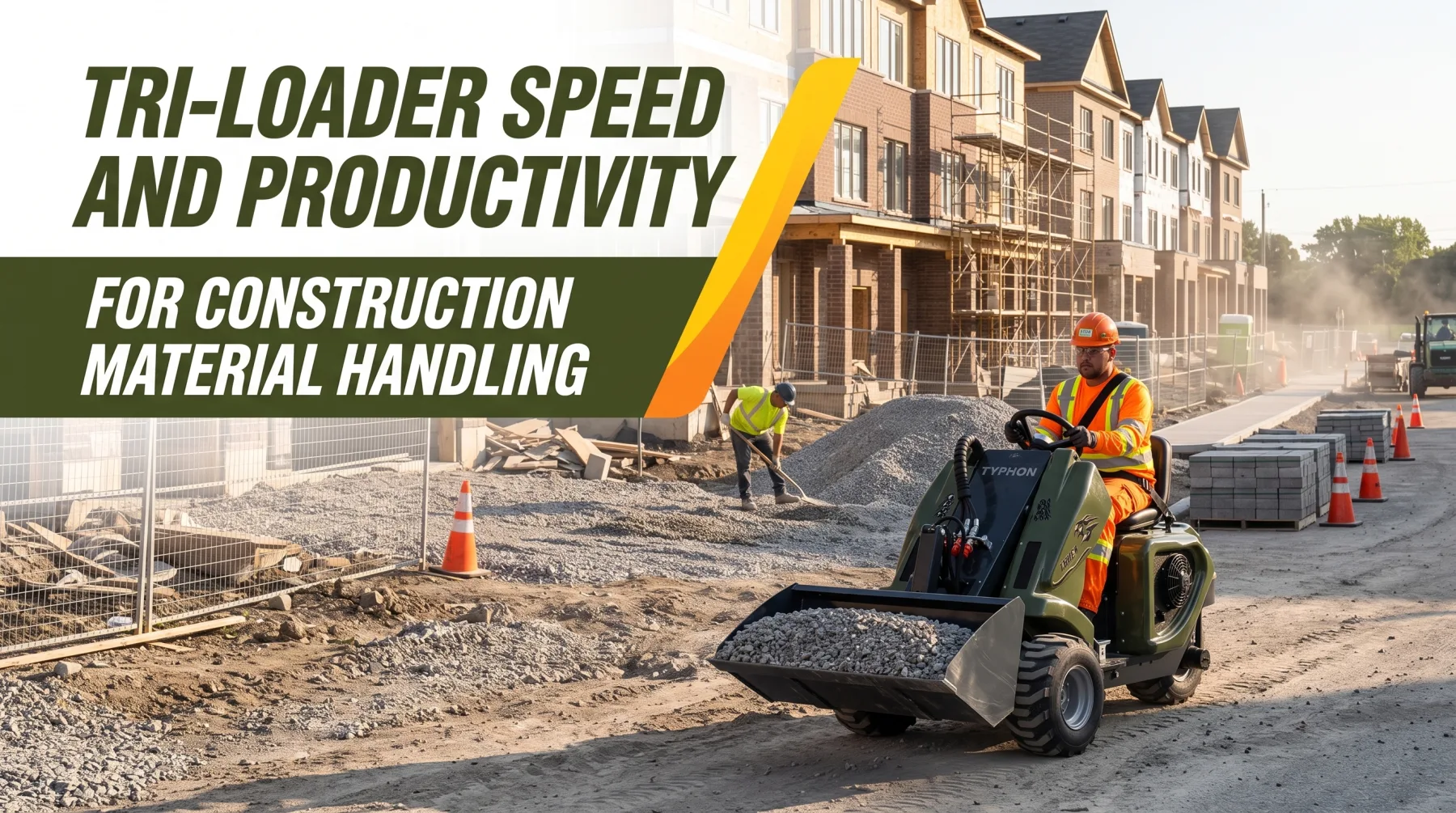
Operating Performance and Productivity for Tri-Loader Material Handling
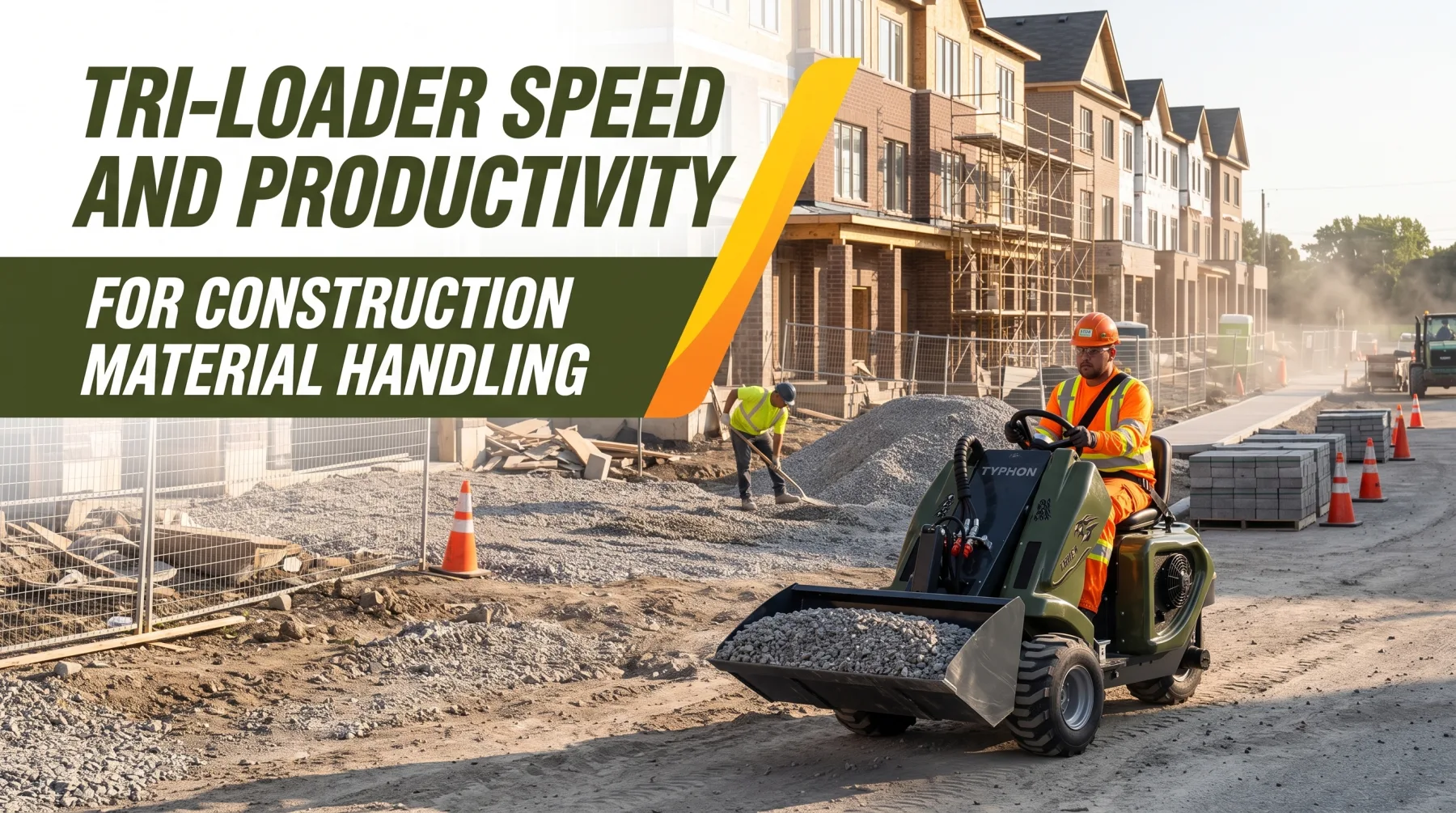
Tri-loader productivity depends on the complete work cycle rather than travel speed alone. Moving quickly can increase output when conditions allow, but excessive speed may cause material spillage, rough handling, hard braking, and extra repositioning. Load size, travel distance, ground conditions, and the time required to load and place each bucket all influence how much material the machine moves during a work period.
Loading technique and attachment performance also affect the efficiency of each cycle. Consistent bucket fills and carrying loads low can improve stability and reduce material loss, while smooth approaches and accurate positioning can shorten unnecessary travel and repositioning. Operators should adjust speed to the route, especially around soft ground, slopes, turns, obstacles, and areas shared with other workers or equipment.
Coordinating the tri-loader with the rest of the crew can further improve productivity. Placing each load where it is needed, maintaining a workable travel route, and avoiding unnecessary stops helps keep loading, hauling, and unloading connected. Balancing travel speed with load control, site conditions, attachment capability, and operator technique supports steady production while reducing unnecessary machine wear and cleanup.
Travel Speed and Work Cycles
Travel speed affects how long it takes a tri-loader to move between loading and unloading points. Every trip from the stockpile to the placement area and back adds travel time to the cycle. On longer routes, travel time can make up a large share of each cycle, and efficient movement between work areas starts to matter.
Distance changes how much speed matters. On a short route, such as moving material 30 feet from a pile to a trench, the machine spends most of its time loading, positioning, and dumping. A faster travel speed saves only a few seconds per cycle. On a larger jobsite, where the machine might travel several hundred feet each way, steady and efficient travel can save meaningful time over a full shift.
Consider a simple example. Suppose a cycle takes 90 seconds, and 40 of those seconds are travel. Cutting travel time by 10 percent saves 4 seconds per cycle. Cutting loading and positioning time through smoother technique might save just as much, or more, without adding speed or risk. Productivity comes from the whole cycle, not one part of it.
Practical travel speed is also limited by what the machine is carrying and the ground it crosses. A loaded machine on a rough route can’t safely travel as fast as an empty machine on a smooth one. Speed that causes spillage, bouncing, or hard braking adds time back into the cycle through rehandling, cleanup, and repositioning.
The goal is consistent, controlled travel that suits the route. Plan the shortest practical path between loading and unloading points, keep that path firm and clear, and travel at a speed that keeps the load and the machine under control.
Key takeaway: Travel speed shapes the time spent moving between work areas, but its effect on productivity depends on route length, load, and ground conditions, so focus on steady, controlled travel that improves the complete cycle.
Operator Control and Work Efficiency
Work efficiency depends heavily on how smoothly and consistently the operator controls the machine. Good steering, precise hydraulic movements, proper load positioning, and planned work patterns can reduce wasted movement while supporting safer and more productive cycles throughout the shift.
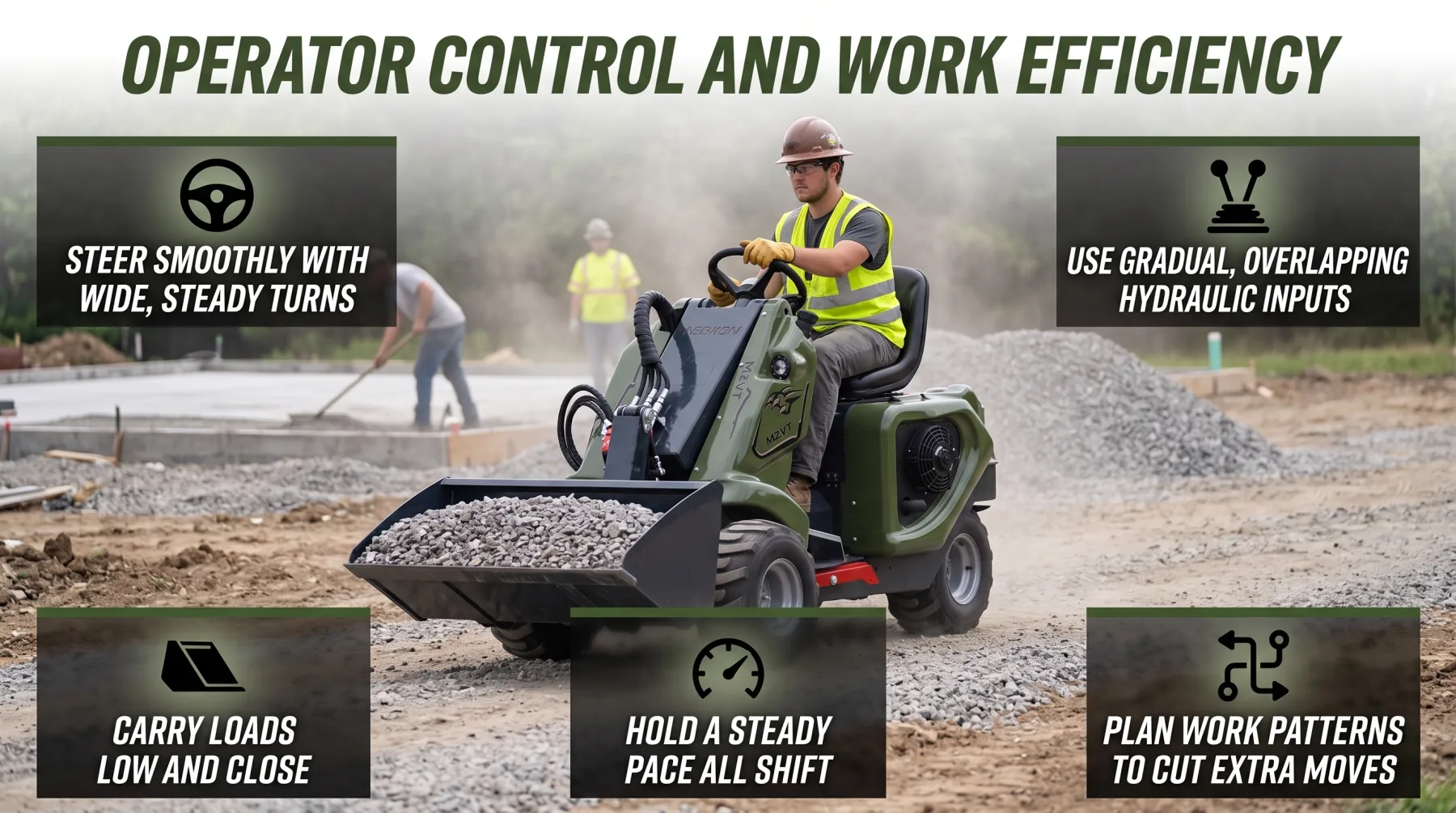
Smooth Steering: Controlled steering and gradual turns help maintain stability, protect the load, and reduce unnecessary corrections.
Hydraulic Control: Smooth hydraulic movements allow precise attachment positioning while reducing jerking, material spillage, and unnecessary machine stress.
Load Positioning: Carrying loads low and close to the machine helps maintain stability, visibility, and control during travel.
Efficient Work Patterns: Planning loading, travel, and placement routes reduces unnecessary repositioning and keeps work cycles moving consistently.
Operator Awareness: A steady pace, clear travel path, seat belt use, and proper awareness of nearby workers help maintain safe and productive operation.
Key takeaway: Smooth steering, controlled hydraulics, proper load positioning, efficient work patterns, and a steady pace reduce unnecessary movement and maintain consistent production throughout the workday.
Loading and Unloading Efficiency
Every tri-loader work cycle includes four basic stages: loading, traveling, positioning, and unloading. Each stage adds time, and each one offers room to improve. Smooth coordination between these movements often raises output more than faster travel does.
Loading efficiency starts at the pile. Approach the material squarely with the bucket flat on the ground, push in at a steady speed, and curl the bucket as it fills. A slight lift during the curl helps fill the bucket and reduces tire spin. Working the pile face evenly keeps each load consistent and avoids undercutting, which can cause material to collapse unexpectedly.
Positioning is where many cycles lose time. An operator who overshoots the dump point, approaches at the wrong angle, or needs several adjustments to line up can add seconds to every trip. Approach the placement area on a planned line, slow down early, and stop once in the right position. When loading trucks or containers, approach at a right angle and confirm the machine can reach over the side walls before raising the load.
Unloading should be controlled and precise. Raise the load only when you reach the placement point, then tilt the bucket gradually so material lands where it’s needed. Placing material close to its final location reduces hand spreading and rehandling, which saves time for the whole crew.
Layout supports every stage of the cycle. Stockpiles placed close to the work shorten travel. Clear turnaround areas at each end of the route reduce reversing. When loading, travel, positioning, and unloading flow smoothly into one another, the machine completes more cycles with less effort.
Key takeaway: Loading, traveling, positioning, and unloading all add to cycle time, so smooth coordination between these movements and a well-planned layout improve overall output.
Load Size and Productivity
The amount of material moved in each cycle directly affects productivity. A tri-loader that carries a full, appropriate load on every trip moves more material per hour than one that carries partial loads. Load size, however, must stay within what the machine can carry safely and with control.
Every tri-loader has a rated operating capacity, listed on the machine’s decal and in the operator’s manual. That figure includes the weight of the attachment. Material density determines how quickly a load reaches that limit. A bucket of mulch weighs far less than the same bucket of wet topsoil, crushed stone, or sand. Load by weight first, using the material’s approximate density and allowing for added weight from moisture.
Overloading doesn’t improve productivity. A load near or beyond capacity makes the machine slower to lift, harder to steer, and less stable on uneven ground. It increases spillage, wears tires and loader components faster, and reduces the margin for safe operation. A heaped bucket that loses material over every bump costs time in cleanup and rehandling.
Consistency matters as much as size. Filling the bucket to the same level on every trip makes cycles predictable and helps the crew plan the work. It also makes it easier to track production, since each load represents a known quantity of material.
The best load is the largest one the machine can carry with full control on the route ahead. On a smooth, level path, that may be a full bucket. On a rough or sloped route, a slightly smaller load can keep travel steady and actually raise hourly output.
Key takeaway: Carrying an appropriate, consistent load within rated capacity makes the most of the machine’s lifting capability while keeping control, stability, and productivity in balance.
Attachment Selection
The attachment shapes how efficiently a tri-loader handles each material. Buckets, forks, grapples, and other compatible tools are each designed for specific types of work. The right attachment fills faster, carries more securely, and places material more accurately, which shortens every cycle.
A general-purpose bucket handles soil, gravel, and sand well for most loading tasks. Light-material buckets offer more volume for low-density materials such as mulch and wood chips, so each trip moves more without exceeding capacity. Pallet forks move block, pavers, sod, and bagged materials far faster than unloading by hand. Grapples secure brush, debris, and irregular materials that would roll or slide off a bucket.
A mismatched attachment slows the work. Moving mulch with a small bucket means extra trips. Carrying pallets in a bucket risks damaged materials and unstable loads. Using a large light-material bucket for dense stone can quickly push the machine past its rated capacity. Matching the tool to the task keeps loads efficient and within limits.
Every attachment also changes how the machine behaves. Some add significant weight, which reduces the capacity left for material. Pallet forks place loads farther forward than a bucket, which affects balance. Before using any attachment, confirm it’s approved for the machine, compatible with its mounting system, and suited to its hydraulic capability.
Fast, secure attachment changes support productivity across varied tasks. Regular maintenance and inspection help keep the mounting plate and locking mechanism in good working condition. Clean the mounting plate before each change, engage the locking mechanism according to the manufacturer’s instructions, and visually confirm the lock is fully engaged before lifting any load.
Key takeaway: Selecting an attachment suited to the material and task improves handling efficiency and keeps each cycle productive, as long as it’s compatible with the machine and fully secured.
Jobsite Conditions and Movement
Ground conditions, slopes, congestion, and available space all set the practical operating speed on a construction site. A machine’s rated travel speed describes what it can do on ideal ground. Real jobsites rarely offer ideal ground, so the operator must adjust speed to the conditions.
Rough, rutted, or soft ground calls for slower movement. Uneven surfaces cause the machine and load to bounce, which increases spillage and reduces control. Soft soil and recent backfill can let a wheel sink, which can tilt the machine. Slopes change how weight is distributed and require careful travel. Follow the manufacturer’s slope limits, travel straight up and down rather than across, and avoid turning on inclines.
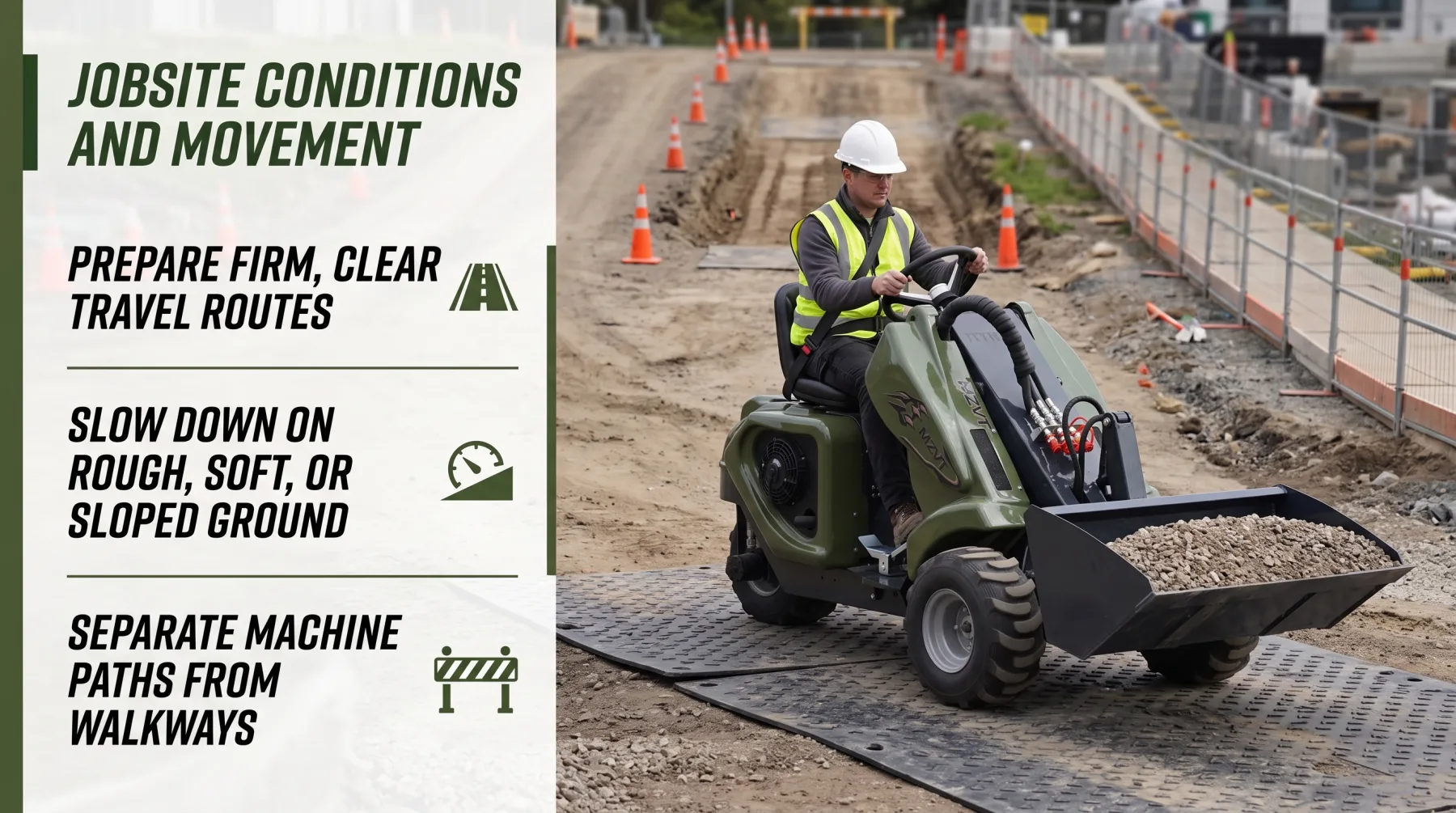
Congestion has a similar effect. Busy sites with workers on foot, delivery trucks, stockpiles, and other equipment require slower, more deliberate movement. Tight spaces between structures limit turning room and visibility. In these areas, careful travel protects people and property, and it prevents the delays that follow any contact incident.
Site preparation is one of the most effective ways to improve practical speed. Grade and compact the main travel route, fill ruts and holes, and add stone to soft areas that see heavy use. Lay ground protection mats across lawns and finished surfaces. Separate machine routes from pedestrian walkways where possible, and mark turnaround areas so the machine doesn’t need long reversing moves.
Recheck the route throughout the day. A path that was firm in the morning can soften after rain or heavy use, and deepening ruts can unsettle a loaded machine. Small repairs during the shift keep travel smooth and cycles consistent.
Key takeaway: Slopes, rough surfaces, congestion, and limited space reduce practical operating speed, so prepare firm, clear routes and adjust travel to conditions for safe, efficient movement.
Conclusion
Tri-loader speed contributes to productivity, but the amount of material a machine moves in a working period depends on the complete work cycle. Efficient loading, positioning, and unloading save time on every trip, while appropriate, consistent loads make full use of the machine’s capability without sacrificing control. The right attachment shortens cycles for each material, and well-prepared routes let the machine travel steadily through changing site conditions. Above all, skilled operator control ties these factors together, turning smooth inputs and planned work patterns into reliable, sustained output. When you evaluate productivity across the whole cycle instead of focusing on top speed alone, your tri-loader delivers safer, more consistent results on every construction project. Before your next shift, walk the travel route, confirm the load weight for the day’s materials, and plan stockpile and placement points to keep every cycle short and controlled.
Frequently Asked Questions
Does higher tri-loader speed always mean higher productivity?No. Productivity depends on load size, cycle time, attachment, travel distance, loading and unloading time, and jobsite conditions. Higher travel speed can reduce individual travel time, but it may also make handling less controlled. Smooth, consistent cycles often move more material efficiently than faster operation that causes unnecessary braking, repositioning, or spillage.
How does load size affect productivity?Appropriate load sizes allow the tri-loader to move useful quantities of material during each cycle while maintaining stable and controlled operation. Loads that are too small may require more cycles, while excessive loads can reduce handling performance and increase machine stress. Stay within the rated operating capacity and use consistent loading practices to support predictable productivity.
Can attachments affect tri-loader productivity?Yes. The correct attachment can improve handling efficiency by matching the machine to specific materials and tasks. Buckets, forks, grapples, and other tools may perform differently depending on the application and material. Confirm attachment compatibility, hydraulic requirements, weight, and machine capacity before use to avoid reduced performance or excessive strain.
Why do jobsite conditions affect operating speed?Slopes, rough surfaces, soft ground, congestion, obstacles, and limited working space can require slower travel for better control and stability. Operators should adjust speed to the terrain and working conditions rather than relying on maximum travel speed. Preparing firm, clear travel routes can reduce unnecessary stops and repositioning while supporting steady and efficient cycles.