


How Often Should You Change Skid Steer Oil?
Every successful contracting business relies on machinery that performs flawlessly under immense pressure. When your operators turn the key on a skid steer, they expect raw power and unyielding reliability. However, this heavy equipment operates in inherently hostile environments, constantly fighting against friction, extreme heat, and abrasive dust. Protecting the heart of your machine—the engine—requires a strict commitment to proper fluid management.
Ignoring your machine’s lubrication needs is the fastest way to destroy an expensive engine and halt your entire operation. The fundamental question every equipment owner must answer is how often you should change skid steer oil to maximize performance. Relying on guesswork or waiting for an engine to overheat guarantees costly downtime and severe mechanical failures.
This comprehensive guide breaks down the essential rules of engine lubrication. We will explore manufacturer baselines, the severe job site factors that accelerate fluid degradation, and the physical warning signs of failing oil. By understanding and executing a disciplined oil maintenance strategy, you protect your heavy equipment investment and keep your crews highly productive.
Why Clean Engine Oil is Essential for Heavy Machinery
A skid steer engine is a massive assembly of heavy steel components moving at thousands of revolutions per minute. This aggressive mechanical action generates staggering amounts of internal friction and blistering heat. Engine oil serves as the primary defense mechanism against this destructive force. It creates a microscopic barrier between the metal parts, allowing pistons and crankshafts to move smoothly without grinding against one another.
The immediate problem operators face is that engine oil actively degrades the longer it runs. As the oil cycles through the hot engine block, it slowly breaks down at a molecular level, losing its critical viscosity. Furthermore, it absorbs microscopic metal shavings, soot, and external dust that slip past the air intake system. When oil becomes saturated with this abrasive debris, it transforms from a protective lubricant into a destructive, sandpaper-like sludge.
Replacing this degraded fluid with fresh oil completely restores the engine’s internal protection. The new lubricant effectively cools the engine block, cleans away internal carbon deposits, and restores peak hydraulic compression. The direct impact on your business is a machine that runs cooler, burns fuel more efficiently, and delivers maximum breakout force on the job site. Securing this daily reliability requires you to first understand the baseline rules set by the engineers who built the machine.
Understanding Manufacturer Recommendations for Oil Change Intervals
Every skid steer rolls off the assembly line with a highly specific, heavily researched service manual. Equipment manufacturers spend thousands of hours testing their engines to determine exactly when the internal fluids reach the end of their usable life. A frequent vulnerability for equipment owners is completely ignoring this manual, assuming that all heavy machinery operates on the exact same maintenance timeline.
Most manufacturers recommend a standard skid steer oil change frequency of every 250 to 500 operating hours. This baseline interval assumes the machine is operating under normal, moderate conditions with standard fluid types. Modern machines utilizing premium synthetic oils can sometimes push closer to the 500-hour mark, while older units running conventional diesel oil usually require servicing at 250 hours. Failing to follow these exact guidelines often immediately voids your factory warranty, leaving you entirely responsible for catastrophic engine replacements.
Adhering to the manufacturer’s specific hour intervals establishes a solid foundation of preventative care. Your mechanics can proactively schedule downtime, ordering the correct filters and fluids weeks before the machine actually needs them. This calculated approach prevents unexpected mid-shift breakdowns and keeps your maintenance budget highly predictable. However, these baseline hours are only a starting point, as the reality of your specific job site often demands a much more aggressive schedule.
Factors That Influence Your Skid Steer Oil Change Frequency
Heavy construction and landscaping projectsrarely offer clean, moderate working conditions. The severe limitation of relying solely on a generic hour interval is that it completely ignores the physical environment surrounding the machine. Running a loader inside a clean warehouse places significantly less stress on the engine than operating that exact same machine in a dusty, high-temperature quarry.
Environmental extremes and heavy workloads drastically accelerate the breakdown of engine oil. If your skid steer constantly operates in thick dirt, heavy airborne pollen, or extreme summer heat, the oil must work twice as hard to cool and clean the engine block. Furthermore, applications that require constant high-RPM operation, such as running a heavy-duty forestry mulcher or a cold planer, generate massive thermal loads that quickly cook standard engine oil.
Operating in these severe conditions requires you to drastically shorten your maintenance intervals to protect the machine. A loader functioning in a high-dust demolition environment may require fresh oil every 150 hours to survive the abrasive onslaught. By adapting your schedule to the actual physical demands of the job, you actively prevent premature engine wear. Recognizing when the environment has overwhelmed the oil requires operators to watch for distinct physical warning signs.
Recognizing the Warning Signs That Your Oil Needs Changing
Even with a strict hour-based maintenance schedule, mechanical anomalies can cause engine oil to fail much faster than anticipated. Inexperienced operators often jump into the cab and throttle up without ever checking the machine’s vital signs. Waiting for the digital dashboard to flash a severe warning light means you have already allowed the engine to operate under dangerous conditions.
The most obvious sign of failing oil is a drastic change in its physical appearance and texture on the dipstick. Fresh diesel engine oil quickly turns black due to normal soot, but it should remain smooth and fluid to the touch. If the oil feels gritty, smells heavily of burnt carbon, or appears thick and sludgy, it has completely lost its protective qualities. Additionally, if the engine suddenly sounds much louder, vibrates excessively, or starts trailing dark exhaust smoke, the internal components are actively struggling against high friction.
Training your ground crews to identify these warning signs during their morning inspections halts massive mechanical failures before they happen. Catching degraded oil early allows you to pull the machine offline for a quick, inexpensive service rather than a total engine rebuild. When the time comes to perform this crucial maintenance, executing the process flawlessly is just as important as the timing.
How to Change Skid Steer Oil the Right Way
Servicing heavy machinery requires meticulous attention to detail to prevent accidentally introducing contamination into the engine. A massive mistake novice mechanics make is rushing through the oil change, working in a dirty environment with uncleaned tools. If you drop a funnel in the dirt and immediately place it into the engine block, you are actively injecting abrasive rocks directly into the cylinders.
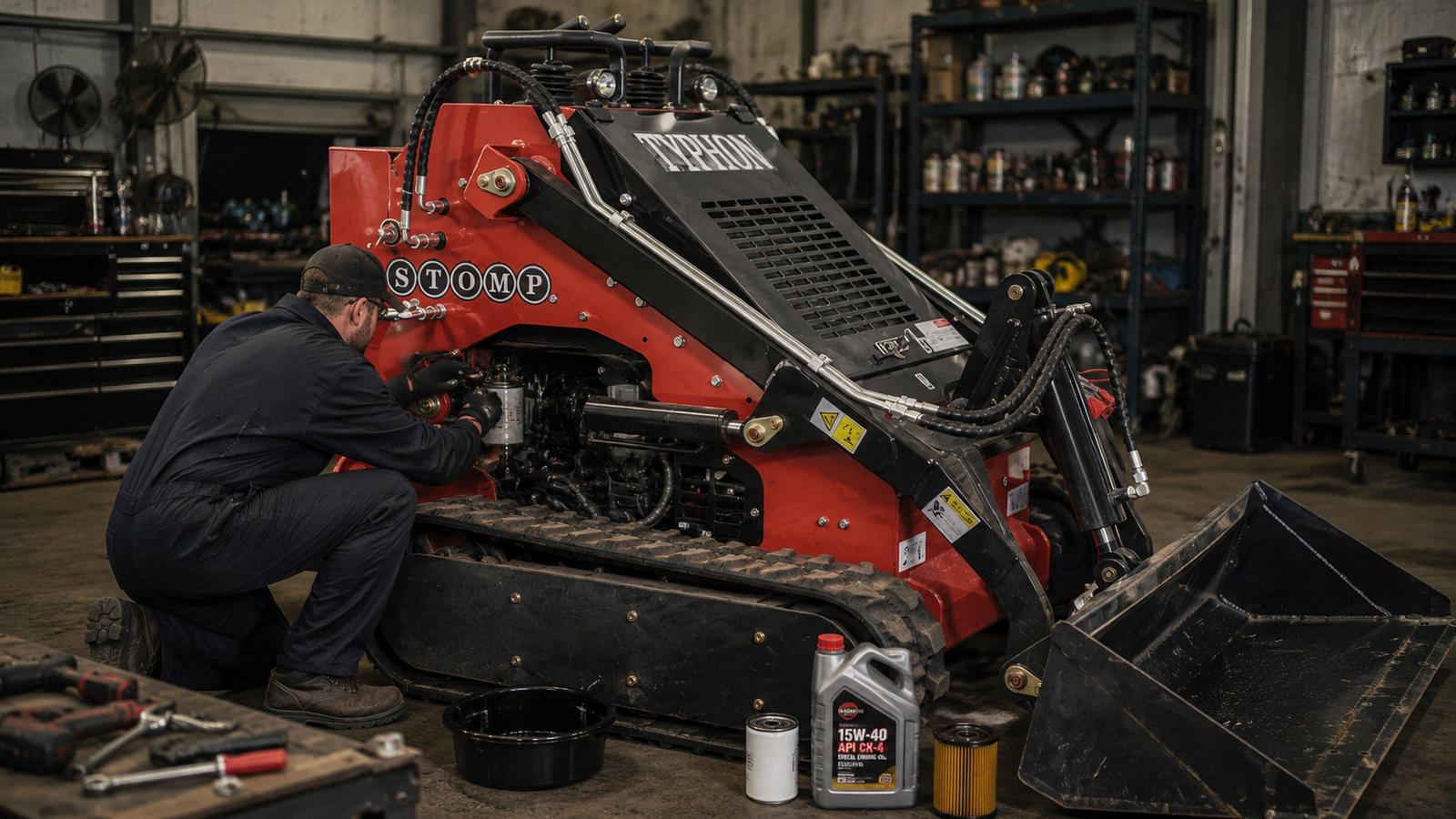
Learning how to change skid steer oil properly starts with bringing the machine up to normal operating temperature. Warm oil flows much faster and carries away significantly more suspended dirt than cold, sludgy oil. After safely elevating the lift arms and engaging the safety locks, the mechanic must thoroughly clean the area around the drain plug and the oil filter housing before loosening them. Once the old oil drains completely, you must install a premium, OEM-approved oil filter and refill the engine with the exact viscosity of oil specified in the manual.
Executing this process with absolute cleanliness ensures that the new oil can perform at its maximum potential. Your engine receives pure, uncontaminated lubrication, instantly restoring its internal cooling and friction-fighting capabilities. This surgical approach to heavy equipment maintenance secures the maximum return on your capital investment.
The Long-Term Financial Benefits of a Strict Maintenance Schedule
Owning and operating heavy machinery is a massive financial commitment that requires aggressive protection. Business owners who view routine oil changes as an annoying expense rather than a strategic investment constantly struggle with broken equipment. Running degraded oil to save a few hundred dollars on maintenance will inevitably cost you tens of thousands of dollars in emergency repairs and lost client contracts.
Implementing a strict, non-negotiable oil change schedule transforms your contracting business into a deeply stable, highly profitable enterprise. You maximize the operational lifespan of your engine, ensuring the machine continues to generate revenue long after the initial financing is paid off. Furthermore, a loader with a documented, flawless service history commands a premium resale value when you decide to upgrade your fleet.
Take a calculated look at your current equipment management protocols and demand excellence from your crews. Prioritize daily fluid checks, respect the manufacturer’s operating hours, and utilize these skid steer maintenance tips to build a fiercely reliable fleet. By committing to absolute mechanical discipline, you ensure your company possesses the power and endurance required to dominate your local market.