Currently Empty: $0.00
What Specifications Matter Most When Buying a Skid Steer Trencher?
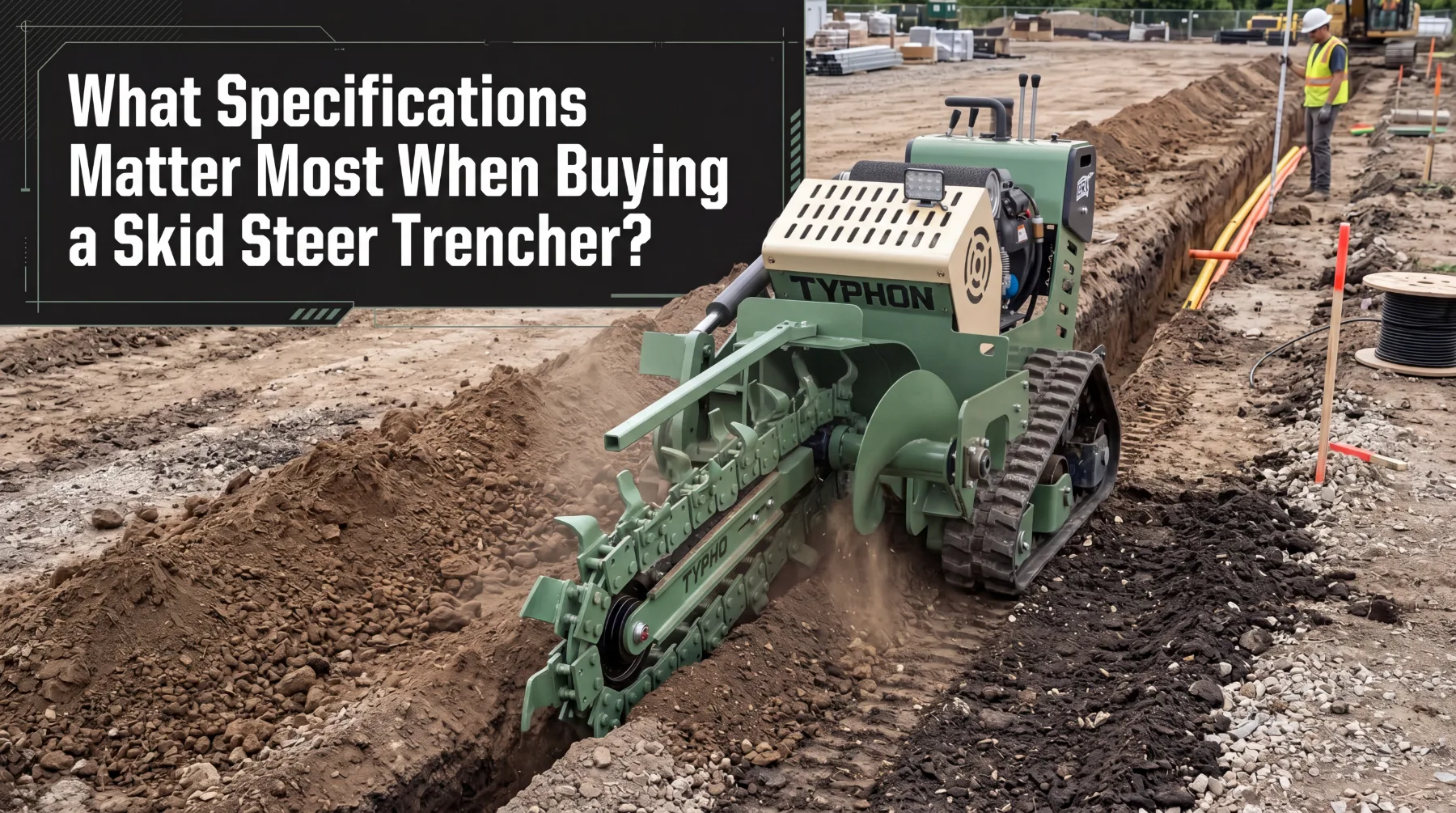
Choosing the right skid steer trencher can shape the success of every underground installation you take on. The wrong machine slows the work, produces uneven trenches, and wears out faster than it should. The right one cuts cleanly, holds a consistent profile, and handles the ground conditions you face day after day. Knowing which specifications truly matter helps you make a confident, informed decision rather than guessing your way through a purchase.
This guide walks through the specifications that deserve your closest attention when buying a skid steer trencher. You will learn why hydraulic flow and pressure come first, how digging depth and trench width must match your work, why chain and tooth configuration shape performance in different soils, how engine power and hydraulics work together, and which spoil removal and depth control features produce cleaner results. By the end, you will know exactly what to weigh before you commit to a machine.
Hydraulic Flow and Pressure
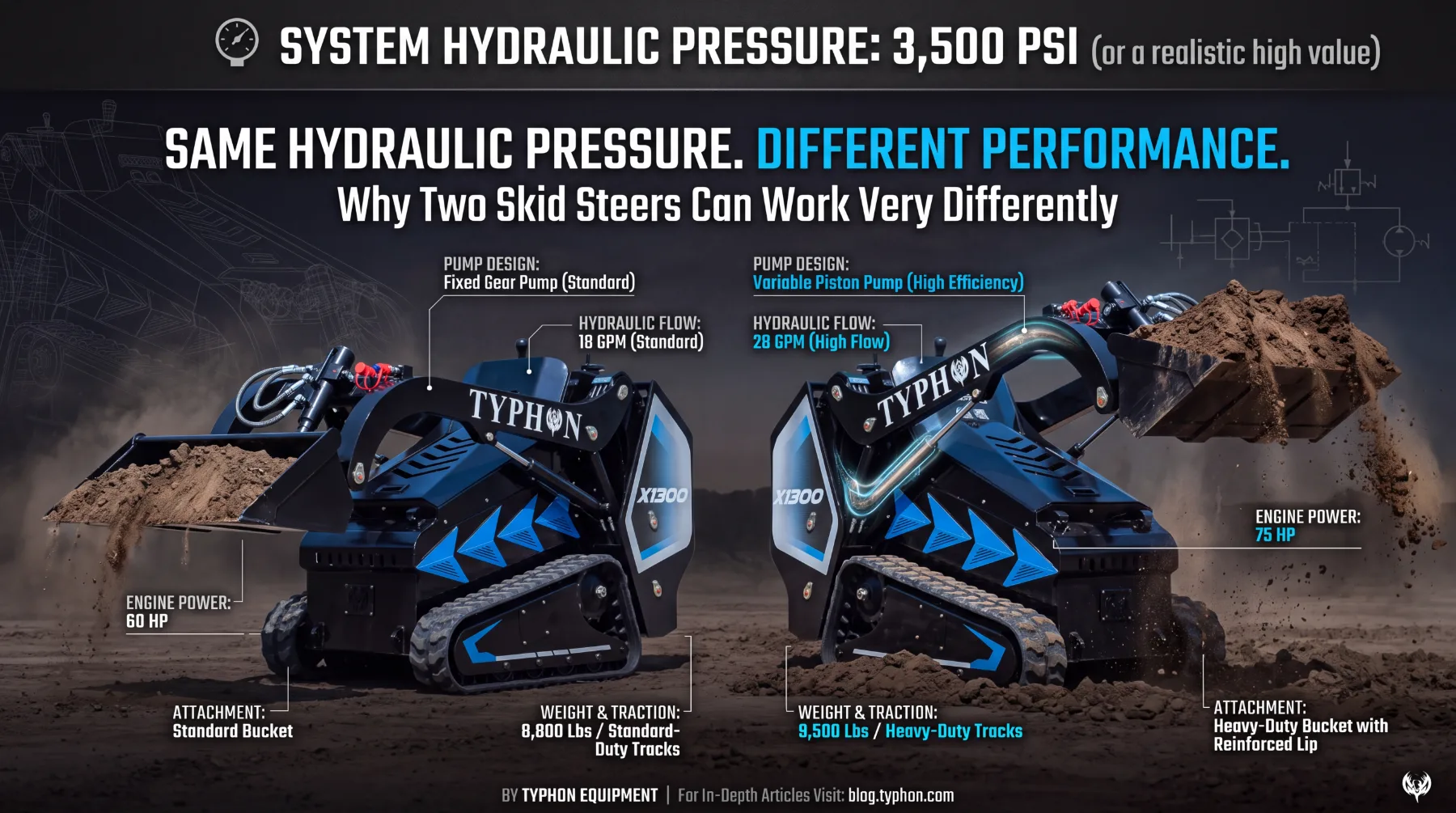
For a skid steer with a built-in trencher, hydraulic performance is one of the first specifications to check, and for good reason. The trencher draws its cutting power from the machine’s hydraulic system, so the relationship between the two determines how well the machine digs. Every trencher carries a required flow and pressure range set by the manufacturer, and matching that range to the skid steer’s hydraulic output is what delivers consistent, dependable cutting performance across a full run.
Flow and pressure each play a distinct role. Flow, usually measured in gallons or liters per minute, governs the speed and continuity of the cutting chain, keeping it turning at a rate that clears material efficiently from the trench. Pressure supplies the force the chain needs to break through resistance when the ground turns dense, compacted, or rocky. When both align with the trencher’s requirements, the machine holds a steady pace and cuts predictably, even as conditions shift underfoot.
Problems appear quickly when the hydraulic supply falls short. Insufficient flow slows the chain and reduces how fast material clears the trench, while inadequate pressure leaves the machine straining against harder ground rather than cutting through it cleanly. Both conditions drag out the work and add unnecessary wear over time.
Before you buy, take a few practical steps to confirm the match:
- Check the trencher’s rated flow range against the skid steer’s auxiliary hydraulic output
- Confirm the machine can supply that flow and pressure consistently under real working loads
- Account for both minimum and maximum limits, since operating outside either end causes trouble
When the power source and the attachment are properly matched, the trencher delivers the steady cutting the job demands.
Digging Depth and Trench Width
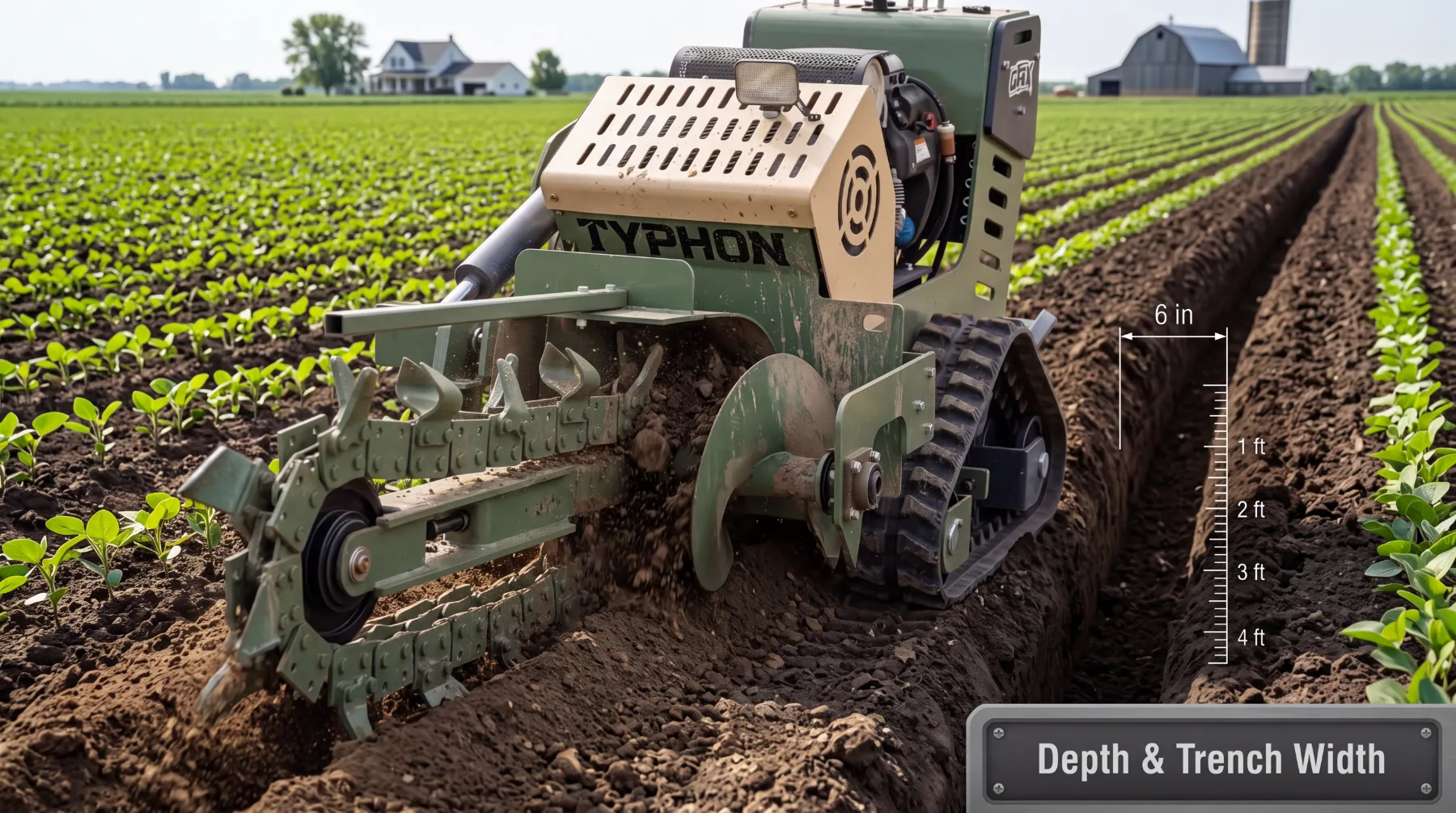
Maximum digging depth and trench width are among the most defining specifications on any skid steer trencher, because they set the physical limits of the work the machine can perform. These two dimensions determine whether the trencher suits utility installation, drainage, irrigation, or landscaping, and they must line up with the actual requirements of the jobs you take on. A machine that cannot reach the depth your lines require, or cannot cut a channel wide enough for the pipe, simply will not serve the work no matter how capable it is in other respects.
Digging depth matters because different installations sit at different levels below the surface. Electrical and communication cables often need to reach a specific depth to meet code and stay protected, water and drainage lines require enough depth to function properly and resist freezing, and irrigation lines may sit shallower. Choosing a trencher whose maximum depth comfortably covers your typical installations ensures you can complete each trench in a single controlled pass rather than fighting to reach the required level.
Trench width is equally important, since the channel must accommodate the line being installed along with any bedding material. A trench cut too narrow forces reworking, while one cut wider than necessary removes more soil than the job requires and adds to backfilling and cleanup.
Before selecting a machine, match these dimensions to your real needs:
- Confirm the maximum digging depth meets or exceeds the deepest lines you install
- Check the trench width against the diameter of your pipes and cables plus bedding
- Consider your typical mix of jobs, so the machine suits utility, drainage, irrigation, and landscaping work alike
When depth and width match the installation requirements, the trencher produces channels ready for the line right away.
Chain and Tooth Configuration
The cutting chain and the arrangement of its teeth directly affect how a built-in trencher performs, making this one of the most important specifications to weigh against your ground conditions. Soil is rarely uniform, and the way the chain is built and how its teeth are configured decide how effectively the machine handles what lies beneath it. A setup matched to the material fractures the ground cleanly and keeps the chain moving at a productive rate, while a poorly matched configuration slows the cut and leaves an uneven trench.
The right choice depends on where the machine will mainly work. Soft soil, compacted ground, rocky terrain, and mixed conditions each place different demands on the cutting system, and tooth type plays a central role in meeting them.
- Soft soil generally cuts easily and pairs well with teeth designed for a fast, clean cutting action
- Compacted ground demands teeth and a chain built to break through denser material without stalling
- Rocky terrain calls for a more aggressive, durable tooth configuration engineered to handle abrasion and hard obstructions
- Mixed conditions benefit from a versatile setup that holds up as the ground changes across a single run
Selecting a configuration suited to your conditions protects both the pace of the work and the life of the components. A chain and tooth arrangement poorly matched to hard or rocky ground can slow the cut dramatically, wear the teeth prematurely, and leave a ragged trench that needs additional work. On sites where conditions shift across a run, this becomes even more important, since the setup must perform as the ground varies. Thinking through the ground you expect to encounter before choosing a chain and tooth configuration is a straightforward step that keeps the trencher cutting reliably and delivers the consistent profile your installations depend on.
Engine Power and Hydraulic System
Because the trencher is integrated into the skid steer, engine output and hydraulic capacity work together to determine overall digging performance. These two elements are closely linked, and neither tells the whole story on its own. The engine generates the power that drives the hydraulic system, and the hydraulic system converts that power into the flow and pressure the trencher needs to cut. A properly matched powertrain is what allows the machine to maintain cutting force while it simultaneously powers the trenching system, so understanding how they combine is essential before you buy.
Engine output sets the foundation. A machine with adequate engine power has the capacity to supply the hydraulic system fully, even when the trencher demands substantial force to break through tough ground. When engine power falls short, the hydraulics cannot deliver their full potential, and the trencher loses the steady cutting force it needs. This shows up as a machine that bogs down in demanding conditions, slows unexpectedly, or struggles to hold a consistent pace through a run.
The hydraulic system then translates that engine power into useful work. Its capacity determines how effectively the available power reaches the cutting chain, and a well-designed system delivers consistent flow and pressure without straining. When engine output and hydraulic capacity are balanced, the machine handles the combined demands of moving forward and cutting at the same time, holding its performance even as the ground gets harder.
For a buyer, the practical lesson is to evaluate the powertrain as a whole rather than focusing on a single number. A generous engine means little if the hydraulic system cannot use its output effectively, and a capable hydraulic system falls short if the engine cannot supply it. Looking at how the two work together helps you choose a machine that maintains dependable cutting force across the full range of conditions your work involves.
Spoil Removal and Depth Control
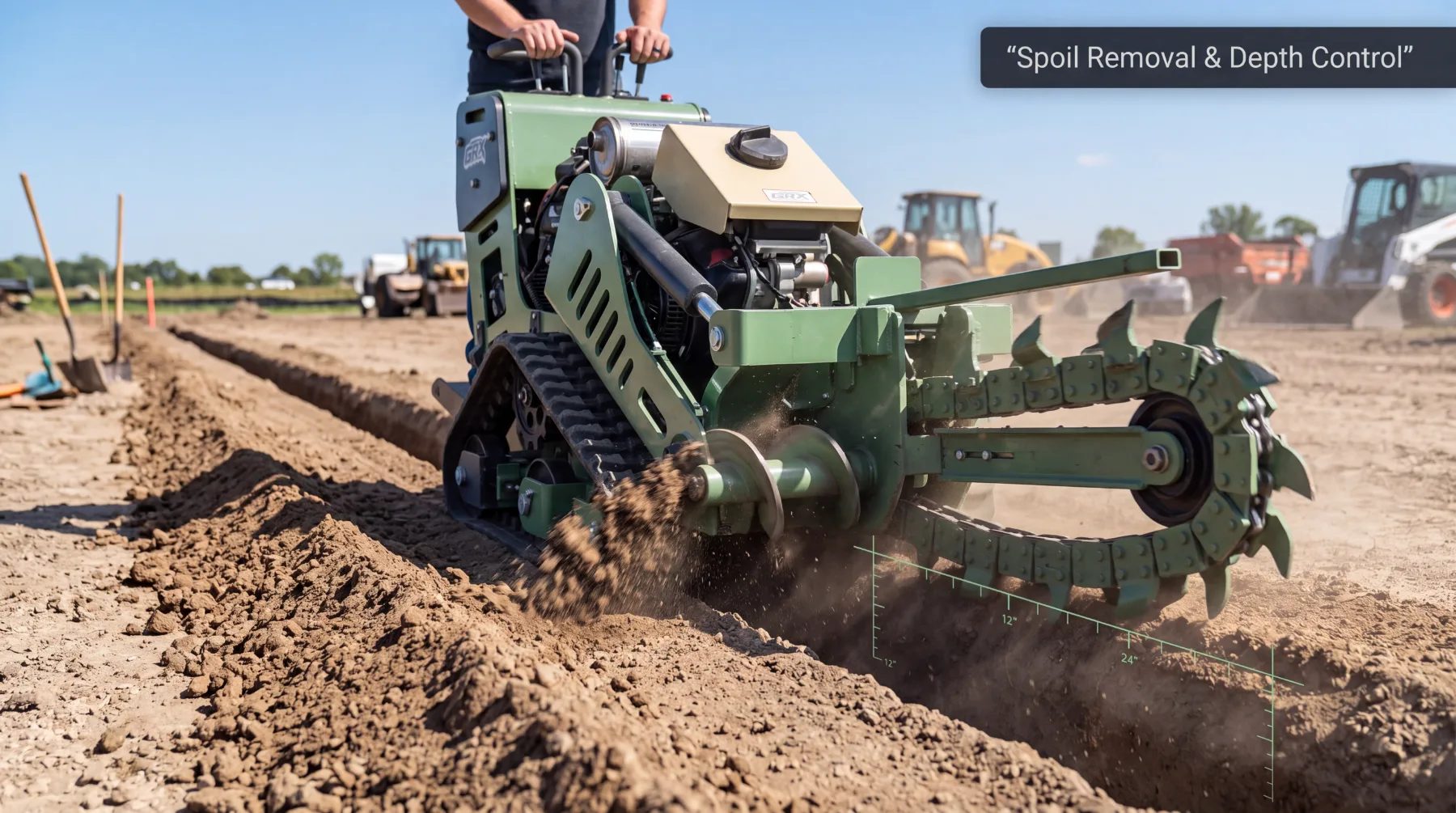
A good integrated trencher should do more than cut a channel. It should move excavated material away from the trench while maintaining a consistent digging depth, and the features that support these two functions have a direct effect on the quality of the finished work. Spoil removal keeps the trench clear and the surrounding area workable, while depth control ensures the channel holds a uniform profile from start to finish. Together they produce cleaner, more controlled trenches that are ready for the line with far less cleanup and reshaping.
Several specific features contribute to these results, and looking for them helps you judge how well a machine performs in practice:
- A spoil auger carries excavated material away from the trench and deposits it neatly to the side, keeping the channel clear and reducing the mess left along the trench line
- A crumber system removes loose material that falls back into the bottom of the trench, helping produce a clean, even base ready for the pipe or cable
- A built-in skid shoe helps stabilize the trencher and maintain a consistent digging depth as the machine advances, keeping the trench profile uniform along the entire run
These features matter because a trench that is uneven in depth or cluttered with spoil creates extra work downstream. Loose material in the bottom of a channel can prevent a pipe from sitting properly, and spoil piled directly along the trench slows backfilling and can fall back into the cut. A machine that manages both problems as it works saves considerable time and produces a result that meets specification the first time.
When evaluating a trencher, confirm which of these features it includes and how well they perform in your conditions. A machine equipped to remove spoil efficiently and hold a steady depth delivers the clean, consistent trenches that reliable underground installation depends on, letting your crew move from cutting to laying the line with confidence.
Conclusion
Buying the right skid steer trencher comes down to understanding how a handful of key specifications work together to shape performance. Hydraulic flow and pressure must match the trencher’s requirements to deliver steady cutting, digging depth and trench width needed to suit the lines you install, and the chain and tooth configuration should fit the ground you work in most. Engine power and hydraulic capacity have to be balanced for dependable digging force, and thoughtful spoil removal and depth control features produce the clean, consistent trenches that quality installation demands.
Before you commit to a machine, take an honest look at your typical jobs. Consider the depth and width your installations require, the soil conditions you face, and the hydraulic output your skid steer provides. Match these against a trencher’s specifications, confirm the powertrain is well balanced, and look for the spoil and depth control features that keep trenches clean. When you weigh these factors as a connected whole, you can choose a trencher with confidence and trust it to deliver reliable results run after run.
Frequently Asked Questions
1. Why is hydraulic flow and pressure the first thing to check on a skid steer trencher?
Hydraulic flow and pressure come first because the trencher draws its cutting power directly from the skid steer’s hydraulic system rather than generating its own. Every trencher has a required flow and pressure range set by the manufacturer, and matching that range to the machine’s hydraulic output is what produces consistent cutting performance. Flow, measured in gallons or liters per minute, governs the speed and continuity of the cutting chain, keeping it turning fast enough to clear material efficiently. Pressure supplies the force the chain needs to break through dense, compacted, or rocky ground. When both align with the trencher’s needs, the machine cuts steadily and predictably. Problems appear quickly when the supply falls short: insufficient flow slows the chain, while inadequate pressure leaves the machine straining against hard ground instead of cutting cleanly. Both drag out the work and add wear. Before buying, check the trencher’s rated flow range against the skid steer’s auxiliary output and confirm the machine can supply that flow and pressure consistently under real working loads.
2. How do I know if a trencher’s digging depth and trench width suit my work?
Start by looking closely at the installations you perform most often, since digging depth and trench width define the physical limits of what a machine can do. Digging depth matters because different lines sit at different levels below the surface. Electrical and communication cables often need a specific depth to meet code and stay protected, water and drainage lines require enough depth to function and resist freezing, and irrigation lines may sit shallower. Choose a trencher whose maximum depth comfortably covers your deepest typical installations so you can reach the required level in one controlled pass. Trench width is equally important because the channel must accommodate the pipe or cable plus any bedding material. A trench cut too narrow forces reworking, while one cut wider than needed removes extra soil and adds to backfilling and cleanup. Confirm the maximum digging depth meets or exceeds your deepest lines, check the trench width against your pipe and cable diameters, and consider your full mix of utility, drainage, irrigation, and landscaping jobs.
3. Does the chain and tooth configuration really make a difference?
Yes, the chain and tooth configuration has a direct effect on how well the trencher performs and how long its components last. Soil is rarely uniform, and the way the chain is built and how its teeth are arranged decide how effectively the machine handles what lies beneath it. A configuration matched to your ground fractures the material cleanly and keeps the chain moving at a productive rate, while a poorly matched setup slows the cut and leaves an uneven trench. The right choice depends on where the machine will mainly work. Soft soil pairs well with teeth designed for a fast, clean cutting action, compacted ground demands a setup built to break through denser material, and rocky terrain calls for a more aggressive, durable tooth configuration that handles abrasion and hard obstructions. Mixed conditions benefit from a versatile setup that holds up as the ground changes. A configuration poorly suited to hard or rocky ground can slow the cut, wear the teeth prematurely, and leave a ragged trench, so match it to your expected conditions.
4. Why do engine power and the hydraulic system need to be considered together?
Engine power and the hydraulic system need to be evaluated together because the trencher is integrated into the skid steer, and the two elements are closely linked. The engine generates the power that drives the hydraulic system, and the hydraulic system converts that power into the flow and pressure the trencher needs to cut. Neither tells the whole story on its own. Engine output sets the foundation, since a machine with adequate power can supply the hydraulic system fully even when the trencher demands substantial force to break through tough ground. When engine power falls short, the hydraulics cannot deliver their full potential, and the machine bogs down or struggles to hold a steady pace. The hydraulic system then translates that power into useful work, with its capacity determining how effectively the available power reaches the cutting chain. When engine output and hydraulic capacity are balanced, the machine handles moving forward and cutting at the same time, maintaining cutting force even as conditions get harder.
5. What spoil removal and depth control features should I look for?
Look for features that move excavated material away from the trench while helping the machine hold a consistent digging depth, since both directly affect the quality of the finished work. A spoil auger is one of the most valuable, carrying excavated material away from the trench and depositing it neatly to the side, which keeps the channel clear and reduces the mess along the trench line. A crumber system removes loose material that falls back into the bottom of the trench, helping produce a clean, even base ready for the pipe or cable to sit properly. A built-in skid shoe helps stabilize the trencher and maintain a consistent depth as the machine advances, keeping the trench profile uniform along the entire run. These features matter because a trench that is uneven or cluttered with spoil creates extra work downstream, slowing backfilling and preventing pipes from seating correctly. When evaluating a machine, confirm which of these features it includes and how well they perform in your specific ground conditions.