

Introduction
At the end of a long workday, when the dust settles and the engine finally goes quiet, most operators are ready to move on. The job is done, deadlines are met, and attention quickly shifts to the next task. But what happens in those final minutes—after the machine is turned off—often determines how well it performs tomorrow.
A mini skid steer is built to handle tough environments: mud, debris, gravel, concrete dust, and organic material. Yet, the same conditions that make it valuable also accelerate wear if not managed properly. Cleaning is often treated as a minor routine, but in reality, it is one of the most critical maintenance habits a contractor can develop.
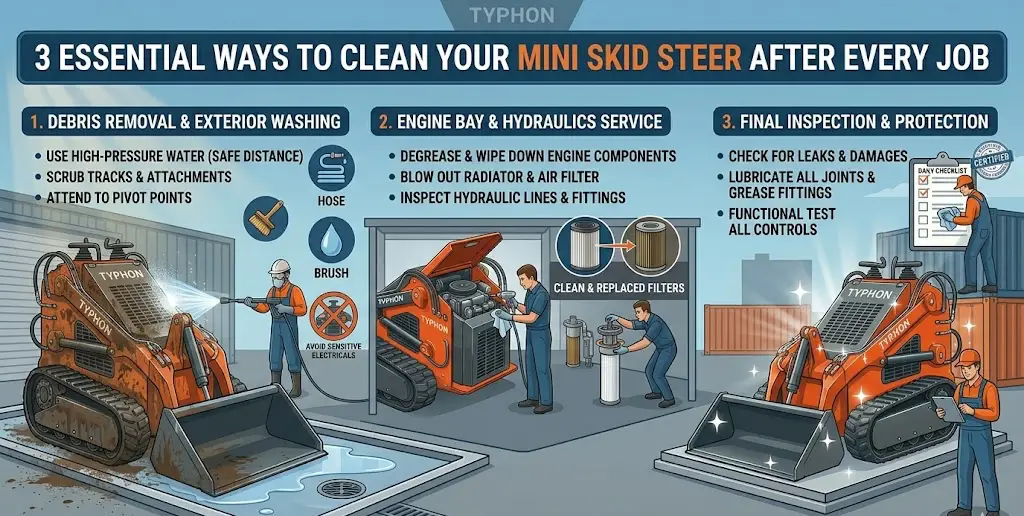
The difference between a machine that lasts two years and one that performs reliably for five or more often comes down to simple post-use care. Cleaning is not about appearance—it is about protection, efficiency, and long-term cost control. Understanding how to clean your mini skid steer properly is not complicated, but doing it correctly—and consistently—requires intention. There are three core practices that, when done right, will dramatically improve your machine’s durability and performance
1. Removing Heavy Debris Before It Becomes a Mechanical Problem
Every job site leaves a mark on your machine. Soil packs into crevices, gravel wedges itself into moving parts, and organic material clings to the undercarriage. While it may seem harmless in the short term, accumulated debris is one of the most common causes of premature wear.
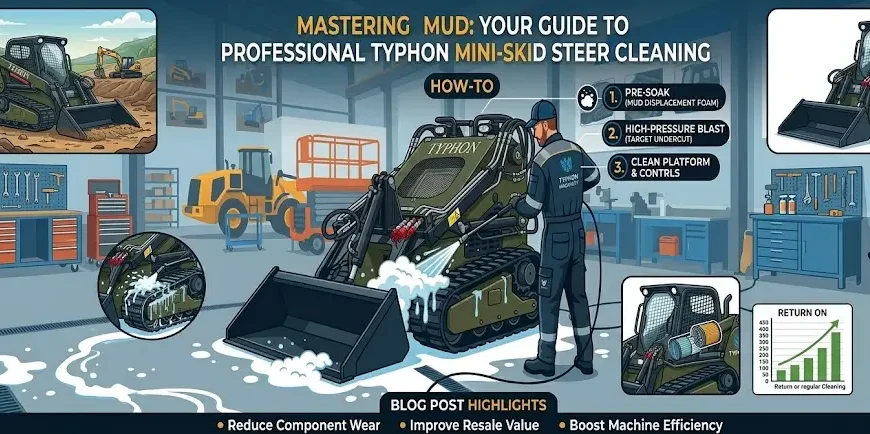
The real issue is not the dirt itself, but what it does over time. Debris traps moisture, creates friction, and interferes with moving components. Tracks begin to wear unevenly, rollers struggle under added resistance, and hydraulic components are forced to work harder than designed. The most effective approach starts immediately after use, before debris has time to harden or settle. By physically removing large clumps of dirt, mud, and materials from the undercarriage, bucket, and attachment points, you prevent buildup from turning into a structural issue.
This step is especially critical for contractors working in wet or clay-heavy environments, where material can harden almost like concrete if left overnight. A few minutes spent clearing out these areas preserves mobility, reduces strain on the drive system, and ensures the machine is ready for the next job without resistance. Once the bulk of the debris is removed, the machine becomes much easier—and safer—to clean in more detail, which leads directly into the next step.
2. Washing with Control: Protecting Components While Cleaning Effectively
Water is one of the most powerful tools for cleaning a mini skid steer, but it is also one of the most misunderstood. Many operators rely on high-pressure washing as a quick solution, blasting away dirt without considering the potential consequences.
The challenge lies in balance. While water effectively removes fine dust and residue, excessive pressure can force contaminants into sensitive areas such as bearings, seals, electrical connections, and hydraulic fittings. Over time, this can lead to corrosion, electrical faults, and system failures that are far more costly than the dirt you were trying to remove.
A controlled wash focuses on targeted cleaning rather than brute force. The goal is to rinse away remaining debris while respecting the integrity of the machine’s components. Areas such as the engine compartment, hydraulic lines, and control panels require a more careful approach, avoiding direct high-pressure exposure.
When done correctly, washing does more than improve appearance. It enhances cooling efficiency by removing dust from vents and radiators, reduces overheating risks, and prevents abrasive particles from circulating within the system.
For contractors operating in dusty or high-temperature environments, this step becomes even more critical. A clean machine runs cooler, operates more efficiently, and experiences fewer unexpected shutdowns. Once the machine is clean on the surface, attention must shift to something less visible—but equally important.
3. Drying and Inspecting: Turning Cleaning Into Preventive Maintenance
Cleaning should never end with water. What happens after washing is where true long-term value is created. Moisture left on the machine can quietly undo all the benefits of cleaning, leading to rust, corrosion, and gradual component degradation.
Drying is not just about removing water—it is about preparing the machine for its next cycle of work. Allowing the skid steer to air dry in a well-ventilated space or using compressed air to clear trapped moisture ensures that critical areas remain protected but this stage offers something even more valuable: visibility.
A clean machine reveals what a dirty one hides. Small hydraulic leaks, loose bolts, worn hoses, or early signs of damage become much easier to detect when surfaces are free from grime. This transforms a simple cleaning routine into an opportunity for preventive maintenance.
For business owners and operators, this is where real cost savings emerge. Catching a minor issue early can prevent major downtime, expensive repairs, and project delays. It shifts maintenance from reactive to proactive—a key difference between struggling operations and efficient, profitable ones.
This habit, repeated consistently, builds a deeper understanding of your machine’s condition over time. You begin to notice patterns, anticipate wear, and make smarter decisions about servicing and part replacement.
The Hidden Cost of Skipping Post-Use Cleaning
It is easy to underestimate the impact of skipping cleaning, especially when schedules are tight. However, the consequences rarely appear immediately. Instead, they accumulate quietly—reduced efficiency, increased fuel consumption, and gradual component failure.
Machines that are not cleaned regularly tend to run hotter, experience more friction, and require more frequent repairs. Attachments become harder to swap, controls may feel less responsive, and performance begins to decline in subtle but measurable ways.
For contractors managing multiple projects, this translates into lost time and reduced productivity. What seems like a minor shortcut at the end of the day can lead to significant operational setbacks over weeks or months.
Understanding this long-term impact reframes cleaning as an investment rather than a chore. It becomes part of the workflow, not an optional add-on.
Building a Routine That Supports Productivity
The most successful operators treat cleaning as part of the job, not something separate from it. Integrating it into the daily workflow ensures consistency and eliminates the tendency to skip it when time is limited.
This does not require complex systems or additional labor. In most cases, a disciplined 10–15 minute routine at the end of each shift is enough to maintain the machine in optimal condition. The key is consistency, not intensity.
Over time, this routine pays for itself through reduced maintenance costs, fewer breakdowns, and improved machine reliability. It also creates a professional standard that reflects directly on your business, especially when clients and partners see well-maintained equipment on-site.
Conclusion
Cleaning a mini skid steer is often overlooked, but it’s at the intersection of performance, longevity, and profitability. It is one of the simplest actions you can take, yet it delivers some of the most significant long-term benefits.
By removing heavy debris before it hardens, washing with control to protect sensitive components, and drying while inspecting for early issues, you transform a basic routine into a powerful maintenance strategy.
For contractors and equipment owners, the goal is not just to keep machines running—it is to keep them running efficiently, reliably, and profitably. The difference between constant repairs and consistent performance often comes down to what happens after the engine shuts off.
In an industry where margins are tight and downtime is costly, small habits create big advantages. Cleaning your mini skid steer properly is one of those habits—simple in execution, but critical in impact.
Comments (4)
Josephine1203
April 17, 2026https://shorturl.fm/9oXqq
Riley3722
April 23, 2026https://shorturl.fm/qfayt
Madeleine3298
April 24, 2026https://shorturl.fm/FNUj1
Angelica274
April 24, 2026https://shorturl.fm/iRnfS