
Versatility Through Multi-Functional Attachments
As crews move through different stages of development, the scope and demand of construction projects change all the time. You could start the day digging a deep trench, spend the afternoon grading a yard, and end the day hauling heavy pallets of stone. In the past, business owners had to buy, move, and keep a large fleet of highly specialized machines to keep up with these quickly changing needs. This old-fashioned method ties up a lot of working capital and makes things very hard for your transport crews to plan.
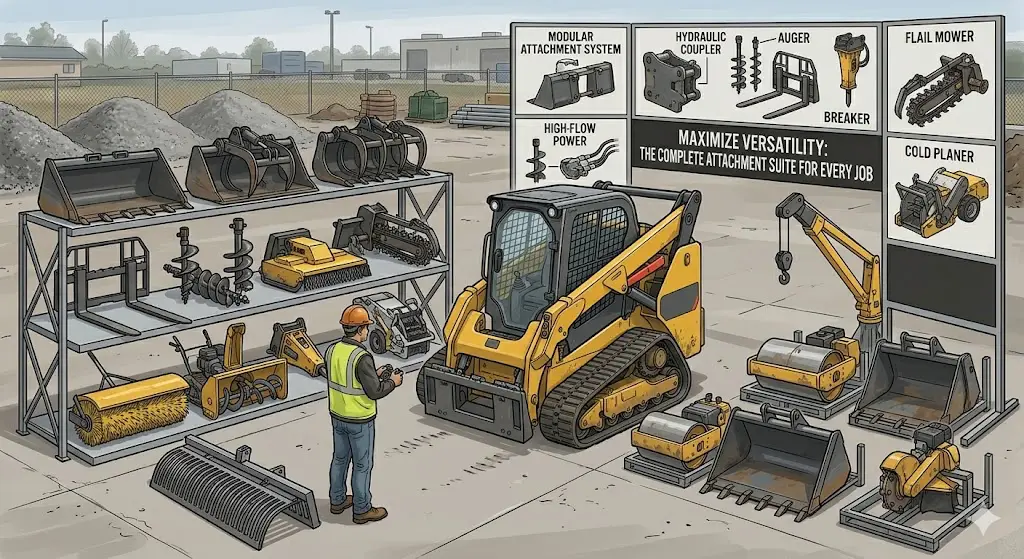
The real strength of a mini skid steer is not just its small engine, but also its ability to completely get around this old fleet model. A compact loader is not just a tool for moving dirt; it’s a lot more than that. It is a universal hydraulic power platform that has been designed to run dozens of highly capable, interchangeable tools. You can turn one piece of equipment into a powerful tool that can do many things if you know how to make the most of its amazing flexibility.
When you give your crews a wide range of attachments, it changes how they handle complicated, multi-stage contracts. Your operators can get right back to work by switching out the working end of their loader instead of waiting for a rental company to bring them a dedicated machine. This complete guide explains how using multi-functional attachments can help you avoid having to buy single-purpose machines, make your daily work easier, and protect your bottom line at the same time.
Overcoming the Burden of Traditional Equipment Fleets
If a contracting business wants to grow its service offerings, one of its main goals should be to build a complete inventory of all its tools and equipment. Contractors want to be ready for any job that pays well, which is why they often buy a dedicated rough-terrain forklift, a small bulldozer, and a compact excavator. The biggest problem with this plan is that these very specialized machines spend most of their lives sitting around doing nothing. You end up paying a lot of money each month for heavy equipment that you only use for a few hours a week.
Also, it’s a nightmare for your dispatch team to plan the logistics for moving three different heavy machines to the same residential job site. You have to secure a lot of big trailers, burn through hundreds of gallons of diesel fuel, and drive huge delivery trucks through quiet neighborhoods. The elegant answer to this logistical chaos is viewing your compact loader as a modular, universal hub for all your heavy lifting needs. Instead of buying a completely new engine, cab, and undercarriage for every job; all you have to do is buy the right attachment to do the job.
This modular equipment method cuts your initial capital investment by a huge amount and your annual routine maintenance costs by a huge amount. Your mechanical crew only has to take care of one diesel engine and one set of rubber tracks, but your business can still do dozens of very specific jobs. This huge drop in operational costs instantly boosts your profit margin on every contract you sign. Getting rid of a big, old-fashioned fleet lets you focus only on the tools that make money, starting with the basics of preparing the site.
Mastering Earthmoving and Precision Grading
Almost every successful building or landscaping project starts with a lot of earthmoving and careful site preparation. Before any real building can safely happen, crews have to regularly cut away thick topsoil, fill in huge retaining walls, and level the ground perfectly. It takes a long time to do these tasks by hand with shovels and heavy wheelbarrows, and it can be very tiring for your workers. On the other hand, it’s often impossible to bring in a big, dedicated bulldozer because modern residential property lines don’t have enough space.
Standard dirt buckets and specialized grading blades on a mini skid steer are the perfect middle ground between hard work and big machines. The loader’s strong pushing power drives the bucket deep into hard-packed soil, easily tearing out tough roots and heavy clay. Operators can quickly move huge scoops of dirt around the property, which speeds up the first phase of the project by a lot. Once most of the material has been moved, the operator can smoothly switch from aggressive digging to careful finishing at the surgical site.
The operator can perfectly level the ground to exact specifications by replacing the standard bucket with a dedicated soil conditioner or grading blade. These attachments break up hard soil clods, get rid of dangerous rocks, and leave behind a smooth, perfectly graded surface that is ready for seed or concrete. This dual capability makes sure that your highly paid crew spends their time building instead of fighting with the dirt under their feet. As the surface soil is properly prepared and graded, contractors must naturally turn their attention to the important utilities that are buried deep underground.
Streamlining Complex Underground Utility Work
Modern buildings need a complicated network of underground utilities, such as heavy water mains, electrical conduits, and complicated irrigation systems. Plumbers, electricians, and irrigation experts always have to deal with the problem of safely burying these important lines below the frost line in their area. When you use a standard compact excavator for this job, it often makes a trench that is too wide, which means you have to backfill too much and ruin the grass that is already there. This strict method annoys property owners and makes contractors spend thousands of dollars fixing the surrounding landscape before they can finish the job.
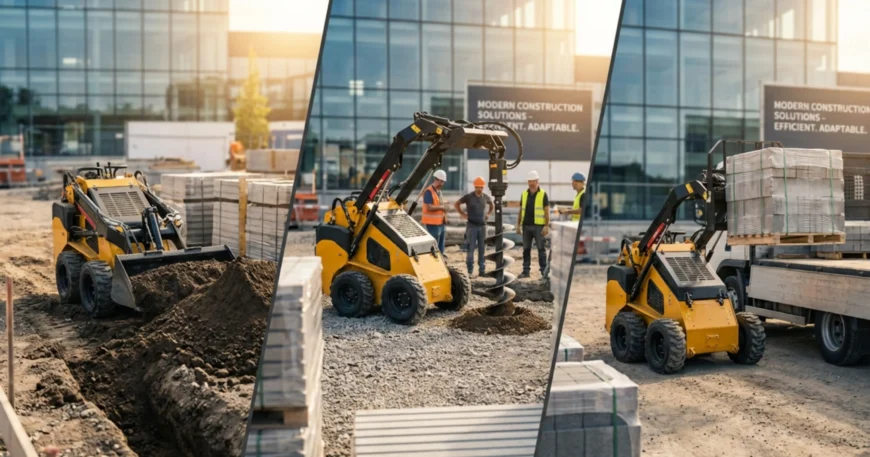
Dedicated trencher and hydraulic auger attachments are a very precise alternative to traditional, messy digging methods. A trencher attachment uses a strong chain with carbide tips to cut a perfectly straight, narrow channel right where the utility line needs to go. The machine neatly drops the dirt it digs up right next to the trench, which makes the last step of filling it in very quick and easy. This exact, mechanized method greatly reduces damage to other people’s lawns and makes sure that the soil around it stays completely intact.
The operator just attaches a hydraulic auger when the project needs to dig down vertically for structural fence posts or deep concrete footings. The loader’s auxiliary hydraulics give the auger bit a lot of rotational torque, which lets it easily break through thick clay and heavy rocks. Using these special attachments saves your crew from hours of hard manual digging and keeps them safe from serious back injuries. Once the underground utilities are safely installed and covered, the work on the job site quickly shifts to handling the heavy materials needed for construction above ground.
Revolutionizing On-Site Material Logistics
Heavy building materials need to be moved from the staging area to the active installation zones on a busy construction site all the time. General contractors often have trouble moving heavy pallets of bricks, big bundles of roofing shingles, and huge rolls of new sod across muddy, bumpy ground. Waiting for a delivery truck from a third party that has a special forklift can often cause major scheduling problems that stop the whole project in its tracks. When the forklift isn’t available, contractors have to make their highly skilled workers carry these heavy materials by hand.
Adding a set of heavy-duty pallet forks to your attachments list will instantly fix this huge logistical problem. The mini skid steer can quickly change into a powerful material handler for rough terrain that can get through thick mud and deep ruts without getting stuck. Operators can move easily around the busy job site, bringing heavy pallets of cement block right to the masons who are waiting at the foundation wall. This quick logistical improvement keeps your highly paid crews focused on productive installation work that makes money instead of tiring material transport.
Landscaping crews can carefully move big, old trees without hurting the fragile root balls by using special attachments like nursery jaws. This amazing logistical flexibility gets rid of the need to rent expensive equipment and makes sure that your materials are always where they need to be. When you take full control of the logistics of your on-site materials, you avoid expensive scheduling delays and keep your whole crew working at their best. But in the end, every contractor runs into huge problems that need brute force instead of careful handling of materials.
Conquering Demolition and Heavy Debris Removal
When you renovate commercial retail spaces or clear out neglected plots of land, you have to rip out a lot of solid concrete, thick asphalt, and twisted structural steel. One of the most dangerous and time-consuming parts of any big construction project is dealing with this heavy, irregular debris. When operators try to use a regular dirt bucket to move brush that is tangled up or pieces of concrete that are sharp, the materials keep moving around and spilling over the sides. Because there isn’t enough secure material control, ground workers are at great risk of getting hurt, and operators have to make dozens of trips to the dumpster that aren’t very useful.
Adding a hydraulic root grapple to your loader makes it easy to move around debris that is hard to handle. The grapple is like a strong mechanical hand that uses separate hydraulic upper jaws to hold uneven loads tightly. The operator can safely pick up big piles of broken concrete and tangled tree limbs and hold them tightly against the frame of the attachment. This strong grip makes the job site much safer, stops falling debris from accidentally damaging property, and speeds up your overall clearing speed by a huge amount.
When the problem is a solid slab of reinforced concrete that won’t move, the operator can use a heavy-duty hydraulic breaker attachment. The breaker sends a huge amount of impact force right through the loader boom, easily breaking up thick driveways and stubborn retaining walls without the need for dangerous handheld pneumatic jackhammers. Using a mounted breaker to break up concrete takes a fraction of the time and makes workers much safer by keeping them completely away from flying debris. But the real magic of this whole process is how quickly an operator can switch between these very dangerous tools.
The Operational Power of Quick-Change Systems
The real value of having a lot of different attachments depends on how easily your crew can use them in the field. In the past, changing the bucket on a big tractor took a lot of people, heavy sledgehammers, and a lot of physical wrestling to get the stubborn steel pins to line up. Because this process was so hard and dangerous, operators often chose not to change attachments at all and instead used the wrong tool to finish a job. That unwillingness completely defeats the purpose of having flexible tools and makes your job site much less productive.
Modern mini skid steers have universal quick-attach mechanisms that are so easy to use that they completely change how operators work with their machines. In less than two minutes, one person can disconnect a heavy dirt bucket, back away, line it up with a hydraulic trencher, and lock it in place. The hydraulic quick-couplers are made to make connections quickly and without leaks, so the operator can power up the new implement without leaving the work area. This ability to switch configurations without any downtime gets rid of the annoying downtime that usually comes with changing heavy equipment configurations.
Operators are strongly encouraged to always use the right tool for the job because the transition process is so easy. Using three different tools, a worker can break concrete, load the debris into a dump truck, and grade the soil that is left over to a perfect finish in just one afternoon. This smooth, uninterrupted workflow is the best example of a job site efficiency, allowing a small crew to accomplish the work of a massive commercial outfit. Understanding this operational power naturally points to a highly profitable future for contractors willing to embrace multi-functional machinery.
Empowering Your Business for Strategic Growth
A contracting business that is very successful can quickly adapt to unexpected problems on the job site. By making smart investments in multi-functional attachments, you can get rid of the huge cost of keeping a large fleet of single-purpose equipment. With the right tools, one mini skid steer gives your crew the confidence to move earth, install utilities, handle logistics, and do heavy demolition. This amazing flexibility makes sure that your capital investment is always working hard to make money instead of just sitting around in a storage lot.
Don’t let the limitations of traditional equipment strategies set the limit on how big your business can grow. Look closely at your upcoming project pipeline and figure out what specific operational problems are making your crews work more slowly. Today, get in touch with a reliable heavy equipment dealer to look through their huge selection of attachments. Then, confidently build the customized, multi-functional fleet your business needs to take over the local market.