
Mini Skid Steer
In today’s construction and landscaping world, the pace of work has changed dramatically. Deadlines are tighter, job sites are more complex, and clients expect both speed and precision without compromise. Efficiency is no longer something that simply gives you an edge—it’s something you must have just to stay competitive.
Whether you’re a contractor managing multiple projects, a landscaper working in residential areas, or a property owner handling your own upgrades, the pressure to do more with less is constant. Less time, less space, fewer resources—but still delivering top-tier results.
The mini skid steer has established itself as one of the most valuable machines on modern job sites.
At first glance, it’s easy to underestimate it. Its compact size might suggest limitations. But in reality, that compact design is precisely what gives it an advantage. A mini skid steer isn’t trying to compete with larger machines—it’s solving problems those machines can’t handle efficiently.
What makes it truly powerful is the combination of agility, strength, and versatility. It’s a machine designed for real-world conditions, not just open construction sites. And once you understand its core benefits, it becomes clear why more professionals are making it a central part of their operations—not just an optional tool.
Let’s take a deeper look at why mini skid steers are becoming essential equipment across industries.
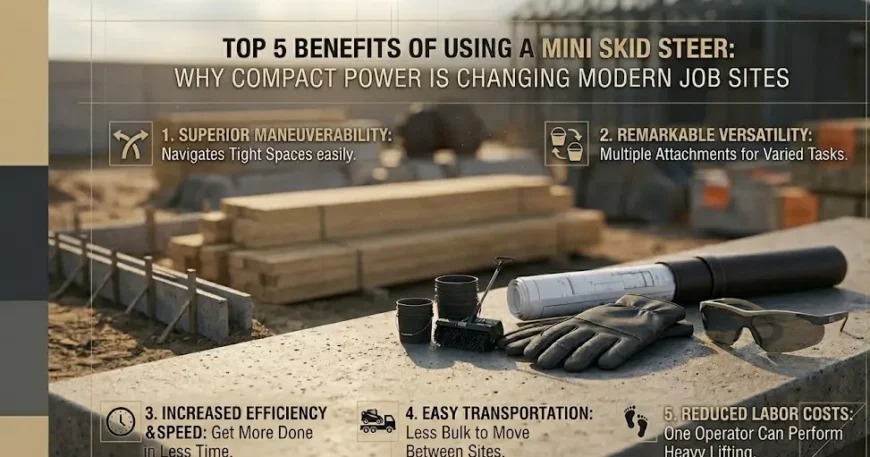
1. Exceptional Maneuverability in Tight Spaces
One of the biggest challenges on any job site is space—or more specifically, the lack of it.
Not every project takes place in wide-open areas. In fact, many of today’s jobs happen in environments where space is limited and precision matters more than raw power. Think about residential backyards, narrow alleyways, indoor demolition sites, or urban construction zones surrounded by existing structures.
This is where traditional equipment often becomes inefficient. Larger skid steers or heavy machinery may offer more horsepower, but they struggle when space is restricted. Turning becomes difficult, positioning takes longer, and the risk of accidental damage increases.
A mini skid steer is designed with these exact challenges in mind.
Its compact frame allows it to move through tight pathways that larger machines simply can’t access. It can navigate around obstacles with ease, handle sharp turns, and operate in confined areas without constant repositioning. This level of control gives operators the confidence to work closer to structures, fences, and delicate features without compromising safety.
But maneuverability isn’t just about fitting into small spaces—it’s about working efficiently within them.
When a machine can move smoothly and precisely, tasks get completed faster. There’s less time wasted adjusting position, less back-and-forth movement, and fewer interruptions. Over the course of a project, this adds up to significant time savings.
Even more importantly, this precision helps reduce costly mistakes. Damaging a client’s property, landscaping, or surrounding structures can quickly turn a profitable job into an expensive one. A mini skid steer minimizes that risk, allowing operators to maintain accuracy while still working quickly.
In many cases, it’s not about having the biggest machine—it’s about having the right one. And when space is limited, nothing performs quite like a mini skid steer.
2. Versatility Through Multi-Functional Attachments
If there’s one feature that truly sets the mini skid steer apart, it’s its ability to transform.At its core, a mini skid steer is not just a machine—it’s a platform. What it can do depends largely on the attachments you pair with it. And that’s where its real value becomes clear.
Instead of investing in multiple specialized machines, you can use one compact unit to handle a wide range of tasks. With the right attachments, a mini skid steer can shift seamlessly between roles throughout a single project.
In the morning, it might be digging trenches for utility lines. By midday, it could be grading soil or moving materials. Later in the day, it might switch to lifting, hauling, or even clearing debris.This level of flexibility changes how work gets done.
Traditionally, different phases of a project would require different equipment. That means coordinating machine availability, managing transport, and dealing with downtime during transitions. Every switch slows the workflow.
With a mini skid steer, those transitions become almost effortless. Attachments can be swapped quickly, allowing operators to move from one task to another without significant delays.
And the range of available attachments is extensive. Buckets, augers, trenchers, grapples, forks, and more—each one expands what the machine can accomplish. It’s not just about convenience; it’s about maximizing productivity with minimal resources.
For contractors and business owners, this versatility directly impacts profitability. Instead of tying up capital in multiple machines, you can invest in one highly adaptable system. It reduces equipment costs, simplifies logistics, and ensures you’re always ready to handle different job requirements.
In an industry where flexibility is key, having a machine that can adapt instantly is a powerful advantage.
3. Increased Efficiency and Productivity
Every job site operates on one critical resource: time.
The faster you can complete a task without sacrificing quality, the more efficient—and profitable—your operation becomes. Delays, inefficiencies, and unnecessary labor costs all eat into margins.
This is another area where mini skid steers excel.
Because of their compact design and ease of operation, they streamline workflows in ways that larger machines often cannot. They’re quick to position, easy to transport, and simple to operate, which reduces downtime and keeps projects moving forward.
Tasks that would normally require multiple workers using manual labor can often be completed by a single operator using a mini skid steer. This doesn’t just speed up the process—it also reduces physical strain on workers, improving overall job site safety and consistency.Another key factor is operator comfort.
Modern mini skid steers are designed with intuitive controls and ergonomic layouts. This might seem like a small detail, but over the course of a long workday, it makes a significant difference. When operators are comfortable and less fatigued, they can maintain higher levels of focus and performance.
This leads to better results and fewer errors.
Transport is another area where efficiency improves. Larger machines often require specialized trailers and additional planning to move between job sites. Mini skid steers, on the other hand, are much easier to transport. This makes them ideal for contractors handling multiple projects in different locations.
Less time spent on logistics means more time spent getting actual work done.
When you combine faster operation, reduced labor needs, and improved workflow, the result is clear: higher productivity with less effort.
4. Cost-Effective Investment and Operation
For many contractors and business owners, equipment decisions come down to one key question: is it worth the investment?
Mini skid steers offer a compelling answer.
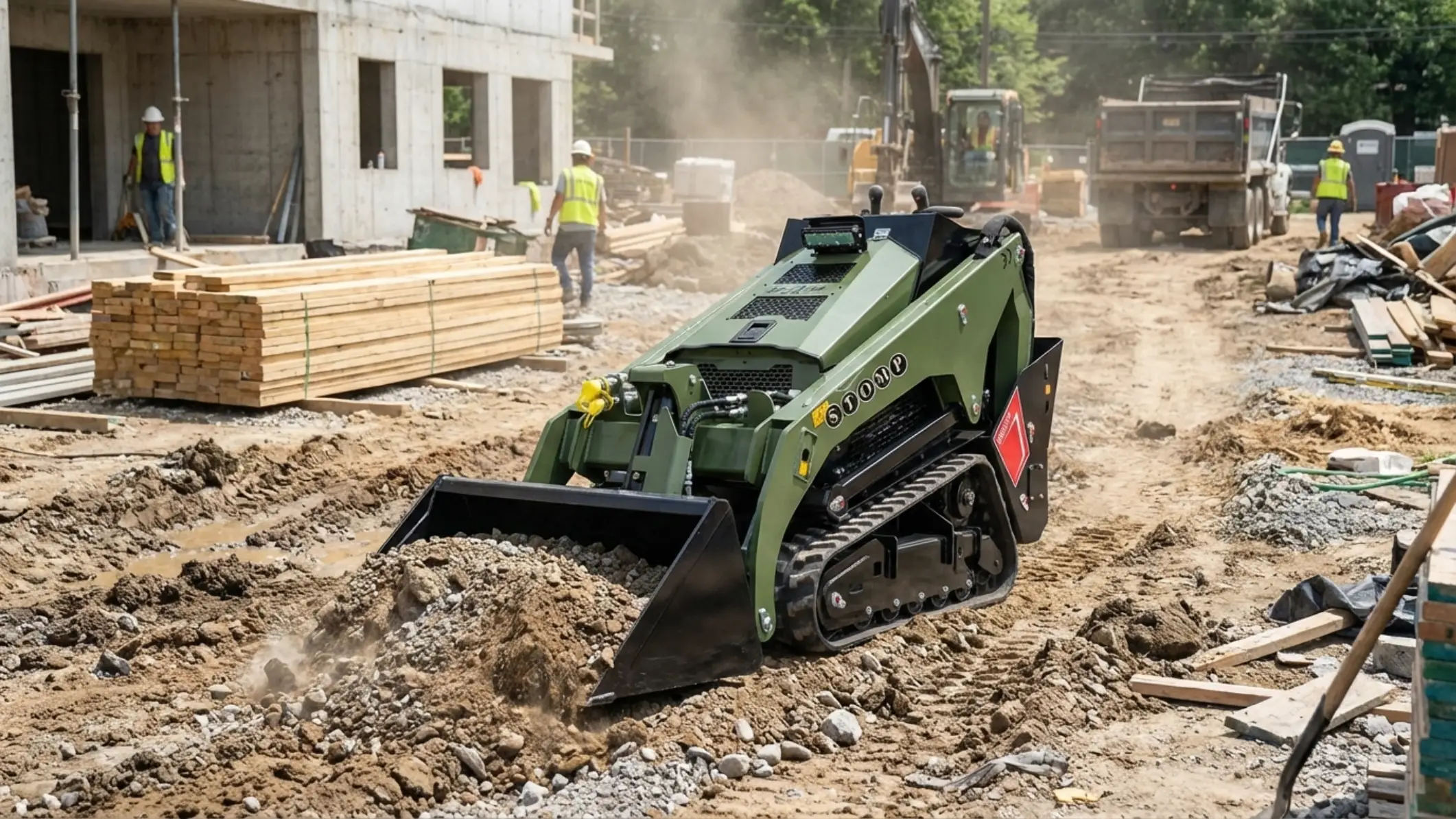
Compared to larger construction equipment, the initial purchase cost is significantly lower. This makes them more accessible, especially for small businesses, independent contractors, or those just starting to expand their operations.
But the real value goes beyond the upfront price.
Operating costs are also much lower. These machines typically consume less fuel, require less maintenance, and are easier to service. Over time, these savings can add up to a substantial reduction in total ownership costs.
There’s also the benefit of consolidation.
Because a mini skid steer can handle multiple tasks with different attachments, you don’t need to invest in several separate machines. This reduces not only equipment costs but also storage, maintenance, and transportation expenses.
It’s a smarter way to allocate resources.
For growing businesses, this flexibility is especially important. Instead of committing large amounts of capital to specialized equipment, you can invest in a system that grows with your needs. As your workload expands, you can simply add new attachments rather than purchasing entirely new machines.
This scalability makes mini skid steers a strategic investment, not just a practical one.
They allow you to take on a wider range of projects without dramatically increasing your overhead. And in a competitive market, that ability to stay flexible while controlling costs can make all the difference.
5. Reduced Ground Impact and Surface Damage
Not every job site is built for heavy machinery.
In many cases—especially in residential landscaping or finished environments—protecting the ground surface is just as important as completing the task itself. Damaging grass, soil, or pavement can lead to additional repair work, increased costs, and unhappy clients.
Mini skid steers are designed with this concern in mind.
Because of their lighter weight and lower ground pressure, they are much less likely to cause surface damage compared to larger machines. This makes them ideal for working on delicate terrain or finished areas where preserving the surface is critical.
Whether you’re operating on grass, soft soil, or landscaped property, a mini skid steer allows you to perform heavy-duty tasks without leaving a heavy footprint.
This is especially valuable for landscapers who need to maintain the aesthetic quality of a project while still handling demanding work. It’s also beneficial for contractors working in residential areas where property damage can quickly impact reputation and client satisfaction.
In simple terms, it helps you work smarter—and cleaner.
Why Mini Skid Steers Are the Future of Compact Equipment
As job sites continue to evolve, so do the demands placed on equipment.
Projects are becoming more complex. Spaces are getting tighter. Expectations are higher. And efficiency is more important than ever.
Mini skid steers are not just keeping up with these changes—they are helping to define the future of how work gets done.
They represent a shift toward smarter, more adaptable machinery. Instead of relying on size and raw power alone, they focus on precision, versatility, and efficiency.
And that’s exactly what modern job sites need.
From construction and landscaping to agriculture and property maintenance, these machines are proving their value across a wide range of industries. They’re not replacing larger equipment entirely—but they are filling a critical gap that those machines cannot address.
Final Thoughts
Choosing the right equipment is one of the most important decisions you can make on any project.
A mini skid steer offers a unique balance of power, precision, and flexibility. It allows you to work efficiently in tight spaces, handle multiple tasks with ease, and reduce both costs and complexity.
More importantly, it helps you adapt.
And in today’s fast-changing work environment, adaptability is everything.
For professionals looking to improve productivity, expand capabilities, and stay competitive, investing in a mini skid steer isn’t just a smart move—it’s a strategic one that positions you for long-term success.
Explore more about Exceptional Maneuverability in Tight Spaces?
Comments (2)
guccii
April 6, 2026hello
Lucy
April 6, 2026hi again