
• Home 2
  • Job Site Efficiency & Innovation

Job Site Efficiency & Innovation

Attachment, mini skid steer

Versatility Through Multi-Functional Attachments – mini skid steer

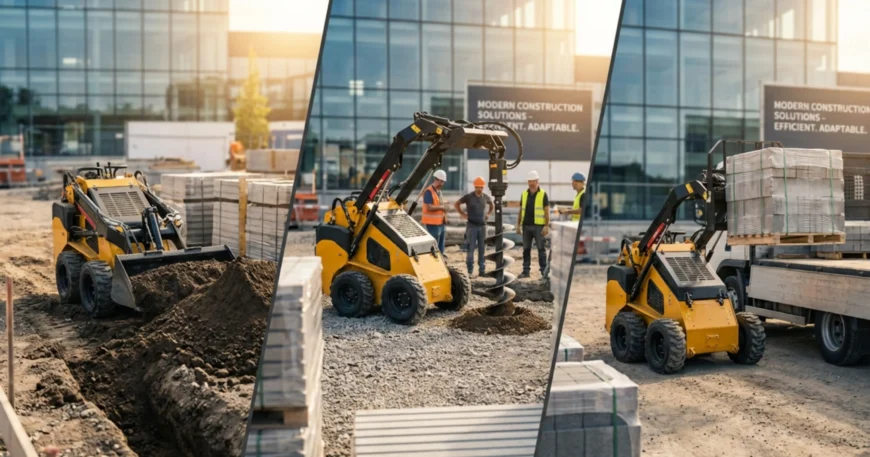
Versatility Through Multi-Functional Attachments As crews move through different stages of development, the scope and demand of construction projects change all the time. You could start the day digging a deep trench, spend the afternoon grading a yard, and end the day hauling heavy pallets of stone. In the past, business owners had to buy, move, and keep a large fleet of highly specialized machines to keep up with these quickly changing needs. This old-fashioned method ties up a lot of working capital and makes things very hard for your transport crews to plan. The real strength of a mini skid steer is not just its small engine, but also its ability to completely get around this old fleet model. A compact loader is not just a tool for moving dirt; it’s a lot more than that. It is a universal hydraulic power platform that has been designed to run dozens of highly capable, interchangeable tools. You can turn one piece of equipment into a powerful tool that can do many things if you know how to make the most of its amazing flexibility. When you give your crews a wide range of attachments, it changes how they handle complicated, multi-stage contracts. Your operators can get right back to work by switching out the working end of their loader instead of waiting for a rental company to bring them a dedicated machine. This complete guide explains how using multi-functional attachments can help you avoid having to buy single-purpose machines, make your daily work easier, and protect your bottom line at the same time. Overcoming the Burden of Traditional Equipment Fleets If a contracting business wants to grow its service offerings, one of its main goals should be to build a complete inventory of all its tools and equipment. Contractors want to be ready for any job that pays well, which is why they often buy a dedicated rough-terrain forklift, a small bulldozer, and a compact excavator. The biggest problem with this plan is that these very specialized machines spend most of their lives sitting around doing nothing. You end up paying a lot of money each month for heavy equipment that you only use for a few hours a week. Also, it’s a nightmare for your dispatch team to plan the logistics for moving three different heavy machines to the same residential job site. You have to secure a lot of big trailers, burn through hundreds of gallons of diesel fuel, and drive huge delivery trucks through quiet neighborhoods. The elegant answer to this logistical chaos is viewing your compact loader as a modular, universal hub for all your heavy lifting needs. Instead of buying a completely new engine, cab, and undercarriage for every job; all you have to do is buy the right attachment to do the job. This modular equipment method cuts your initial capital investment by a huge amount and your annual routine maintenance costs by a huge amount. Your mechanical crew only has to take care of one diesel engine and one set of rubber tracks, but your business can still do dozens of very specific jobs. This huge drop in operational costs instantly boosts your profit margin on every contract you sign. Getting rid of a big, old-fashioned fleet lets you focus only on the tools that make money, starting with the basics of preparing the site. Mastering Earthmoving and Precision Grading Almost every successful building or landscaping project starts with a lot of earthmoving and careful site preparation. Before any real building can safely happen, crews have to regularly cut away thick topsoil, fill in huge retaining walls, and level the ground perfectly. It takes a long time to do these tasks by hand with shovels and heavy wheelbarrows, and it can be very tiring for your workers. On the other hand, it’s often impossible to bring in a big, dedicated bulldozer because modern residential property lines don’t have enough space. Standard dirt buckets and specialized grading blades on a mini skid steer are the perfect middle ground between hard work and big machines. The loader’s strong pushing power drives the bucket deep into hard-packed soil, easily tearing out tough roots and heavy clay. Operators can quickly move huge scoops of dirt around the property, which speeds up the first phase of the project by a lot. Once most of the material has been moved, the operator can smoothly switch from aggressive digging to careful finishing at the surgical site.   The operator can perfectly level the ground to exact specifications by replacing the standard bucket with a dedicated soil conditioner or grading blade. These attachments break up hard soil clods, get rid of dangerous rocks, and leave behind a smooth, perfectly graded surface that is ready for seed or concrete. This dual capability makes sure that your highly paid crew spends their time building instead of fighting with the dirt under their feet. As the surface soil is properly prepared and graded, contractors must naturally turn their attention to the important utilities that are buried deep underground. Streamlining Complex Underground Utility Work Modern buildings need a complicated network of underground utilities, such as heavy water mains, electrical conduits, and complicated irrigation systems. Plumbers, electricians, and irrigation experts always have to deal with the problem of safely burying these important lines below the frost line in their area. When you use a standard compact excavator for this job, it often makes a trench that is too wide, which means you have to backfill too much and ruin the grass that is already there. This strict method annoys property owners and makes contractors spend thousands of dollars fixing the surrounding landscape before they can finish the job. Dedicated trencher and hydraulic auger attachments are a very precise alternative to traditional, messy digging methods. A trencher attachment uses a strong chain with carbide tips to cut a perfectly straight, narrow channel right where the utility line needs to go. The machine neatly drops the dirt
Read More +
Exceptional Maneuverability in Tight Spaces – Mini Skid Steer

Exceptional Maneuverability in Tight Spaces – Mini Skid Steer

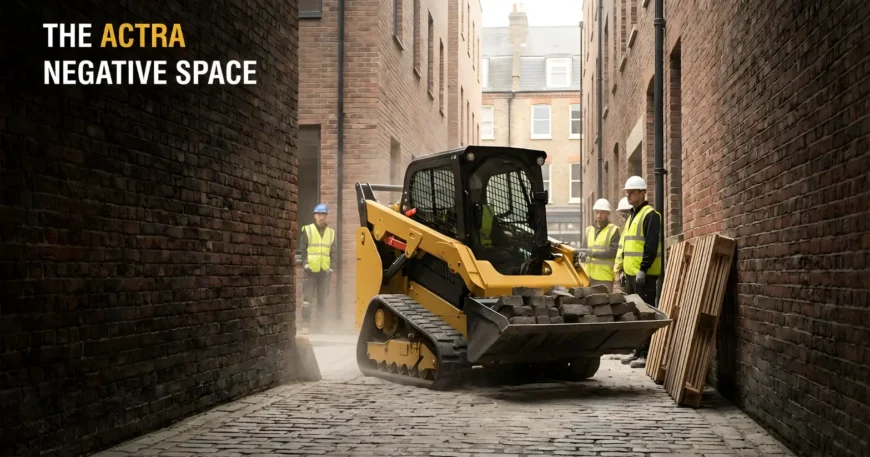
Exceptional Maneuverability in Tight Spaces Getting a good deal on a contract often comes with a big logistical problem. The real work area is either behind a narrow residential gate, at the end of a narrow city alleyway, or completely inside an existing commercial building. If you can’t get the machine to the dirt, raw horsepower doesn’t mean anything when space is very limited. Contractors often find themselves staring at a job that would make them a lot of money, only to realize that their usual tools won’t fit. This spatial limitation makes it hard for construction business owners to make a choice. You can either say no to the job completely or make your crew do days of hard, unprofitable manual labor with wheelbarrows and shovels. Neither choice helps a contracting business grow and compete. You need a mechanical solution that is specifically designed to deliver a lot of power into the most difficult situations. Knowing how to use small machines turns these annoying space limits into clear competitive advantages. This in-depth guide will show you exactly how a mini skid steer can help with the problem of small work areas. You will learn how their unique engineering protects fragile property, cuts down on wasted movement by a huge amount, and keeps your projects in tight spaces very profitable in the end. The Reality of Restrictive Work Environments Urban development and renovations of residential properties currently dominate the construction industry. Clients constantly enhance their homes by constructing outdoor living spaces and upgrading utilities buried deep underground. These projects don’t often have the luxury of a big, clean dirt lot. Instead, contractors have to deal with mature landscaping, paved driveways, and property lines that are only a few inches away from the work area. Bringing in traditional heavy machinery right away makes things very hard to work with. Full-sized loaders need a lot of space to turn around, which is not something that can be found in a typical suburban backyard or a busy downtown sidewalk. When operators try to fit big machines into these spaces, they spend more time nervously checking their blind spots than actually moving things. This constant indecision slows the whole project down to a crawl and puts a lot more physical stress on your crew. A mini skid steer is purpose-built to eliminate this exact operational friction. The machine features an incredibly narrow frame, often measuring less than thirty-six inches wide, allowing it to slip gracefully through standard pedestrian doorways and narrow property lines. This compact footprint removes the immediate barrier to entry, allowing you to bring mechanized power directly to the heart of the project. By solving the access problem, you immediately eliminate the need to manually haul materials across the property, saving countless hours of expensive labor. Navigating Narrow Access Points and Alleyways The most difficult phase of any residential or urban project is usually the initial staging and site access. Getting tools, heavy materials, and machinery from the street parking area to the actual backyard work zone is a massive logistical hurdle. Many contractors resign themselves to dismantling expensive wooden fences or temporarily removing structural gates just to get their equipment inside. This tear-down and rebuild process consumes valuable hours, annoys the property owner, and eats directly into your carefully calculated profit margins. Standard skid steers and compact track loaders, while powerful, simply cannot squeeze through a standard garden gate without causing extensive collateral damage. Even if the machine barely clears the posts, the operator lacks the necessary room to turn the machine once inside the enclosure. This lack of maneuverability turns a simple material delivery into a tense, high-risk operation that threatens the integrity of the client’s property. The solution requires a machine that treats narrow corridors as a standard operating environment rather than an impassable obstacle. Mini skid steers thrive in these exact scenarios due to their specialized undercarriage design and zero-turn capabilities. The independent tracks allow the machine to rotate completely within its own physical footprint. An operator can drive straight down a narrow concrete alleyway, stop, spin the machine ninety degrees on a dime, and proceed directly through a tight gate. This exceptional maneuverability eliminates the need for costly fence removal and ensures your materials arrive at the work zone safely and efficiently. Precision Control Around Delicate Structures Operating heavy machinery is inherently risky, but those risks multiply exponentially when you are working inches away from an expensive glass sunroom or a newly poured concrete foundation. Residential and commercial clients expect contractors to improve their property, not accidentally destroy the surrounding features during the process. Standard construction equipment carries massive momentum, and a slight slip of the operator’s hand can easily result in a heavy steel bucket smashing through a structural wall. When operators are forced to use oversized machines in confined areas, their focus is entirely consumed by avoiding catastrophic collisions. They constantly ride the brakes, overcorrect their steering, and work at an agonizingly slow pace just to prevent property damage. This hyper-cautious approach is mentally exhausting for the operator and terrible for your project timeline. To maintain both speed and safety, you need equipment that responds with absolute precision to the operator’s commands. The hydraulic systems on a high-end mini skid steer are designed to give you very smooth, predictable, and proportional control. The operator stands on a rear platform instead of sitting in an enclosed cab, so they can see the whole machine from all sides. From this great vantage point, they can see exactly where the tracks are and how close the bucket is to a fragile structure. With smooth hydraulics and perfect visibility, this lets your crew work hard and safely in the smallest spaces. Maximizing Efficiency Without Constant Repositioning Keeping a steady, smooth rhythm is important for both earthmoving and material handling. The faster a machine can scoop, turn, dump, and go back to the pile, the more money it makes all day. But working in a small space naturally breaks this
Read More +
Cart

No products in the cart.

Select the fields to be shown. Others will be hidden. Drag and drop to rearrange the order.
  • Image
  • SKU
  • Rating
  • Price
  • Stock
  • Availability
  • Add to cart
  • Description
  • Content
  • Weight
  • Dimensions
  • Additional information
Click outside to hide the comparison bar
Compare