
What Are the Two Types of Skid Steers?
Every successful heavy construction and landscaping project relies on machinery that delivers exceptional power without sacrificing maneuverability. When you step onto a crowded job site, you quickly realize that massive, single-purpose equipment often creates more logistical headaches than it solves. Contractors need highly adaptable solutions that can seamlessly transition from heavy earthmoving to delicate material handling. The compact skid loader perfectly fills this critical operational gap, serving as the ultimate multi-tool for modern site management. However, maximizing your efficiency depends entirely on answering one foundational question: what are the two types of skid steers, and which one does your business actually need?
Understanding the fundamental differences between tracked and wheeled skid steers is essential for protecting your profit margins and ensuring long-term operational success. Making an uneducated purchasing decision can severely limit your daily capabilities, leading to stalled projects and frustrated ground crews. This comprehensive guide breaks down the core designs of both machine types, exploring how they perform across different terrains and industries. By evaluating the unique advantages, maintenance requirements, and long-term value of each configuration, you will gain the expert knowledge required for choosing the right skid steer to drive your company forward.
The Foundation of Compact Versatility
Modern construction demands a relentless pace, requiring crews to execute complex, multi-phase operations within incredibly tight deadlines. The traditional approach to these projects involved renting or purchasing a different piece of heavy machinery for every specific task. The immediate problem with this fragmented strategy is the massive financial burden it creates. Paying to transport, fuel, and maintain a dedicated trencher, a standalone forklift, and a large wheel loader quickly destroys your working capital and clutters the staging area.
The skid steer loader was engineered specifically to eliminate this costly redundancy. By utilizing a universal quick-attach plate and a highly pressurized hydraulic system, a single compact machine can connect to hundreds of different specialized tools. Operators can drop a heavy demolition bucket and pick up a set of pallet forks in a matter of seconds. This seamless adaptability allows a single operator to perform the work of an entire fleet, moving smoothly from site preparation to final grading without ever shutting off the engine.
The real-world impact of this concentrated versatility is a drastically streamlined, highly profitable operation. You dramatically reduce your equipment overhead, lower your transportation costs, and keep your operators actively generating revenue throughout the entire shift. Unlocking this immense earning potential, however, requires you to select the correct foundational platform to carry those specialized attachments across your specific job sites.
Decoding the Two Primary Configurations
When you visit an equipment dealership, you are immediately confronted by dozens of different machines painted in identical corporate colors. A frequent vulnerability for new equipment buyers is assuming that all compact loaders perform identically under pressure. They look closely at horsepower ratings and lifting capacities, completely ignoring the most crucial engineering element separating the machines on the lot. If you fail to recognize how the machine actually makes contact with the ground, you risk purchasing a loader that actively fights against your daily operational goals.
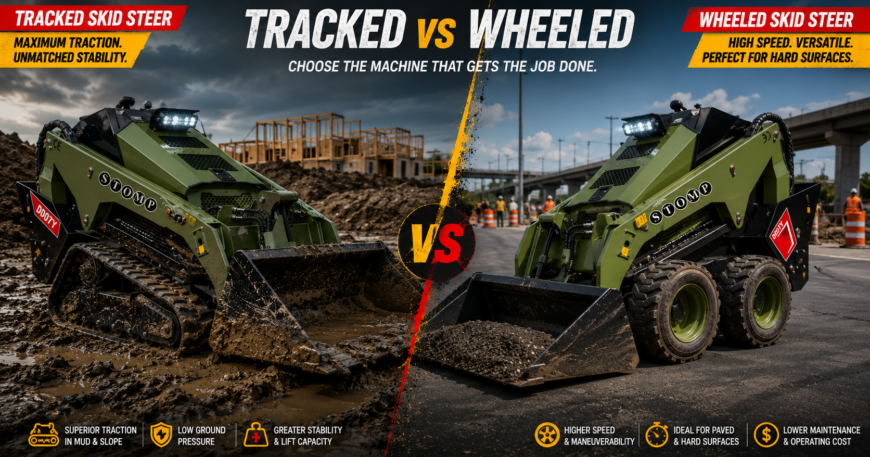
The industry strictly divides these machines into two distinct categories: wheeled skid steer loaders and compact track loaders. Wheeled models rely on four heavy-duty pneumatic or solid rubber tires to navigate the site. They execute their signature zero-radius turns by locking the wheels on one side and driving the wheels on the other, literally skidding across the surface. Conversely, compact track loaders abandon tires entirely in favor of two wide, continuous rubber tracks that wrap around a sophisticated steel undercarriage.
Understanding these two types of skid steers provides absolute clarity when evaluating your fleet’s true capabilities. The physical mechanism a machine uses to touch the earth completely dictates where it can operate safely and efficiently. Making the right choice ensures your operators can tackle challenging environments with absolute confidence. Navigating the most hostile, unforgiving environments naturally points contractors toward the tracked configuration.
Conquering Hostile Ground with Tracked Models
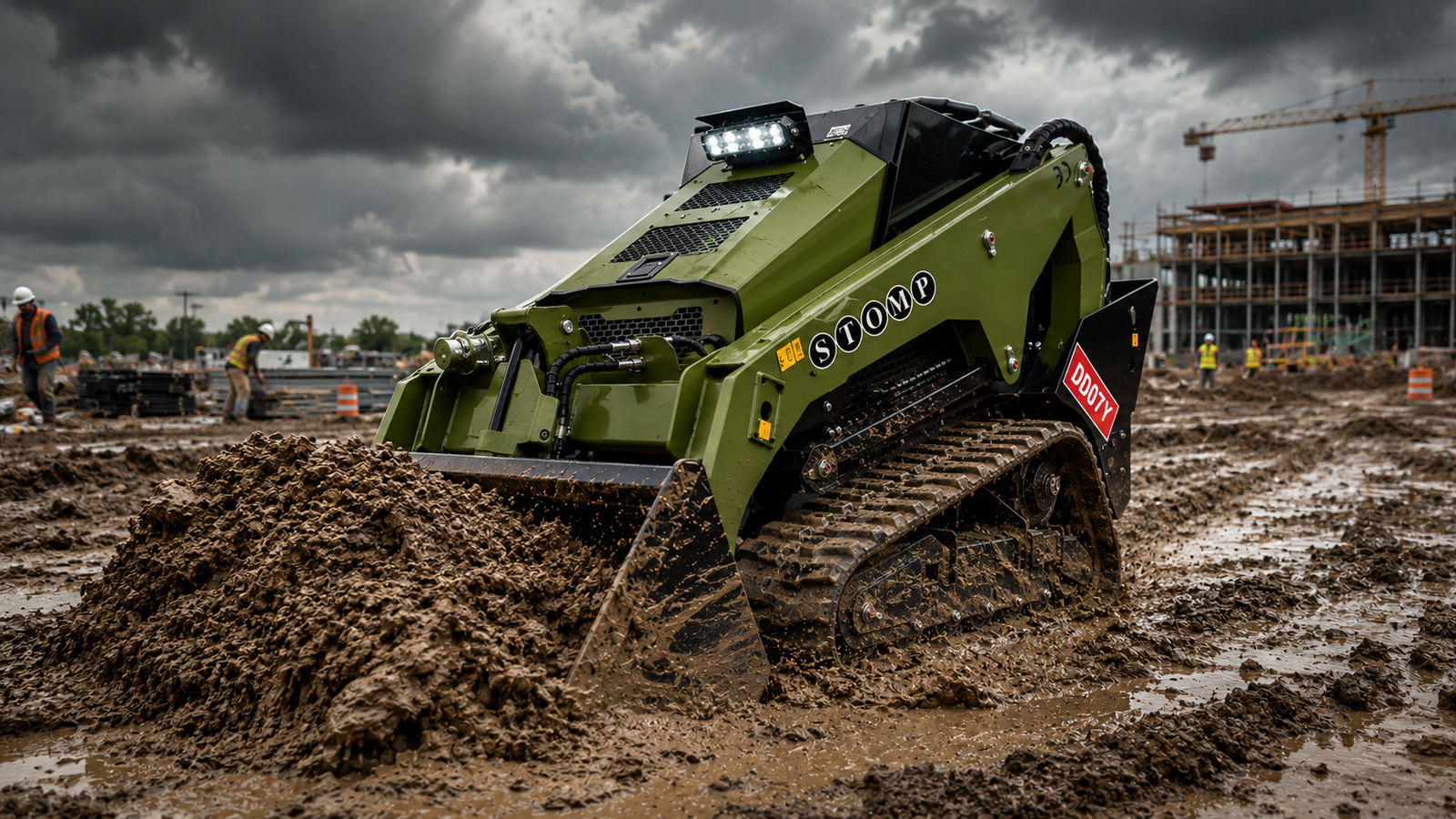
Weather delays represent one of the most frustrating and expensive threats to any contracting business. When a heavy rainstorm saturates a freshly graded residential development, the soil instantly turns into deep, adhesive mud. Attempting to force standard wheeled equipment into this environment is a guaranteed recipe for disaster. The tires quickly lose traction, aggressively dig themselves into deep ruts, and leave the machine hopelessly buried in the mud, forcing you to waste hours executing a dangerous physical recovery.
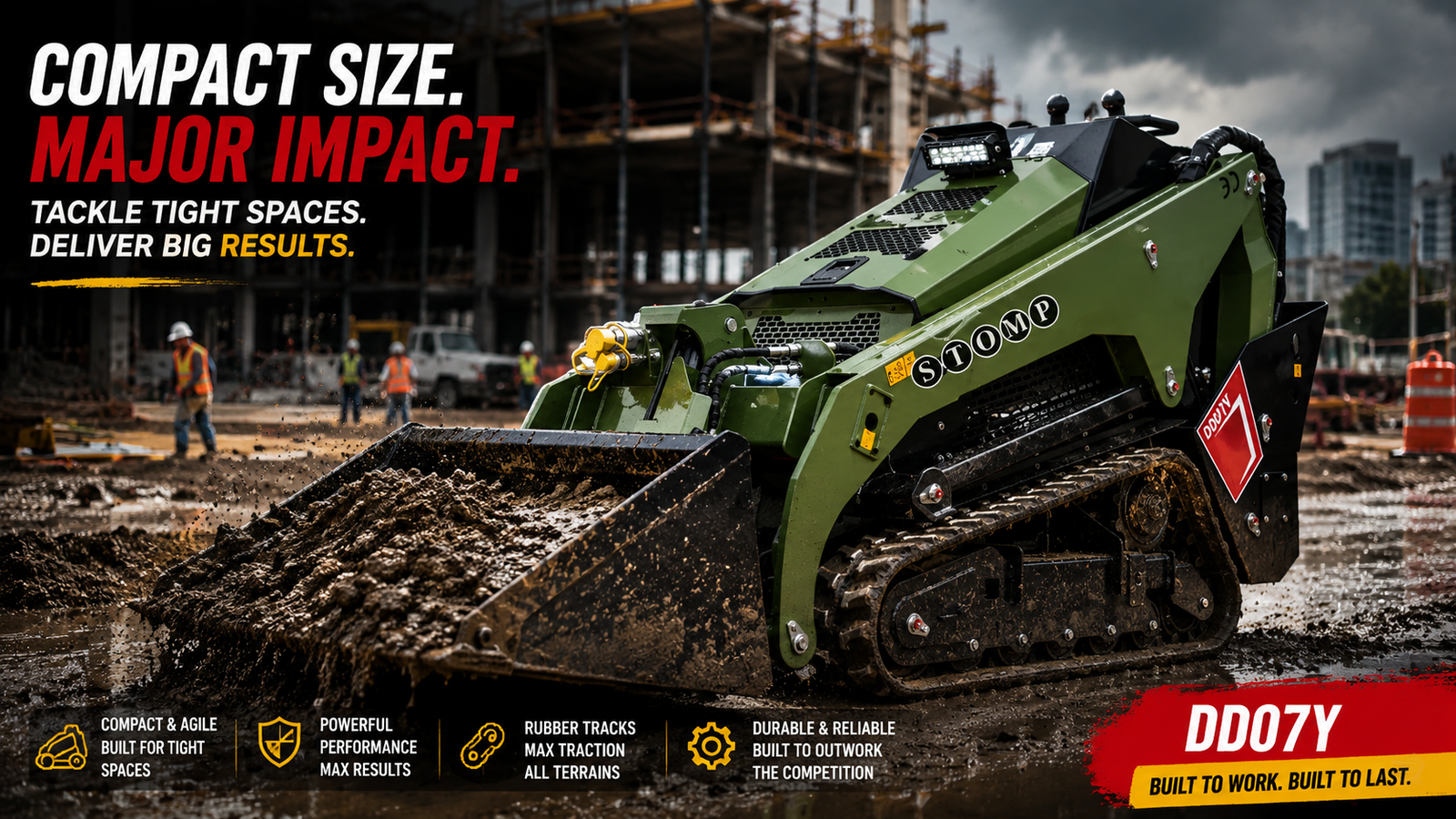
Tracked skid steers deliver the ultimate mechanical solution to soft, unstable ground conditions. The wide, continuous rubber tracks distribute the machine’s immense operating weight across a massive surface area. This brilliant weight distribution creates exceptional flotation, allowing the heavy loader to effortlessly glide over deep mud, loose sand, and delicate turf without sinking. Furthermore, the tracks provide relentless pushing power, ensuring the machine never loses traction while aggressively grading soil or clearing heavy brush.
The financial impact of deploying a tracked machine is the complete elimination of weather-related downtime. When competing contractors are forced to shut down their operations and wait for the ground to dry, your crew continues to execute highly profitable work. Additionally, because the tracks do not leave deep ruts, you save significant time and money on final site restoration. While tracks dominate the dirt, they face severe operational limitations when the ground turns to solid concrete.
Maximizing Speed and Agility on Hard Surfaces
Many contracting businesses operate almost entirely within heavily developed urban environments, focusing on asphalt paving, concrete demolition, and commercial warehouse logistics. The severe limitation these companies face is the rapid, aggressive deterioration of rubber track systems when exposed to hard, abrasive surfaces. Driving a tracked loader across jagged concrete debris or spinning it on hot asphalt literally shreds the expensive rubber, resulting in catastrophic undercarriage repair bills that evaporate your hard-earned profits.
Wheeled skid steers excel perfectly in these highly developed, abrasive environments. The heavy-duty tires provide exceptional durability and massive resistance to surface tearing. Because tires create significantly less friction against the ground than wide rubber tracks, wheeled loaders travel at much higher top speeds across the job site. This increased velocity allows operators to rapidly transport heavy materials from the delivery truck to the installation zone, drastically reducing overall cycle times.
Utilizing wheeled machines on hard surfaces guarantees superior daily efficiency and deeply protected profit margins. Your operators navigate massive commercial staging areas with incredible speed, keeping the entire project moving forward aggressively. Moreover, you completely avoid the massive financial penalty of replacing destroyed rubber tracks, keeping your maintenance budget highly predictable. Aligning these specific benefits with your company’s actual workflow is the defining step in the purchasing process.
Choosing the Right Skid Steer for Your Operation
Building a reliable, highly effective equipment fleet requires deep strategic foresight and a brutal, honest assessment of your daily operations. A critical mistake business owners make is purchasing a machine based on a rare, hypothetical scenario rather than their actual daily reality. Buying a tracked loader because you might occasionally work in the mud, even though ninety percent of your contracts involve paving asphalt, is a massive misallocation of your capital.
Choosing the right skid steer demands that you analyze the primary surface conditions of your most frequent, most profitable contracts. If your company specializes in agricultural management, land clearing, or early-stage earthmoving, you absolutely require the flotation and pushing power of a tracked model. Conversely, if your primary revenue streams involve road construction, scrap yard material handling, or snow removal on paved lots, a wheeled skid steer is the undisputed, highly efficient champion.
Matching your equipment specifically to your industry secures a massive competitive advantage. You empower your highly skilled operators to work faster, safer, and with significantly greater precision. This calculated alignment between machinery and environment builds a reputation for unyielding reliability, proving to your clients that you possess the exact tools required to deliver premium results. Securing this long-term reliability relies heavily on how you manage the physical health of the machine.
Protecting Your Investment Through Strategic Maintenance
Acquiring premium heavy machinery is a massive financial commitment that requires aggressive, proactive protection. Many contractors falsely view their loaders as entirely invincible, completely ignoring the unique mechanical needs of their specific configuration. Failing to respect the differences between tracked vs. wheeled skid steers during your daily maintenance routine guarantees severe mechanical failures, infuriated clients, and completely destroyed project timelines.
Each type of skid steer demands a highly tailored approach to preventative care. Wheeled machines require operators to constantly monitor tire pressure, as uneven inflation causes the machine to drift dangerously while lifting heavy payloads. Tracked loaders demand significantly more daily attention, requiring operators to meticulously clean the undercarriage to prevent dried mud from shattering the expensive steel rollers. Furthermore, operators must consistently monitor and adjust track tension to ensure the heavy rubber belt does not violently derail while working on steep inclines.
Committing to this strategic, configuration-specific maintenance extends the operational lifespan of your equipment by thousands of hours. You transform unpredictable emergency repairs into highly predictable, scheduled maintenance events, deeply protecting your company’s working capital. By respecting the mechanical reality of your chosen machine, you guarantee that it will continue to perform flawlessly throughout the entire construction season.
Secure Your Operational Future
A successful contracting business is built upon a foundation of reliable, deeply capable heavy machinery. Attempting to force the wrong piece of equipment to perform a task it was never engineered to handle is a guaranteed path to financial ruin and severe job site hazards. The true power of compact equipment is only realized when the business owner takes the time to understand the nuanced capabilities of their mechanical assets.
Take a deeply analytical look at your upcoming project pipeline and evaluate the true demands of your job sites. Whether you require the unyielding traction of a compact track loader or the rapid agility of a wheeled model, choosing the right skid steer ensures your company remains fiercely competitive. Invest in the right technology today, empower your operators with premium equipment, and build a highly profitable legacy that dominates your local market for decades to come.