
Exceptional Maneuverability in Tight Spaces
Getting a good deal on a contract often comes with a big logistical problem. The real work area is either behind a narrow residential gate, at the end of a narrow city alleyway, or completely inside an existing commercial building. If you can’t get the machine to the dirt, raw horsepower doesn’t mean anything when space is very limited. Contractors often find themselves staring at a job that would make them a lot of money, only to realize that their usual tools won’t fit.
This spatial limitation makes it hard for construction business owners to make a choice. You can either say no to the job completely or make your crew do days of hard, unprofitable manual labor with wheelbarrows and shovels. Neither choice helps a contracting business grow and compete. You need a mechanical solution that is specifically designed to deliver a lot of power into the most difficult situations.
Knowing how to use small machines turns these annoying space limits into clear competitive advantages. This in-depth guide will show you exactly how a mini skid steer can help with the problem of small work areas. You will learn how their unique engineering protects fragile property, cuts down on wasted movement by a huge amount, and keeps your projects in tight spaces very profitable in the end.
The Reality of Restrictive Work Environments
Urban development and renovations of residential properties currently dominate the construction industry. Clients constantly enhance their homes by constructing outdoor living spaces and upgrading utilities buried deep underground. These projects don’t often have the luxury of a big, clean dirt lot. Instead, contractors have to deal with mature landscaping, paved driveways, and property lines that are only a few inches away from the work area.
Bringing in traditional heavy machinery right away makes things very hard to work with. Full-sized loaders need a lot of space to turn around, which is not something that can be found in a typical suburban backyard or a busy downtown sidewalk. When operators try to fit big machines into these spaces, they spend more time nervously checking their blind spots than actually moving things. This constant indecision slows the whole project down to a crawl and puts a lot more physical stress on your crew.
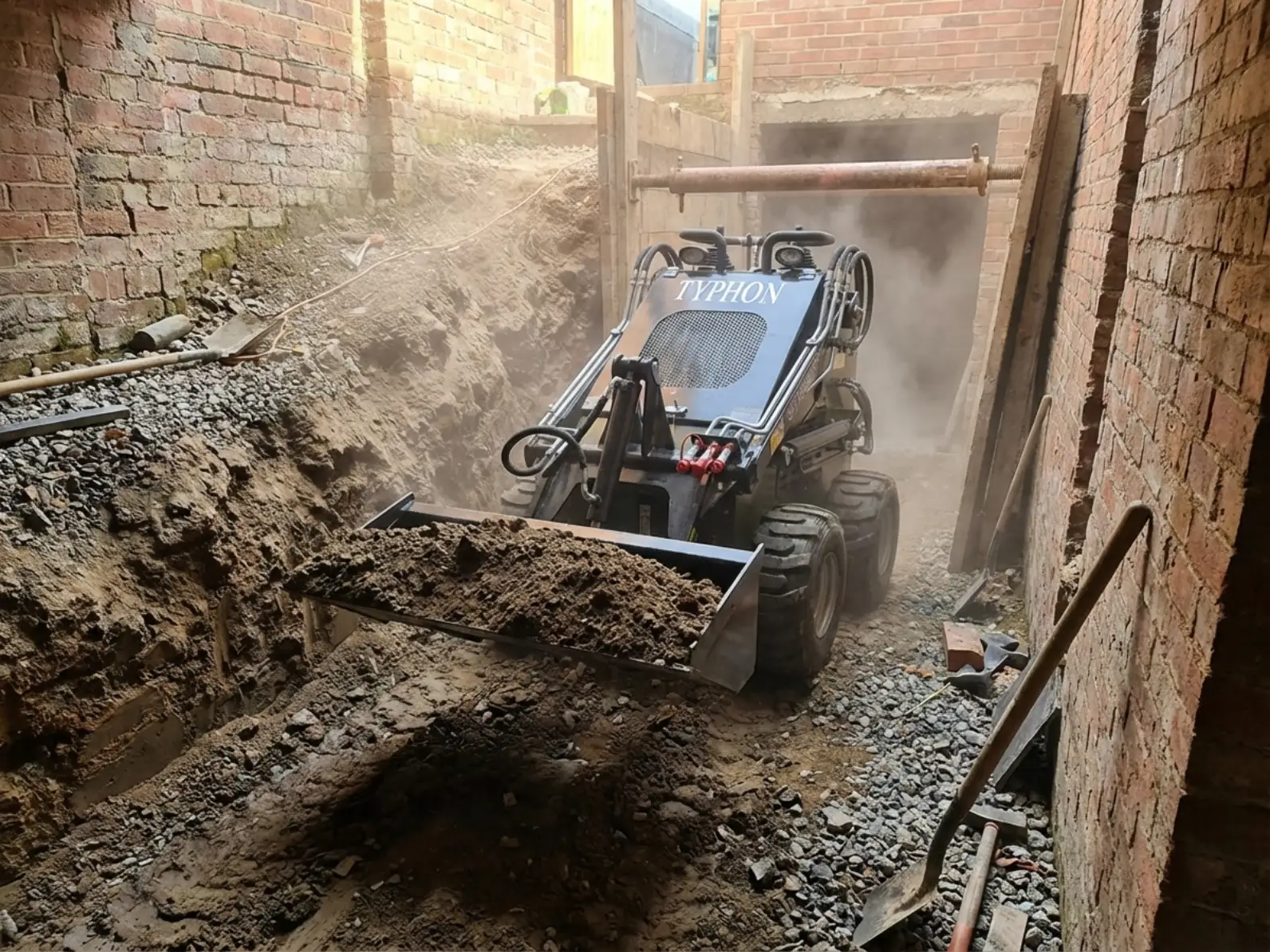
A mini skid steer is purpose-built to eliminate this exact operational friction. The machine features an incredibly narrow frame, often measuring less than thirty-six inches wide, allowing it to slip gracefully through standard pedestrian doorways and narrow property lines. This compact footprint removes the immediate barrier to entry, allowing you to bring mechanized power directly to the heart of the project. By solving the access problem, you immediately eliminate the need to manually haul materials across the property, saving countless hours of expensive labor.
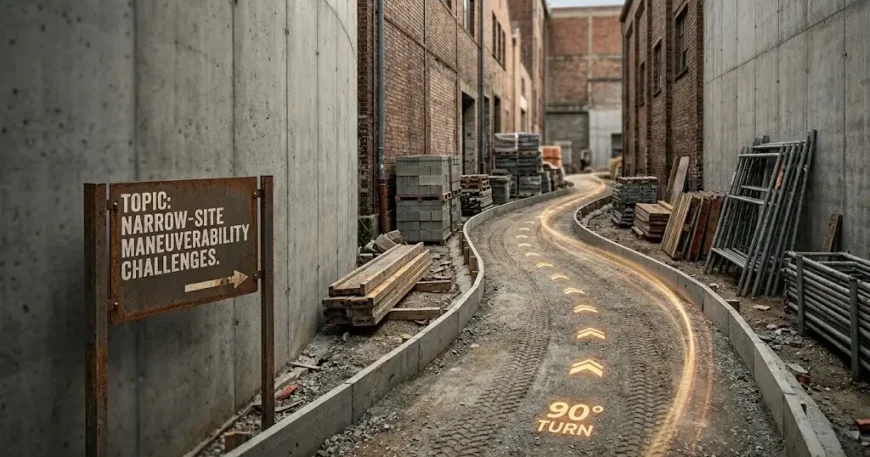
Navigating Narrow Access Points and Alleyways
The most difficult phase of any residential or urban project is usually the initial staging and site access. Getting tools, heavy materials, and machinery from the street parking area to the actual backyard work zone is a massive logistical hurdle. Many contractors resign themselves to dismantling expensive wooden fences or temporarily removing structural gates just to get their equipment inside. This tear-down and rebuild process consumes valuable hours, annoys the property owner, and eats directly into your carefully calculated profit margins.
Standard skid steers and compact track loaders, while powerful, simply cannot squeeze through a standard garden gate without causing extensive collateral damage. Even if the machine barely clears the posts, the operator lacks the necessary room to turn the machine once inside the enclosure. This lack of maneuverability turns a simple material delivery into a tense, high-risk operation that threatens the integrity of the client’s property. The solution requires a machine that treats narrow corridors as a standard operating environment rather than an impassable obstacle.
Mini skid steers thrive in these exact scenarios due to their specialized undercarriage design and zero-turn capabilities. The independent tracks allow the machine to rotate completely within its own physical footprint. An operator can drive straight down a narrow concrete alleyway, stop, spin the machine ninety degrees on a dime, and proceed directly through a tight gate. This exceptional maneuverability eliminates the need for costly fence removal and ensures your materials arrive at the work zone safely and efficiently.
Precision Control Around Delicate Structures
Operating heavy machinery is inherently risky, but those risks multiply exponentially when you are working inches away from an expensive glass sunroom or a newly poured concrete foundation. Residential and commercial clients expect contractors to improve their property, not accidentally destroy the surrounding features during the process. Standard construction equipment carries massive momentum, and a slight slip of the operator’s hand can easily result in a heavy steel bucket smashing through a structural wall.
When operators are forced to use oversized machines in confined areas, their focus is entirely consumed by avoiding catastrophic collisions. They constantly ride the brakes, overcorrect their steering, and work at an agonizingly slow pace just to prevent property damage. This hyper-cautious approach is mentally exhausting for the operator and terrible for your project timeline. To maintain both speed and safety, you need equipment that responds with absolute precision to the operator’s commands.
The hydraulic systems on a high-end mini skid steer are designed to give you very smooth, predictable, and proportional control. The operator stands on a rear platform instead of sitting in an enclosed cab, so they can see the whole machine from all sides. From this great vantage point, they can see exactly where the tracks are and how close the bucket is to a fragile structure. With smooth hydraulics and perfect visibility, this lets your crew work hard and safely in the smallest spaces.
Maximizing Efficiency Without Constant Repositioning
Keeping a steady, smooth rhythm is important for both earthmoving and material handling. The faster a machine can scoop, turn, dump, and go back to the pile, the more money it makes all day. But working in a small space naturally breaks this rhythm by limiting how the machine can move. If a regular loader gets stuck in a small yard, the operator can’t just turn around; they have to do a series of annoying three-point turns to get the loader facing the right way.
This constant, clumsy moving around is terrible for job site efficiency. Every time an operator has to back up, fix their angle, and then pull forward again, they are wasting valuable labor hours and expensive diesel fuel. These wasted seconds add up over the course of a week-long project, causing huge delays that could make you miss your deadlines. To fix this problem with efficiency, you need equipment that can move fluidly, no matter how tight the space around it is.
Because a mini skid steer is so flexible, you never have to move it around in an awkward or time-consuming way. The machine moves smoothly from one task to the next because it controls the speed of the left and right tracks on its own. An operator can scoop up a load of heavy gravel, spin smoothly in place, and then go straight to the installation zone without ever having to back up. This nonstop, unending workflow speeds up project timelines by a huge amount and makes sure you get the most out of every hour of work.
Eliminating the Burden of Manual Labor
When there isn’t enough room for traditional machinery to get to a job site, contractors have always used the oldest method: manual labor. They give crews heavy steel wheelbarrows, pickaxes, and shovels and tell them to move mountains of dirt by hand. Human labor is very flexible when it comes to tight spaces, but it is also very slow, very unpredictable, and very tiring.
Putting your skilled workers through days of hard manual earthmoving is a sure way to lower crew morale and make them very hurt. Back pain, joint pain, and extreme tiredness always lead to a rise in expensive workers’ compensation claims and sick leave. turnover. In an industry already suffering from a massive shortage of reliable, skilled labor, burning out your best workers on basic material transport is a terrible business strategy. You must find a way to mechanize the heavy lifting, even when the space seems impossibly small.
Using a mini skid steer is like giving your workers a huge boost in power, as it can do the work of three to four manual laborers. Your crew won’t have to work as hard to move heavy pallets of block, big tree root balls, and yards of wet concrete through thick mud. They can use the machine instead. Your skilled tradesmen can stay fresh, focused, and ready to do the high-value installation work that brings in your money because they don’t have to deal with the physical burden of moving materials.
Boosting Profitability Through Strategic Equipment Choice
The main goal of any contracting company is to always get good work and do it perfectly. But the physical capabilities of your fleet completely determine whether or not you can bid on profitable home renovations or difficult repairs to urban utilities. If you only have big earthmoving tools, you’re shutting yourself out of a huge part of the construction market. Every time you turn down a backyard grading job or an indoor demolition job because you can’t get to it, you’re giving your competitors clean money.
Having a machine that can move around easily opens up new ways for you to do business and brings in more money. You can confidently bid on high-paying jobs in neighborhoods with a lot of people, knowing you have the right tool to get around the space issues. Also, because these machines work so well, you can cut down on the money you used to set aside for fixing accidental damage to your driveway or turf.
Buying a compact loader isn’t just about getting another piece of yellow iron; it’s about setting your business up for long-term growth. Property managers and homeowners both find your services very useful because you can work quickly and safely in places where other contractors can’t. When you combine easy access with quick material handling, your profit margins naturally grow, which keeps your whole business financially healthy in the long run.
Optimizing Configuration for Total Job Site Maneuverability
Maneuverable heavy equipment will only grow. For a professional contractor who wants to stay ahead of the game, relying on big machines or doing hard manual work is no longer a good idea. You need a dedicated solution that makes restricted access a normal, profitable part of your day instead of a daily nightmare.
A mini skid steer delivers the perfect balance of raw hydraulic power and delicate, surgical precision. By investing in this exceptional maneuverability, you protect your client’s property, preserve the physical health of your crew, and drastically accelerate your daily production rates. Do not let narrow gates and cramped alleyways dictate the limits of your business success. Evaluate your upcoming project schedule, identify where restricted space is killing your efficiency, and reach out to a trusted heavy equipment dealer to secure the machine that will take your capabilities to the next level.
Comments (3)
Willow1543
April 23, 2026https://shorturl.fm/zoCqL
Linda596
April 24, 2026https://shorturl.fm/jSyt8
Donovan1817
April 24, 2026https://shorturl.fm/CXaVJ