
Mini Skid Steer
When you walk onto a busyjob site, you can see how hard it is to find a balance between raw power and strategic efficiency. For a long time, it was hard for contractors to decide what to do when they had to work on hard projects in small spaces. You either pushed a big, heavy piece of machinery into a space where it didn’t belong, or you made your crew work long hours doing hard, unprofitable manual work. Neither option would have worked for a construction or landscaping business that was growing.
The small skid steer loader changed the way professionals deal with these kinds of problems in a big way. These amazing machines fit in between wheelbarrows and big earthmovers. They send a lot of hydraulic power into small backyards and narrow streets in cities. If you want to grow your business, you need to know what this equipment can do.
This complete guide for beginners will tell you what a mini skid steer is and how it works on the job site. We will talk about the main differences between compact and full-sized models, compare walk-behind and stand-on models, and list the most common uses in different fields. You’ll know exactly why these machines are so popular and how they can help your business make a lot more money every day by the end of this article.
Defining the Compact Hydraulic Powerhouse
Every new mechanical invention begins with a strong desire to solve a simple problem at work. Contractors often had to move heavy things, but regular tractors couldn’t get to the places where they were. Moving heavy pallets of retaining wall block or yards of dense topsoil by hand hurts the crew’s spirits and makes the project take longer. The industry really needed a machine that could do the work of a big loader but fit in a regular wheelbarrow.
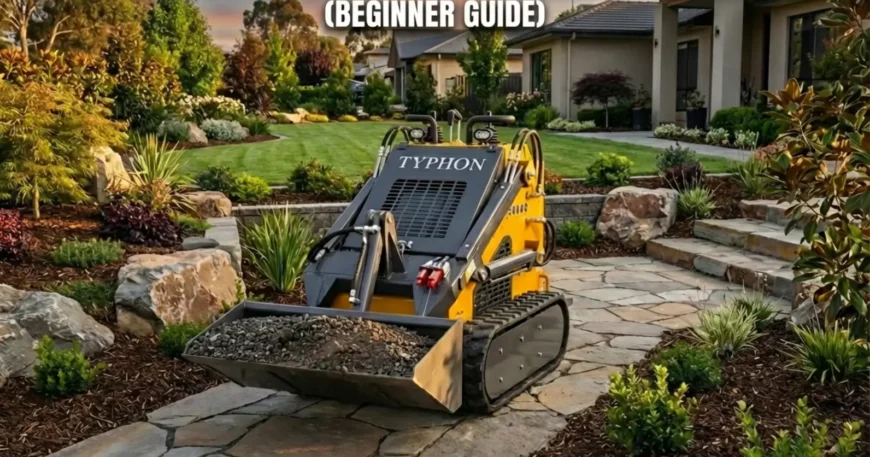
A mini skid steer is a small machine with an engine and hydraulic lift arms that can use a lot of different tools. This machine doesn’t steer by turning the front wheels like a regular car does. Instead, it turns by changing the speed of the left and right tracks or wheels. This is what makes the machine special: it lets it “skid” across the ground. It can spin all the way around without leaving a mark.
This amazing ability to turn without a radius means you don’t have to make wide, awkward turns in tight spaces anymore. A very powerful diesel or gas engine powers the machine and its complicated system of internal hydraulic pumps. This hydraulic system not only gives the tracks the power they need to move, but it also gives the attachments on the front a lot of power all the time.
This engineering makes your daily tasks a lot easier in real life. This machine can do the work of a whole crew of manual workers in a fraction of the time. Using hydraulic power instead of wheelbarrows will help your workers stay healthy and not get too tired. The switch from doing things by hand to doing them automatically is what makes a modern contracting business so successful.
Mini Versus Full-Size Skid Steers
You need to know what each type of machine can and can’t do in order to build a good fleet of equipment. Many traditional contractors believe that larger machinery invariably yields superior and more expedient outcomes. The biggest problem with full-size skid steers is that they are too heavy and too wide to be useful in tight or delicate spaces. Using a full-size loader on a finished residential property almost always causes a lot of damage to the grass, cracks in the concrete driveways, and high costs for fixing the site.
The mini skid steer was made to work in places where bigger machines can’t. The most obvious difference is their size; compact models are usually less than thirty-six inches wide. The compact loader’s narrow shape makes it easy to fit through standard residential garden gates and move through narrow city alleys. You would have to take down the client’s whole fence to get to the work area in the backyard if you had a full-size machine.
The difference in operating weight has a big effect on how you handle your logistics and keep the job site safe, in addition to just being able to get to it. The difference in operating weight has a big effect on how you handle your logistics and keep the job site safe, in addition to just being able to get to it. To move full-size loaders, you usually need heavy-duty commercial transport trucks, specialized trailers, and drivers with commercial licenses. The compact skid steer loader, on the other hand, is very light, so you can easily tow it behind a regular heavy-duty pickup truck. This simple logistics saves your business thousands of dollars in shipping costs and lets you move the machine to several sites in one day.
Also, the ground pressure on the terrain is much lower because the compact model is lighter. A big loader will sink into soft mud and leave big ruts on a clean lawn, but a mini loader will move smoothly over the surface. This better flotation protects the client’s property, saves you money on landscaping repairs after the project is done, and keeps your reputation as a professional. You keep your hard-earned profit margins when you choose the compact option instead of wasting them on collateral damage that isn’t needed.
Navigating Walk-Behind Versus Stand-On Models
Once you see how useful compact machinery is, you need to decide which way to set it up for your daily tasks. Most companies make these machines in two styles: walk-behind and stand-on. People who buy new equipment need to know how the operator’s body position affects safety, visibility, and long-term fatigue on the job site. If you pick the wrong configuration, operators might get mad and production might slow down.
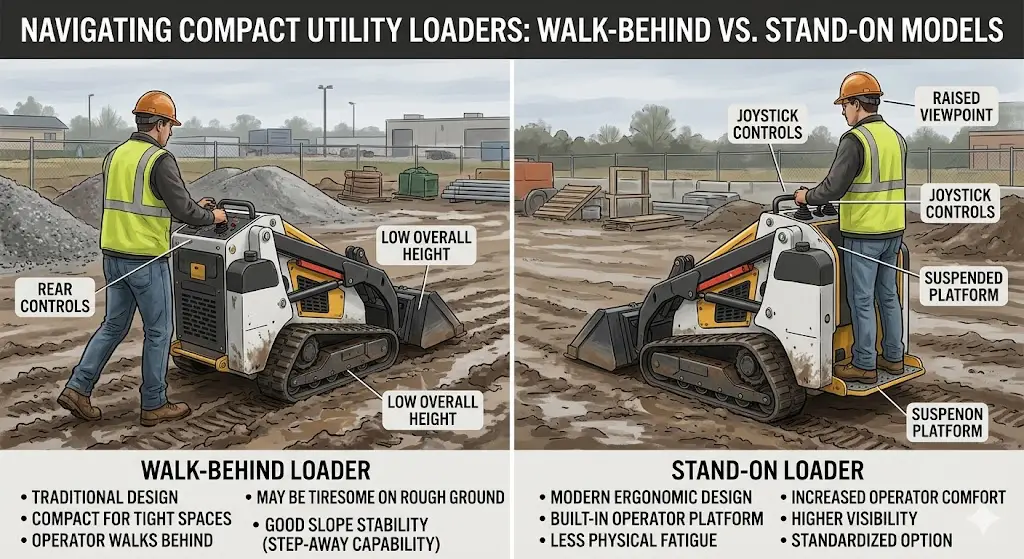
The walk-behind model is the older, more traditional type of this kind of equipment. As the name suggests, the operator stands right behind the machine and holds the controls on the back dashboard. Because of this design, the machine is very short overall, which makes it easy to move around in even the smallest spaces. When working on very steep, unpredictable slopes, walk-behind models are often better because the operator can easily step away from the machine if it starts to lose traction or tip.
But the operator has to walk through thick mud and rough ground behind a machine for eight hours a day, which is very tiring. Because of this tiredness, manufacturers made the modern stand-on model, which has a separate, suspended platform at the back of the machine. The operator rides with the loader on this platform, so they don’t have to walk across the job site, which is very tiring.
The stand-on configuration has quickly become the standard in the industry because it makes operators more comfortable and job sites safer. They are on a platform, so the operator can see the attachments, the tracks, and the area around them clearly. This better visibility makes it easier to handle materials with great care and greatly lowers the risk of accidentally damaging property. Keeping your operators comfortable and awake will help them do their best work all day long.
Exploring Top Mini Skid Steer Uses in the Field
The most important things about heavy equipment are how flexible it is and how many different things it can do. You shouldn’t spend your limited working capital on a machine that can only do one thing. The problem with specialized tools is that they spend most of their time in your storage yard. You need a universal platform that can change to meet the needs of your clients in order to get the most out of your investment.
The front of the mini skid steer has a universal quick-attach plate, which lets it do a lot of different things. This smart system lets operators quickly switch out dozens of very specialized hydraulic tools. Landscapers use standard dirt buckets to move mulch, soil, and decorative stone quickly across lawns that are very delicate. A landscaper can drill perfectly straight holes for mature trees and structural fence posts in rocky, dense soil by adding a special hydraulic auger to their tools.
When it comes to building homes and businesses, these little machines are the best way to help with logistics. General contractors often put heavy-duty pallet forks on the loader so they can move big piles of roofing shingles or cement blocks directly to the job site. When they do big renovations, workers use hydraulic breaker attachments to completely break up thick concrete driveways. This means they don’t have to use jackhammers that are powered by air.
This helpful tool is also very important for keeping farms and large horse properties in good shape every day. Farm managers use grapple buckets and manure forks to quickly clean out small animal stalls that are too small for regular tractors. It can easily move heavy round bales of hay and big pallets of livestock feed, making it a tireless, automated farm worker. This one machine can hold a lot of different tools, so it can replace a whole fleet of expensive tools that only do one thing.
Why the Compact Skid Steer Loader Is Surging in Popularity
The way people do their daily work in the construction and landscaping industries is changing a lot right now. Finding reliable manual labor is hard for business owners all over the country. People are becoming less and less willing to do hard physical work, like pushing heavy wheelbarrows or digging deep trenches by hand. Due to this labor shortage, contractors have to turn down jobs that would make them money because they don’t have enough workers to finish them.
The compact skid steer loader is very popular because it is the best way to fix the terrible problem of not having enough workers. You can make the hardest parts of your projects easier by adding this powerful machine to your operations. One person using this equipment can easily do the work of three to four manual laborers in a day. This huge increase in power lets your business take on more complicated contracts without having to hire and train new workers quickly.
Also, clients want specialized, low-impact equipment more and more, and modern properties are being built in a way that makes this necessary. Infill projects in cities and new housing developments in the suburbs have property lines that are very close together and not much room for big machines to set up. Clients want high-end outdoor renovations and deep utility installations, but they won’t put up with the huge damage that heavy construction has caused in the past.
Mini skid steers are great for today’s needs because they are very powerful and can fit in a very small space. They let contractors work hard in places where their competitors can’t fit. This unique feature makes the machine more than just a tool for moving dirt; it gives you a big advantage over your competitors. Businesses need to invest in small, flexible mechanization to stay in business for the long term. It’s no longer a luxury; it’s a necessity.
Maximize Your Operational Potential Today
The first thing you need to do to grow your contracting business is learn about the mechanical and financial benefits of modern tools. You can’t let small job sites, not having enough workers, or being afraid of damaging other people’s property keep you from making money. Contractors can now do more in a day because they can go from doing hard manual work and using big machines to doing precise, small work.
The mini skid steer is the most useful machine on the market. You can easily switch between moving dirt, handling materials, and tearing down buildings without worrying about anything. When you buy this great hydraulic platform, you help keep your workers from getting tired, protect your clients’ property, and lower your daily operating costs by a lot. Check out the problems with your current project, figure out how much your manual labor workflows are costing you, and get in touch with a trusted heavy equipment dealer to learn how compact power can change the way you do business.
Click on this to explore more about skid-steer loaders..
Comments (3)
Valerie3851
April 23, 2026https://shorturl.fm/cgJQ9
Jake2212
April 24, 2026https://shorturl.fm/gzaMi
Annie4471
April 24, 2026https://shorturl.fm/KBtpb