
Introduction
There’s a certain moment every contractor recognizes—the instant a machine doesn’t respond the way it should. The controls feel sluggish, the engine sounds slightly off, or the hydraulics don’t deliver the same sharp power they did weeks ago. With a mini skid steer, those subtle changes are often the first warning signs of something deeper. And in a business where time is money, ignoring those signals can quickly turn into downtime, expensive repairs, and lost opportunities.
Mini skid steers are built for versatility and efficiency. They squeeze into tight job sites, handle multiple attachments, and often work longer hours than their larger counterparts. But that convenience comes with a cost: these compact machines are pushed hard, often in demanding environments where dust, debris, and heavy loads are constant factors.
The difference between a machine that lasts five years and one that performs like new for a decade often comes down to maintenance—not just routine checks, but thoughtful, consistent care. Proper maintenance isn’t about reacting to problems; it’s about preventing them before they start.
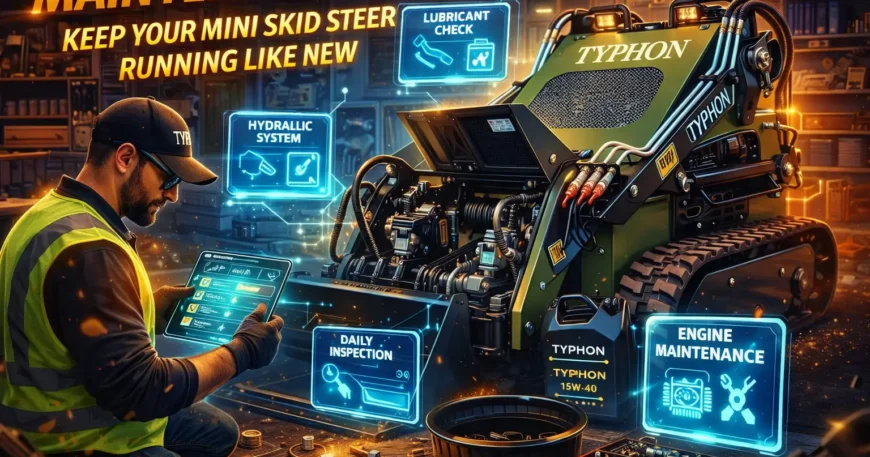
In this guide, we’ll walk through five essential steps to maintain your mini skid steer the right way. Each step is grounded in real-world job site conditions and focuses on what actually matters: performance, reliability, and long-term value.
Step 1: Daily Inspection – The Habit That Prevents Costly Downtime
Every experienced operator knows that most major equipment failures don’t happen suddenly—they build over time. A loose hose, a small fluid leak, or a worn track doesn’t cause immediate shutdown, but left unnoticed, it can escalate into a serious issue. That’s where daily inspections come in.
Before starting your mini skid steer each day, taking just a few minutes to walk around the machine can make a significant difference. This isn’t about following a rigid checklist—it’s about developing a trained eye for what “normal” looks like. Once you know how your machine should appear and sound, even small deviations become obvious.
Hydraulic hoses deserve particular attention. Because mini skid steers rely heavily on hydraulics for lifting, digging, and attachment operation, even a minor crack or leak can lead to reduced performance and eventual system failure. Catching that early not only saves repair costs but prevents job interruptions.
Tracks or tires are another critical point. Uneven wear or embedded debris can affect traction and stability, especially on uneven terrain. Operators who ignore this often find themselves dealing with premature replacements or reduced efficiency on site.
Fluid levels—engine oil, hydraulic fluid, and coolant—should never be assumed. Low levels don’t just reduce performance; they accelerate internal wear. Over time, this leads to expensive repairs that could have been avoided with a simple check.
What makes daily inspection powerful is not the time it takes, but the problems it prevents. It creates a baseline of reliability, allowing the rest of your maintenance strategy to build on a solid foundation.
Step 2: Hydraulic System Care – Protecting the Core of Your Machine
If the engine is the heart of your mini skid steer, the hydraulic system is its muscle. Every movement, from lifting loads to operating attachments, depends on clean, properly functioning hydraulics. Yet, it’s also one of the most commonly neglected systems.
The challenge with hydraulics is that problems often develop internally before becoming visible. Contaminated fluid, for example, doesn’t immediately cause failure. Instead, it slowly damages pumps, valves, and seals, reducing efficiency over time until performance noticeably drops.
Regularly checking hydraulic fluid quality is essential. Clean fluid should have a consistent color and be free of debris. When it becomes dark or milky, it’s a sign of contamination—either from dirt or moisture. Ignoring this leads to increased friction inside the system, which ultimately shortens the lifespan of critical components.
Filters play an equally important role. They act as the first line of defense against contaminants, but once clogged, they lose effectiveness. Replacing hydraulic filters at recommended intervals ensures that the system continues to operate smoothly under pressure.
Another often overlooked factor is heat. Hydraulic systems generate significant heat during operation, especially in demanding tasks like trenching or grading. Overheating can break down fluid properties, reducing lubrication and increasing wear. Ensuring proper cooling and avoiding prolonged overloading can make a significant difference in system longevity.
Taking care of the hydraulic system isn’t just about avoiding repairs—it directly impacts performance. A well-maintained system delivers smoother operation, better control, and more efficient power transfer, all of which translate into faster, more precise work on site.
Step 3: Engine and Oil Maintenance – Extending the Life of Your Investment
The engine is where raw power is generated, but it’s also where neglect becomes most expensive. Unlike visible components, engine wear happens internally, often without immediate warning signs. By the time performance drops noticeably, damage has already occurred.
Oil is the engine’s primary defense against wear. It lubricates moving parts, reduces friction, and helps dissipate heat. Over time, however, oil breaks down and accumulates contaminants. When that happens, it stops protecting the engine effectively.
Regular oil changes are not just a recommendation—they are essential. Skipping or delaying oil changes leads to increased friction between engine components, accelerating wear and reducing efficiency. In severe cases, it can lead to complete engine failure.
Air filters are another critical element. Mini skid steers often operate in dusty environments, where airborne particles can quickly clog filters. When airflow is restricted, the engine has to work harder, consuming more fuel and generating additional heat. Replacing air filters regularly ensures optimal combustion and performance.
Fuel quality also plays a role. Contaminated fuel can introduce particles into the engine system, causing injector issues and reduced efficiency. Using clean, high-quality fuel and maintaining the fuel filter helps prevent these problems.
Engine maintenance is about consistency. When properly maintained, an engine doesn’t just last longer—it performs better, delivering consistent power and fuel efficiency across every job. This reliability is what keeps projects on schedule and budgets under control.
Step 4: Cleaning After Use – The Most Underrated Maintenance Practice
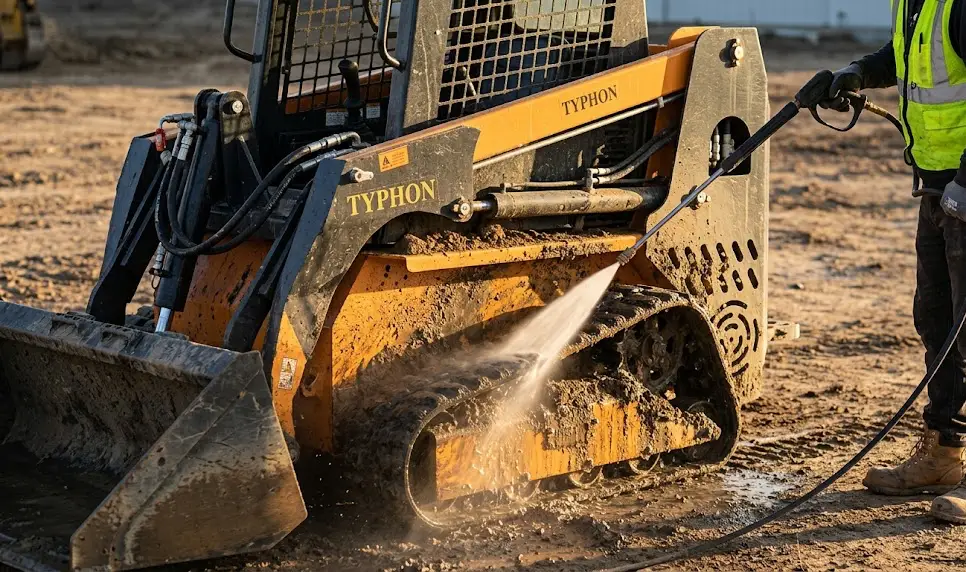
At the end of a long workday, cleaning a machine might feel like the last priority. However, it’s one of the simplest yet most effective ways to extend the life of your mini skid steer.
Construction environments expose machines to dirt, mud, concrete residue, and debris. Over time, these materials don’t just sit on the surface—they find their way into moving parts, cooling systems, and sensitive components.
When dirt accumulates around the engine or hydraulic components, it acts as an insulator, trapping heat. This can lead to overheating, especially during extended operation. Cleaning these areas allows proper airflow and cooling, helping the machine maintain optimal operating temperatures.
Tracks and undercarriage components are particularly vulnerable. Mud and debris can harden over time, increasing resistance and causing unnecessary strain on the drive system. Regular cleaning prevents buildup and ensures smoother operation.
Radiators and cooling fins should never be overlooked. Dust and debris can block airflow, reducing cooling efficiency. A clogged radiator forces the engine to run hotter, which accelerates wear and reduces performance.
Cleaning also has a psychological impact. Operators are more likely to notice issues on a clean machine. Leaks, cracks, or worn components stand out clearly when they’re not hidden under layers of dirt.
What seems like a simple task ultimately contributes to better performance, reduced wear, and improved safety. It’s a small investment of time that delivers long-term benefits.
Step 5: Avoiding Common Mistakes – Protecting Your Machine from Everyday Damage
Even with the best intentions, many operators unknowingly shorten the lifespan of their mini skid steer through everyday habits. These mistakes don’t always cause immediate damage, which is why they’re often repeated until problems arise.
One of the most common issues is overloading the machine. Mini skid steers are designed with specific capacity limits, and consistently exceeding them puts strain on both the engine and hydraulic system. Over time, this leads to premature wear and reduced performance.
Another frequent mistake is ignoring unusual sounds or vibrations. Machines communicate problems early, but those signals are often dismissed as minor quirks. Addressing these signs immediately can prevent larger, more expensive issues later.
Improper storage is another overlooked factor. Leaving a machine exposed to the elements can lead to rust, fluid contamination, and component degradation. Whenever possible, storing equipment in a sheltered environment helps preserve its condition.
Skipping scheduled maintenance is perhaps the most costly mistake. It’s easy to delay servicing during busy periods, but the long-term consequences often outweigh the short-term convenience. Maintenance schedules are designed to prevent issues, not just fix them.
Finally, using incorrect attachments or operating techniques can place unnecessary stress on the machine. Ensuring compatibility and proper usage protects both the equipment and the operator.
Avoiding these mistakes isn’t about perfection—it’s about awareness. Small adjustments in daily operation can significantly extend the life of your machine and improve its overall performance.
Conclusion
Maintaining a mini skid steer isn’t just about keeping it running—it’s about preserving its value, performance, and reliability over time. In an industry where margins are tight and deadlines are unforgiving, equipment that performs consistently becomes a competitive advantage.
What sets successful contractors apart is not just the machines they own, but how they care for them. Daily inspections prevent small issues from becoming major problems. Hydraulic system care ensures smooth, powerful operation. Engine maintenance protects the core of the machine. Cleaning preserves efficiency and safety. And avoiding common mistakes keeps everything working together as it should.
These steps are not complicated, but they require discipline and consistency. Over time, that consistency translates into fewer breakdowns, lower repair costs, and a machine that continues to perform like new long after others have worn out.
In the end, maintenance is not an expense—it’s an investment. And for those who treat it that way, the returns are clear: better performance, longer lifespan, and a business that runs more efficiently with every job completed.
1 Comment
guccii
March 30, 2026can you share more about how to clean